
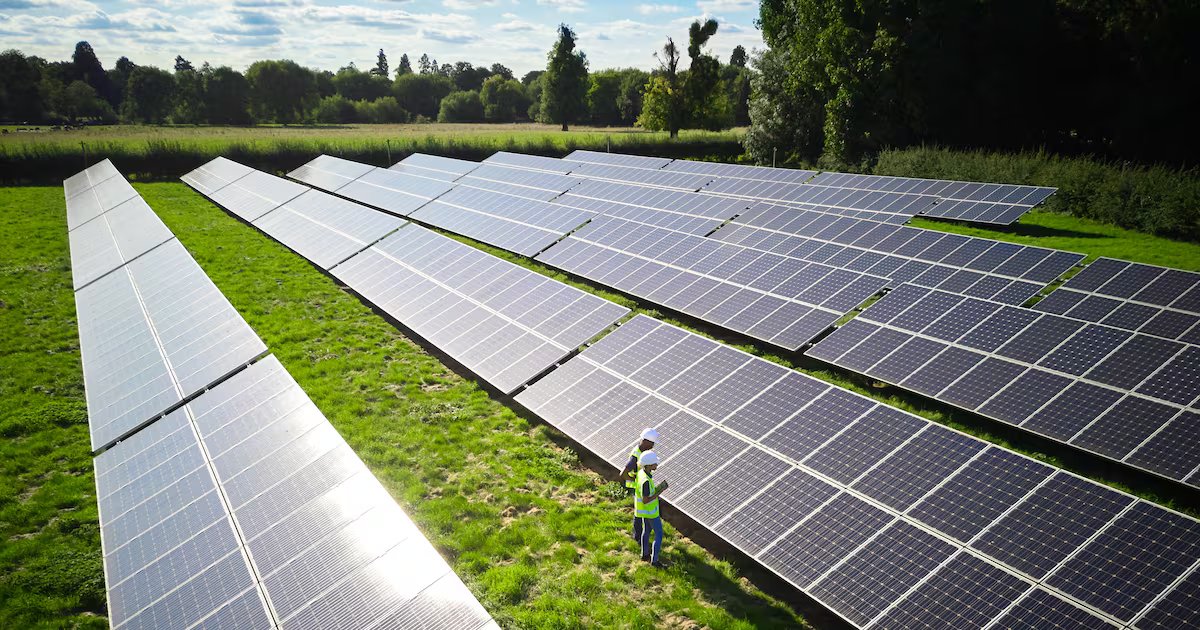
Investment in renewable energy to meet Ireland’s 2030 renewable energy targets will mean a transfer of €1 billion from private companies to communities. How do we maximise the benefits of this unprecedented transfer of wealth?
The energy transition is firmly under way in Ireland, and we are seeing accelerated progress in several key areas, with solar energy rapidly expanding, and significant growth in home energy upgrades and electric vehicle sales.
However, Ireland is not on track to meet statutory 2030 targets and accelerating the pace and scale of renewable energy development is urgently required.
Persistent societal challenges remain, however, relating to the siting and development of large renewable energy infrastructure and the necessary grid upgrades to carry this electricity from where it is produced to where it can be consumed.
While the benefits nationally for our climate ambitions and energy security needs are increasingly understood, the benefits at community level are not always as evident.
Ensuring that community benefits from renewable energy projects are both significant and meaningful is essential if Ireland is to address the delays in developing infrastructure now being investigated by the Government’s Accelerating Infrastructure Taskforce.
Community benefit funds are emerging nationally and internationally in this context as a fruitful strategy to pave the way for enhanced public engagement with energy and sustainability. This is in part driven by national policy that mandates developers to create community benefit funds for renewable energy projects.
The estimated value of community benefit funds from renewable energy projects to meet our 2030 targets is projected to be more than €1 billion, representing a sizeable transfer of wealth to local communities from renewable energy companies – significantly higher than regional development funds such as Leader (€180 million for the current 2023-2027 programme).
Nevertheless, beyond the notable “financial participation” opportunities it provides, it also potentially enables new engagement opportunities, such as helping to build trust, fairness and community capacity to meet Ireland’s energy and sustainability goals.
[ How communities across Ireland are taking control of their energy futureOpens in new window ]
Research just published by researchers from the MaREI Centre at UCC’s Sustainability Institute in the Energy Policy journal sheds light on this key opportunity for Ireland.
The findings reflect upon innovative approaches to public engagement and participation adopted in relation to the transmission grid, but many of these insights are relevant to the development of Ireland’s offshore wind energy and renewable energy more broadly.
Between 2022 and 2025, UCC’s team examined how Ireland’s electricity transmission system operator EirGrid engages with the public in developing the electricity grid, focusing on engagement practices and strategies, interconnection projects, and community benefit funding.
It reflects growing awareness that social factors are crucial to a successful energy transition, and that infrastructure planning must take them into account.
Involving citizens and communities, as well as providing community benefit funding, is now a key part of energy policy, and these efforts seek to support infrastructure developments and encourage public participation in the energy transition.
However, they also raise important questions about consent, fair participation, how benefits are shared, and what counts as a benefit.
[ Up to €2.7m worth of energy ‘wasted’ every day by State, committee toldOpens in new window ]
To understand EirGrid’s evolving approach to community benefit funding, UCC researched three different funds linked to electricity grid projects in three regions.
The research found that connecting community benefit funding to broader sustainability goals can create shared advantages.
It also found, however, that communities need more support to build their capacity, including administrative, legal and financial advice alongside knowledge related to the energy transition under way.
The responsibility to meet local climate objectives should not be left to volunteerism, and the necessary skills and capacity development must not fall solely on individual developers but should instead be part of a co-ordinated national strategy.
This requires a clear national vision for the energy transition, developed with citizen input and widely shared, which can help ensure that communities lead local actions that deliver local benefits while still supporting national goals.
Community benefit funding has been an important part of EirGrid’s approach to delivering projects in recent years.
Beyond the funding aspect itself, the manner in which EirGrid implemented distribution of the funds also has the wider benefit of involving communities in their projects through early engagement mechanisms and the creation of community forums.
This is quite different from the approaches to date by renewable energy developers, where the distribution of community benefit funds has been less structured and at times more ad hoc.
Within EirGrid’s strategy, community forums play an important role as a type of public participation approach that includes local stakeholders, such as sports organisations, volunteer groups, and community councils.
The responsibilities of these community forums include representing the opinions of the community, offering advice on regional requirements, identifying chances for co-operation, resolving conflicts, giving project input, participating in community benefit plans, and disseminating information to a wider audience.
Such an approach has ensured that community benefit is not equated simply to a question of remuneration, which can often come to mean a pay-off for locally impacted communities, but is instead about communities benefiting from being involved in processes around local developments and influencing associated decision making.
This marks a significant transformation in approach by EirGrid, compared to the Grid 25 strategy published in 2008, in which the focus was to minimise the impacts of grid infrastructure on local communities.
[ Renewables generated 42% of electricity in SeptemberOpens in new window ]
The existing approach, by contrast, places community participation much more centrally in grid infrastructure decision-making and positions EirGrid as a leader internationally in this area.
So, how can renewable energy developers learn from this approach to enable greater public participation in renewable energy development and accelerate the pace and scale of renewable energy deployment?
The Renewable Electricity Support Scheme is Ireland’s key renewable energy policy, and it mandates developers to create community benefit funds for local development projects.
Currently, all solar, onshore wind and offshore wind projects must create a community benefit fund, allocating a fixed amount (€2 for every megawatt hour of renewable energy generated) for local economic, environmental, social, and cultural wellbeing.
Communities across Ireland will see a substantial increase in these schemes as the pace of renewable energy implementation increases to meet our targets in the five-year period to 2030.
While the potential is clear, much deeper consideration is needed on how best to maximise the potential of these funds to deliver real change and support communities to undertake projects in alignment with their own specific concerns, interests and priorities.
This also calls for co-ordinated tracking, monitoring and evaluation of the impacts of community benefit funds to inform policy and practice over the next decade.
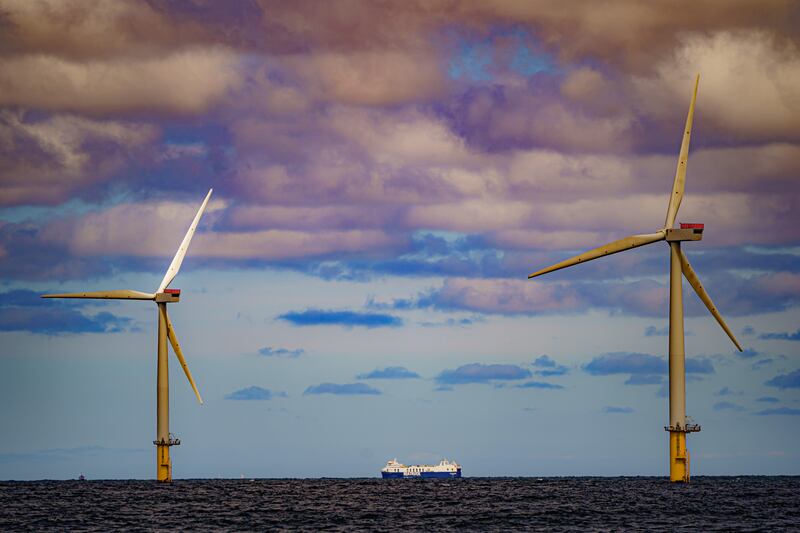
In relation to Ireland’s offshore wind target of 5GW by 2030 and 37GW by 2050, community benefit funding amounts to more than half of the €1 billion and the transfer of wealth to “communities” is without precedent. What this looks like in practice, however, remains unknown.
With relation to electricity grid infrastructure developments there is a clear route associated with the infrastructure, and “community” here is defined in terms of a certain distance from the proposed grid development.
In relation to offshore wind, however, there is not a distinct “community” in a traditional sense, and defining what a “community” is in this context needs more consideration
Fishing is the most clearly impacted industry, but the potential for opposition from residents with a view of these new structures should not be underestimated.
The generation of funds related to offshore wind will be spread over the 15-year lifetime of these projects. As such, the potential for one “impacted” community to receive funding over another may raise serious concerns around fairness and equity, particularly in light of the coastal adaptation challenges which the country will face in the years to come.
In addition, timely learnings are now available based on the approach adopted by EirGrid in terms of the role of community forums to distribute the funds, but also in involving the communities in decision-making processes.
Translating these learnings from recent grid infrastructure developments into policies and processes for renewable energy development provides a key opportunity to maximise community benefits and accelerate the installation of much needed renewable energy infrastructure.
Dr Evan Boyle, Dr Alexandra Revez, Aoife Deane and Prof Brian Ó Gallachóír are researchers at the MaREI Centre based in UCC Sustainability Institute