
One scoop to start: Private equity group EQT is considering charging institutional investors more to put money into its deals, as an influx of money from wealthy individuals makes it less reliant on funds from traditional backers.
A new casino king: Hedge fund manager Steve Cohen has won approval from a critical regulatory board to build a casino in New York, paving the way for the billionaire to potentially run one of the city’s first gambling facilities.
And another thing: Are fancy lawyers the new coddled tech workers? Maybe. While they are bringing in the cheddar, they still can’t get any butter (literally), the FT’s Suzi Ring reports.
Welcome to Due Diligence, your briefing on dealmaking, private equity and corporate finance. This article is an on-site version of the newsletter. Premium subscribers can sign up here to get the newsletter delivered every Tuesday to Friday. Standard subscribers can upgrade to Premium here, or explore all FT newsletters. Get in touch with us anytime: Due.Diligence@ft.com
In today’s newsletter:
-
Italy’s bank takeover ‘conspiracy’
-
Blackstone, Apollo agree to stress tests
-
A Gunvor founder finances his buyout
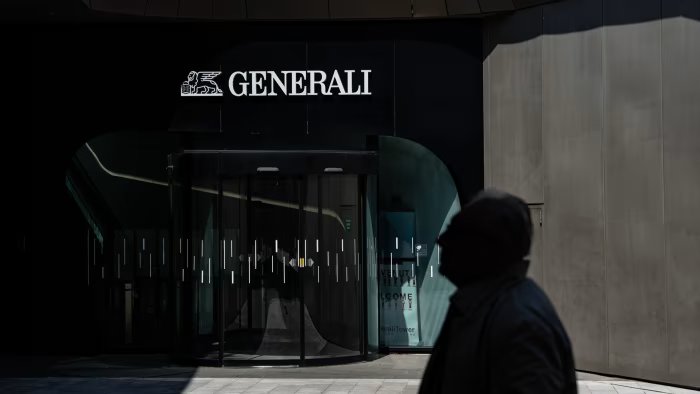
The insurer at the heart of the deal upending Italian finance
The bank takeover that has gripped Italy’s finance sector this year was orchestrated by a secret alliance going after a stealth target, prosecutors are alleging.
DD readers are familiar with the back story. In January the state-backed bank Monte dei Paschi di Siena (MPS) launched the takeover of rival lender Mediobanca, shocking markets and analysts.
The €17bn acquisition was finalised in September. But the saga didn’t end there.
Last week the FT reported that Italian prosecutors were investigating MPS boss Luigi Lovaglio and top shareholders for alleged market manipulation and obstruction of supervisory functions in connection with the takeover. Now, a search and seizure warrant seen by the FT casts the takeover in a new light.
According to prosecutors, MPS’s real target was not Mediobanca, but the insurer in which Mediobanca is the largest shareholder: Generali.
The warrant alleges that Lovaglio and billionaire investors conspired to execute the takeover with Generali as the ultimate prize.
Generali is one of the largest holders of Italian sovereign debt, making it a crucial player in the country’s financial services industry.
The insurer’s chief executive, Philippe Donnet, has been a longtime target of billionaire investors Francesco Gaetano Caltagirone and the Del Vecchio family, which runs the eyewear giant Luxottica and the holding company Delfin. Both are major investors in Generali and acquired substantial stakes in MPS over the past year.
Prosecutors are alleging they used MPS as a vehicle to execute a broader plan to seize control of Generali without launching a costly full-blown takeover.
They allege Caltagirone, along with Delfin, co-ordinated efforts and investment decisions for years without informing the market or regulators, ultimately enlisting MPS chief executive Lovaglio to execute their plan.
Lovaglio, Delfin and Caltagirone have always denied the takeover of Mediobanca was a strategy to install a friendly chief executive at Generali.
MPS said it was “confident it can provide all the necessary information to clarify the correctness of its actions” and is co-operating with authorities.
Yet the probe could make it more difficult for investors to oust Donnet ahead of the end of his term in 2027, and could also complicate MPS’s integration of Mediobanca.
Stress tests enter the private credit chat
The biggest names in private credit are readying to take part in an exercise that traditional lenders such as JPMorgan Chase and Bank of America have been undertaking for years: system-wide stress tests.
Blackstone, Apollo, KKR and Ares have all agreed to take part in a stress test administered by the Bank of England, as regulatory scrutiny of the asset class intensifies.
Executives hope the tests will show that the shift of lending away from bank balance sheets will reveal fewer interlinkages in the financial system.
(Researchers at one of the US’s largest credit rating agencies as well as the Securities and Exchange Commission are betting the opposite is true.)
The fact is, banks play a critical role in how private credit funds dole out hundreds of billions of dollars in credit to borrowers a year. Banks are one of the biggest sources of leverage for private credit funds, as the FT detailed in a visual explainer published on Monday.
While there are myriad ways a fund can borrow, DD wants to focus on “back leverage” — the biggest firepower funds have, outside of the equity capital they’ve raised from clients.
Banks will lend against pools of loans originated by the funds, in what’s known as “loan-on-loan” financing (it’s called that because private credit funds are taking on loans to fund the loans they make).
Bank of America, Barclays, Citi, Wells Fargo, BNP Paribas and SocGen have each provided more than $1bn to finance Blackstone’s flagship private credit fund: BCRED. Goldman Sachs, Deutsche Bank, Morgan Stanley and HSBC have supplied hundreds of millions more.
It’s these linkages that have many regulators fired up. And that’s before we get into the more esoteric stuff: subscription lines, NAV facilities, repo and loans banks make to the portfolio companies within these private credit funds.
DD (and most investors for that matter) will be keen to see how these private investment giants score on the tests.
Gunvor looks inwards for dealmaking
It’s been a wild few months for Torbjörn Törnqvist, the billionaire co-founder of commodities trader Gunvor.
Only several weeks ago, Törnqvist was on the verge of a $22bn deal that would fundamentally remake Gunvor into a top-tier commodity trader with assets in close to 20 countries.
Fast forward to Monday and he’s leaving the firm as Gunvor hopes to put an end to accusations from the US government that it’s a “Kremlin puppet”.
Allow DD to explain how we got here . . .
Back in October, the US imposed sanctions on Lukoil, Russia’s second-biggest oil company. Days later, Gunvor swooped in to buy most of the company’s international operations: that included oilfields, refineries and petrol stations around the world.
But the deal quickly drew unwelcome attention to Gunvor’s long-standing ties to Russia.
The firm made its fortune trading Russian oil in the early 2000s, and co-founder Gennady Timchenko is a close ally of Russian President Vladimir Putin.
Törnqvist bought out Timchenko just before he was hit with sanctions in 2014 and has since attempted to distance Gunvor from Russia.
In an interview in early November with the FT about the Lukoil deal, Törnqvist denied speculation about Gunvor’s Kremlin ties and that some of the assets might return to Lukoil’s hands.
“We are decoupling assets around the world from a Russian owner to a western owner,” he said.
He added that Gunvor urgently needed approval from regulators to ensure operations would not be disrupted when sanctions went into effect later in November.
No such luck. Later that week, the US Treasury department took to X to announce its decision: “As long as Putin continues the senseless killings, the Kremlin’s puppet, Gunvor, will never get a licence to operate and profit.”
Gunvor immediately withdrew its offer for Lukoil, but the damage had been done.
Under mounting pressure from Gunvor staff and lenders, Törnqvist announced on Monday that he would leave and sell his 86 per cent stake to a group of 60 senior employees and provide a 10-year loan to help finance their purchase.
Still, DD’s left wondering: if the buyout is being financed by Törnqvist, has he really left the building?
Job moves
-
The Harvard Management Company has appointed Paul Edgerley, Mary Erdoes and Raymond McGuire to its board of directors. Edgerley is a managing director of VantEdge Partners and was previously a managing director at Bain Capital. Erdoes is the head of asset and wealth management at JPMorgan Chase. McGuire is the president of Lazard.
-
TCV has hired Nari Ansari as a general partner in Menlo Park. He returns to the firm from Sixth Street, where he was a managing director.
-
Office for Budget Responsibility chair Richard Hughes has resigned after the UK fiscal watchdog accidentally leaked its analysis of Rachel Reeves’ Budget before the chancellor delivered it.
Smart reads
Musical chairs As HSBC’s board squabbles over a replacement chair, the FT’s Patrick Jenkins wonders how one of the world’s largest banks found itself without a succession plan — for the second time in 15 years.
Official’s business Donald Trump’s AI tsar David Sacks splits his time between his venture capital business and advising the White House, The New York Times reports. The arrangement is poised to pay off for his investments and his friends.
Peace deals The lines between dealmaking and diplomacy have been blurred in peace talks between the US and Russia over the Ukraine war, The Wall Street Journal writes. Business leaders from the two countries have discussed rare-earth and energy deals as part of the negotiations.
News round-up
Revolut did not tell UK regulators CEO was listed as UAE resident (FT)
Bitcoin champion Strategy launches ‘dollar reserve’ amid crypto sell-off (FT)
Infrastructure investors push for deals with big oil and gas groups (FT)
Top consultancies freeze starting salaries as AI threatens ‘pyramid’ model (FT)
Barrick Mining considering IPO of North American gold assets (FT)
Swiss prosecutors file charges against Credit Suisse and UBS (FT)
Swatch activist lambasts Omega owner’s ‘worst-in-class’ governance (FT)
Samsung turns to M&A in its fight for an AI edge (FT)
Due Diligence is written by Arash Massoudi, Ivan Levingston, Ortenca Aliaj, Alexandra Heal and Robert Smith in London, James Fontanella-Khan, Sujeet Indap, Eric Platt, Antoine Gara, Amelia Pollard, Kaye Wiggins, Oliver Barnes and Julia Rock in New York, George Hammond and Tabby Kinder in San Francisco, and Arjun Neil Alim in Hong Kong. Please send feedback to due.diligence@ft.com