
It is hard to find fault with the aims of the Sustainable Energy Authority of Ireland (SEAI). Its aim – as its name suggests – is to steer us to a cleaner, fossil fuel-free future – and it has a huge amount of money to dole out in the form of grants for energy-efficient home improvements.
It might be hard to find fault with it, but is not impossible, and the process as it was experienced by one reader might well leave you cold. It certainly made him question whether the whole palaver he had in dealing with the authority was worth the funds he eventually got back.
When he first made contact with Pricewatch, Mick, from Finglas in Dublin, was waiting for close to seven grand from the SEAI “under their much-lauded” Better Energy Homes scheme.
His story is long, but the bottom line is he had to wait for a lot longer than he felt was necessary, and had to jump through too many hoops to get the money he was due.
The story starts with “a catastrophic issue with our pre-existing ‘boom time building’ installed heating system”, Mick says.
[ Retrofit grants for older homes: a guide to the new pilot schemeOpens in new window ]
The sloppy work emerged when he looked at doing “a simple floor tile replacement” last October and realised the heating system had been poorly installed. Dry rot meant a full ground-floor replacement was needed.
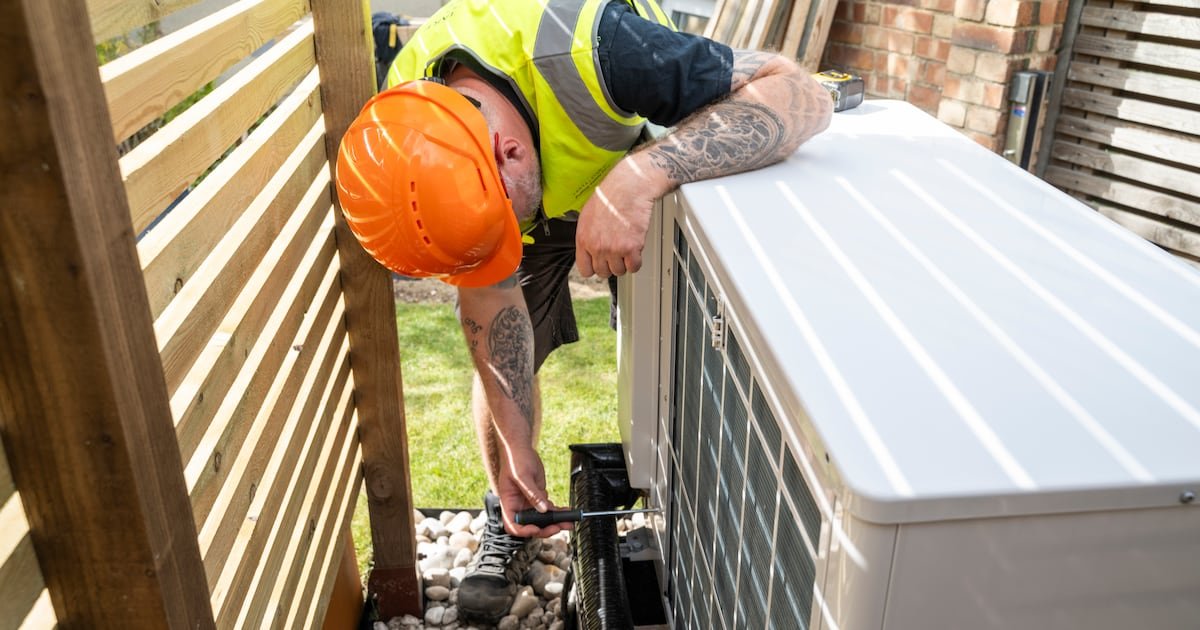
This was not covered by his house insurance, so he had to stump up the cost himself. To make things worse, his “ageing gas boiler” was on the way out too, so he sought advice from the SEAI and decided to replace the boiler with an Air-to-Water heat pump.
The good news was he qualified for a grant of up to €6,750.
“Getting information on how to apply and what would be granted financially from SEAI was relatively straightforward, and we enlisted someone from the SEAI list of registered contractors, along with our own contractor,” he says.
At the time, the SEAI had a qualification criteria for the heat pump grant “which meant that our home had to have a heat loss index (HLI) of 2.0 or better. When our assessment was conducted, our HLI was 2.11 – ie between 2.0 and 2.3. In cases where the HLI is between 2.0 and 2.3, it is also required to conduct remedial insulation works in the home to gain an improved HLI.”
So that is what Mick set about doing, even though it was neither easy nor cheap.
As well as the heat pump and the new heating system he paid for a full redecoration of his downstairs area, which was completed a week before Christmas 2024, although “considerable amount of the remedial works remained”, he writes.
That work was required to get the HLI to where it needed to be.
For six months this year, “in a staggered fashion”, lights and vents were replaced and better insulation was put in. “As you can imagine, this was a lengthy process,” he says. The final step before getting his grant money “was to get a post-works technical assessment and issue a declaration of works completion to the SEAI”.
Much to Mick’s surprise and frustration, the technical assessor told him that in January 2025, or less than 12 weeks after he started the process, the SEAI “changed the goalposts around their qualification criteria for HLI”.
The rule change meant that all applications automatically qualified for the grant (without the need for remedial works) if they achieved a HLI of lower than 2.3 rather than the previous cut-off point of 2.0. And – in case you have forgotten – his HLI was 2.1 before he got all the extra works done, so he could have got the grant without going to all the extra hassle and spending the extra money
“This was a real kick in the teeth, to be honest, but in fairness, the improvements ultimately led to an improvement in our home insulation and we were happy to see this as a worthwhile investment – notwithstanding the fact it came at a cost far beyond that we were prepared for,” he says.
Mick notes that due to the lack of availability of contractors and technical assessors over the summer period, “we proactively requested a six-week extension to the closing date on our grant, and this was not a problem to SEAI.
“The declaration of works was submitted to the SEAI on July 7th, 2025, and we made the incorrect assumption that we would soon be paid our outstanding grant money to finally recoup some of the outlay we needed to make,” he says.
After no initial response to his declaration, he “contacted the SEAI looking for updates on July 22nd. To my surprise, I was told a physical signature was missing, but there was a digital one on one of the technical submission pages that our contractor needed to sign. I thought this was a bit much to be honest and didn’t seem like it was appropriate to only be notifying me of this omission on July 22nd.”
But the situation was what it was, and the SEAI posted all the documents back to him the following day.
“On the 23rd July the fun (well horror) really begins. To my absolute astonishment, I noticed that the documents they returned to me included the details of another application, including their bank details. Furthermore, the three initial pages of my own application were missing. This instilled an immediate panic that someone in SEAI had not only sent me someone else’s details – maybe they sent my details to some other applicant. I immediately flagged this both on the phone and via email and requested an immediate escalation to their data protection officer, and some explanation of how this happened.”
[ The debate: Is a heat pump a good investment for your home?Opens in new window ]
He says that to the SEAI’s credit “and to be cynical about it, when it meant some issue for them, they responded promptly, and I got a phone call from someone who advised that he was an escalation manager calling on behalf of the SEAI and the data protection office of the SEAI. As well as reassuring me that none of my details were inadvertently shared with other applicants, they posted a registered post stamped addressed envelope to me to return the pages belonging to the other applicant.”
The SEAI person “concluded the call by confirming that our application would be ‘escalated for payment without delay as a result of this mishap’ and that I should expect a payment to happen on August 12th”.
The only caveat was that his property might be selected for an inspection, although he was assured this was “unlikely”.
August 12th was a Tuesday. However, on August 8th, a Friday, “at approximately 4pm, I received an unwelcome email from the SEAI advising me that our application would not be paid on the following Tuesday 12th August. Instead, our application was selected for a post-works inspection by their inspections team.”
Mick is annoyed he was told this just one working day before he had been told to expect his grant money.
In fact, he was “absolutely furious, as not only were we not getting paid on the 12th as suggested twice previously, we were only going to have our inspection on August 20th. Furthermore, our payment would not be happening on the 20th, (even if all was well) as it would instead be paid on the next payment run.”
[ Majority of people say cost is a barrier to retrofitting their home, survey findsOpens in new window ]
Mick was not told when that might be. “It was also very apparent that, due to cash flow issues and the clear expectation on our side that we would be receiving nearly €7,000 on August 12th, we were going to run out of cash ahead of the dreaded school return,” he writes.
He three children are in school so – as you might imagine – it is a costly time of the year for him. “We had no choice but to take out a bridging loan of €1,500 just to ensure we had enough money to pay for all of these expenses. It was a time of immense stress, and I took some time off work during late August and September as sick leave because of it.”
He says he made several phone calls and sent several emails to the SEAI disputing the reasons why they would withhold the payment just to carry out the inspection.
“Surely, I suggested, it would be more appropriate to reimburse the applicant who is carrying the financial burden while it conducts an exercise which is effectively only aimed at holding the contractors to account. During all of my calls and correspondence, I emphasised this point to them and pleaded with them to release the payment. I also stated very clearly that I had zero issues with the principle of a post-works inspection, and furthermore thought it was a good idea.”
On August 20th, the SEAI inspector visited “and highlighted something that they felt the contractor should have done that was enough to warrant a ‘reworks’. The issue being that a rotary switch was not installed for the ‘indoor unit’, whereas it was for the ‘outdoor unit’. This meant me needing to contact the contractor again to get his electrician out to retrofit the installation with the missing switch. Needless to say, the contractor was bemused by this, as the indoor unit had its own stand-alone distribution board within 1 metre of the indoor unit and was in and of itself an isolation point for the indoor unit. Nevertheless, the works were done, and some ‘reworks declaration’ paperwork was submitted.”
Mick says you might think that, “at this point, finally, everything could be put to bed, but this started a month of more stress! I got written confirmation from SEAI which paperwork needed to be signed and submitted, and arranged for the contractor to sign the exact form they requested, and it was duly passed to SEAI on September 9th.
He followed up with a phone call to confirm they had received it the following day, “and asked for the lead-time for payment. The individual I dealt with told me they couldn’t tell me the lead time as they didn’t know. On this basis, I formally requested an escalation and to speak to a manager. A manager ‘wasn’t available’ at the time but I was assured they would contact me back within a maximum of 48 hours.”
Mick allowed some time for the manager to call back “and by Monday, September 15th, when absolutely no one from SEAI had been in touch with me either by phone or email, I proactively called them again.
“Eventually, just after 3pm on September 15th, the escalations manager in the reworks team called me back with what I assumed would be an update on when I was to be paid. He proceeded to tell me that the update was that there was still an issue with our paperwork. I asked him when this was noticed and he admitted that it was only looked at by him or anyone just minutes before he called me. Again I was absolutely livid. I asked what was missing and he advised that it was ‘something between the contractor and SEAI that the contractor should know and they have not provided, so we need to contact the contractor and get this concluded. There’s nothing that you can do or have done wrong here’,” Mick was told.
“Yet again, I asked that we be paid our money and yet again I was told that couldn’t happen,” he says.
On the day Mick wrote to us, he said, he knew that “all of this administrative work is done and I’m assured that the paperwork was correct by [the authority] and that my application is with the payments team”.
He said he had been told that he would be paid on October 3rd, “almost one year to the day since the application was accepted.
“After this horrible experience, I would seriously question the general thinking that SEAI grants for home energy improvements are supposed to be for the benefit of the homeowner. Had I had the benefit of hindsight, I’m really not sure I would consider it a benefit that we decided to apply for a grant at all, and that’s a very sorry state of affairs for such a lauded scheme! The whole process has caused us an untold amount of stress and worry and left us in an extremely perilous financial position. Has it been worth it? I really don’t think so to be honest!”
He eventually did get his money, just under 11 months after the application was made.
We shared Mick’s experience with the SEAI and received a detailed statement in response.
A spokesman “noted [his] reported experience during his recent grant application and drawdown and that the experience did not meet his expectations.”
The statement said the SEAI was “happy to confirm that [he] received his full grant payment towards the end of September.
“SEAI endeavours to provide the highest level of customer service to all applicants, while ensuring all governance processes are fully adhered to. We process more than 55,000 grant applications per annum. It is vital that we maintain excellent governance in the administration of the schemes to protect homeowners, contractors, and taxpayers’ money, ensuring the best possible outcome for all. The administrative checks and inspections experienced by [Mick] are normal and essential components of that governance.
“Grant offers issued to homeowners remain valid for eight months from the date of the offer notice. This gives homeowners ample opportunity to complete renovation / retrofit projects of this type. In [Mick’s] case, we were happy to afford him a six-week extension to accommodate the delays he encountered in his project.
“The period for payment was within our normal service level commitment of 4-6 weeks from receipt of properly completed paperwork, except where we select the home for routine inspection, as was the case for [Mick].
“It is important to state that SEAI customer contact centre staff are not permitted to expedite, nor promise to expedite, grant payment beyond the normal processes.
“It is crucial that all works are completed in accordance with prescribed national standards, particularly as it relates to a significant electrical appliance such as a heat pump. It is vital therefore that any issues identified during [Mick’s] inspection be fully rectified for his benefit, irrespective of his contractor’s suggested bemusement.
“We keep our grant schemes under continuous review and sometimes adjust the eligibility terms or technical criteria as appropriate. The HLI change was one such change, specifically to make it easier for homeowners to qualify for the heat pump grant. [Mick’s] project happened to coincide with this scheme update, which has since benefited many homeowners.”