
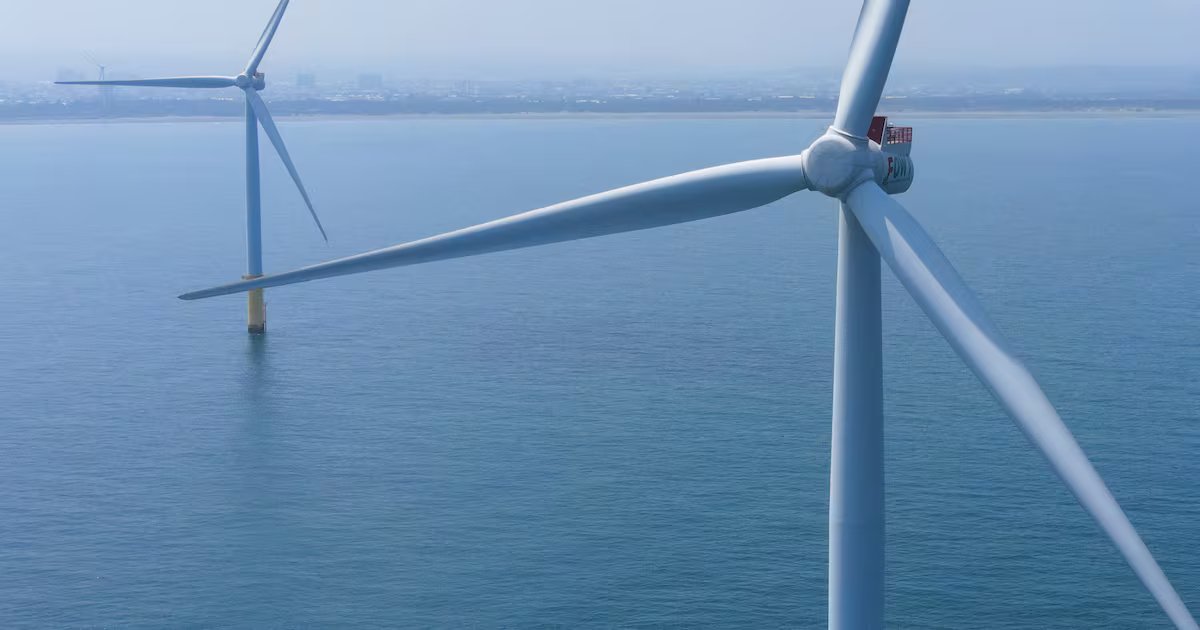
Ireland has signed up to a pan-European pact aimed at turning the North Sea into the world’s largest reservoir of clean, green energy.
Minister for Energy Darragh O’Brien, signed a declaration in Hamburg, Germany, following a high-level gathering on boosting co-operation and planning for offshore wind energy infrastructure.
He said Ireland was well located to benefit from the new plans to deliver wind energy at scale, and would benefit greatly from plans for greater co-ordination and planning of interconnectors to boost European energy sharing.
“These summits are critically important so that we can co-ordinate better in supply chain and planning,” said Mr O’Brien. “It is about the State partnering with the private sector to deliver clean, green renewable energy … and offshore is how we can take a massive step forward.”
Under the pact, the governments of Ireland, the UK, Belgium, Denmark, France, Germany, Iceland, Luxembourg, the Netherlands and Norway promise to collectively support private sector investments to build 5GW of offshore wind capacity every year between 2031 and 2040.
In Hamburg, more than 100 private sector wind energy companies signed up to a plan which its signatories say will reduce existing costs in the field and create 91,000 jobs. The long-term goal is up to 300GW of offshore wind capacity by 2050.

Old order ‘not coming back’ as Trump overshadows World Economic Forum
Germany’s economy Katherina Reiche said joint European planning and operation of wind energy grids could create “clean and affordable energy, strengthen our industrial base and [increase] Europe’s strategic sovereignty”.
The Hamburg gathering came as EU member states gave their final backing on Monday for a full ban on Russian gas imports by late 2027 in response to its ongoing war against Ukraine.
Experts have warned that, even with greater investment in renewables, European dependency on LNG gas from the US could rise from its current 27 per cent of the total to 40 per cent by 2030.
Last year, Ireland generated 40 per cent of its energy from renewables and aims to reach 80 per cent by 2030.
At the third North Sea summit, German chancellor Friedrich Merz agreed a plan with Denmark for a large joint venture near the Danish island of Bornholm.