
With UK households currently paying around 6.29p per kWh for gas and 26.35p per kWh for electricity, small losses in thermal efficiency can translate into hundreds of pounds a year in wasted energy, particularly in poorly performing homes.
Specialists are warning that a commonly overlooked roof issue could be quietly driving up heating demand and household energy bills.
While a well-maintained pitched roof should last 40-60 years and flat roofs around 20-30 years, experts say moss, algae and organic debris are significantly reducing roof lifespan and undermining insulation performance.
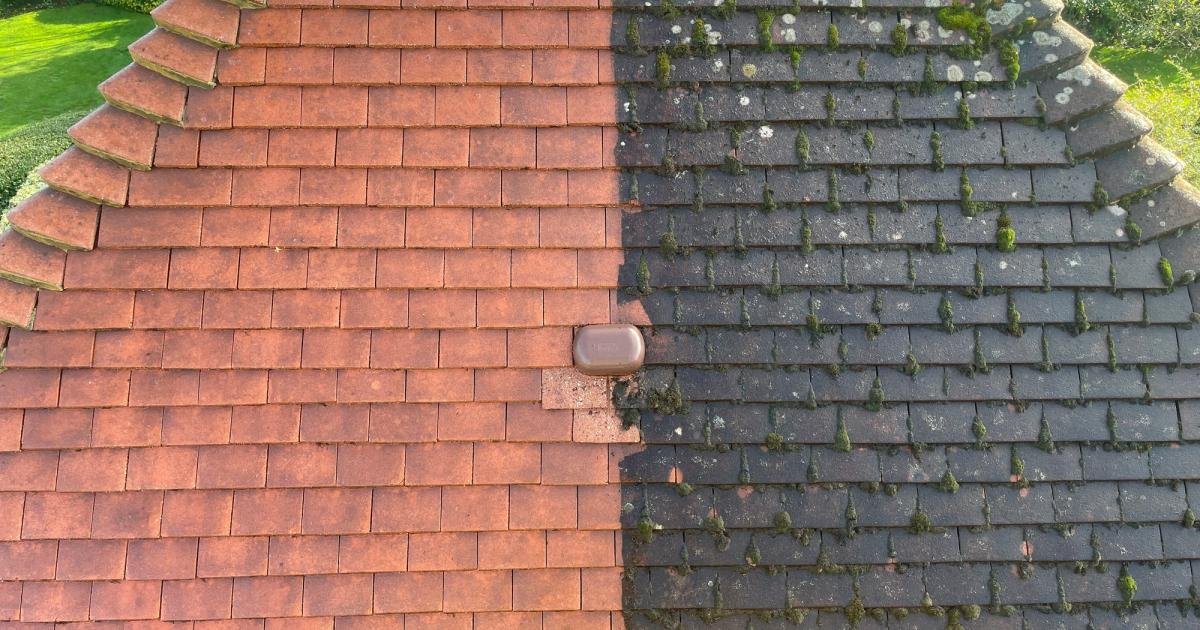
Often dismissed as cosmetic, moss acts like a sponge, holding moisture against roof tiles and structural components. Persistent damp reduces the effectiveness of loft insulation and increases heat transfer through the roof, one of the largest sources of heat loss in a home.
Energy assessors estimate that up to 25% of household heat is lost through the roof. If moisture reduces insulation performance by even 5-10%, a typical gas-heated home using 12,000 kWh of gas per year could waste 600-1,200 kWh annually.
This is equivalent to £45-£95 a year at current gas prices. For electrically heated homes, the cost impact is significantly higher.
Over the lifetime of the issue, that wasted energy also equates to hundreds of kilograms of avoidable CO₂ emissions per household.
Searches for “roof cleaning” have risen sharply, but specialists warn many homeowners unknowingly worsen the problem through delayed or improper maintenance, allowing moisture ingress and thermal degradation to accelerate.
Alex Essex, specialist at Patio Black Spot Removal Company, explains: “Small moss-related issues can escalate incredibly quickly. What starts as surface growth can compromise tiles, batons and insulation beneath. Once moisture penetrates the roof structure, heat loss increases and boilers or heat pumps have to work harder for longer.
“Early moss removal typically costs £150-£350, but once tiles crack or lift, repairs often exceed £1,000. If insulation becomes saturated or structural elements rot, homeowners may face a full roof replacement costing anywhere between £4,000 to £19,000, alongside years of inflated energy bills.”
By the time moss is visible from the ground, Alex warns, insulation performance may already be compromised, particularly in older housing stock that lacks modern moisture barriers.
Premature roof failure also carries a significant environmental footprint. Roof replacements require new materials, transport and disposal of old tiles, increasing embodied carbon that could be avoided through preventative maintenance.
Maintaining roof integrity not only reduces heating demand but can also protect property value.
Well-maintained roofs may add up to 5% to a home’s value, while helping households avoid unnecessary energy consumption over decades.
How roof moss directly impacts energy efficiency
- Moisture retention – Damp tiles conduct heat more readily, increasing heat loss
- Tile displacement – Lifted tiles allow cold air infiltration into insulation layers
- Frost damage – Freeze–thaw cycles crack tiles, creating thermal gaps
- Blocked gutters – Damp external walls reduce overall building thermal performance
- Shortened roof lifespan – Early replacement increases waste and embodied carbon
Alex adds: “Moss traps moisture, lifts tiles and accelerates rot. It can cut a roof’s lifespan in half. Once water reaches insulation, thermal performance drops sharply, energy use rises, and repair costs escalate from minor fixes to major structural work.”
Five steps homeowners can take to cut roof-related energy loss
- Inspect the roof annually – Check for moss, broken tiles, sagging or blocked gutters
- Remove moss early – Prevent moisture retention and insulation degradation
- Avoid pressure washing – This strips protective coatings and worsens thermal issues
- Keep gutters clear – Prevent damp walls and secondary heat loss
- Trim overhanging branches – Faster drying reduces moss growth and moisture exposure
Alex also cautions against DIY cleaning methods that can worsen both damage and energy efficiency: “Acid-based cleaners degrade clay tiles, wire brushes remove protective surfaces, and walking on roofs often cracks tiles. All of these create new pathways for moisture and heat loss.
“Using purpose-made moss treatments with professional methods provides long-term protection without compromising structural integrity or energy performance.”