
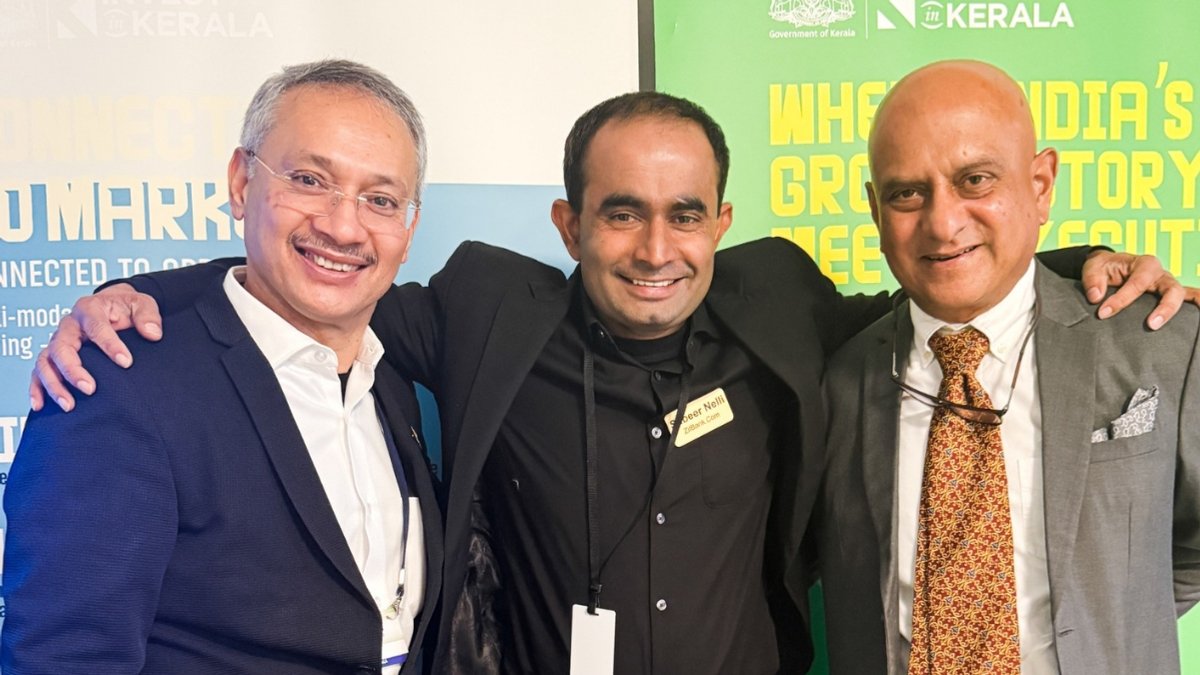
At the World Economic Forum Annual Meeting 2026, Zil Money CEO Sabeer Nelli engaged with global leaders to discuss the practical application of artificial intelligence and fintech. The focus remained on building resilient cross-border payment systems and digital infrastructure. Nelli emphasised that AI should serve as an extension of human oversight to support sustainable international business growth.
Partner Content
-Staff


The
fintech
CEO
engages
with
global
leaders
at
Davos
2026,
focusing
on
the
practical
role
of
AI
and
fintech
in
shaping
resilient,
cross-border
financial
systems.
The
second
day
of
the
World
Economic
Forum
Annual
Meeting
2026
in
Davos
unfolded
with
a
sharper
focus
on
artificial
intelligence,
digital
infrastructure,
and
the
evolving
architecture
of
global
finance.
As
policymakers
and
business
leaders
examined
how
technology
is
reshaping
economies
under
geopolitical
and
trade
pressures,
Sabeer
Nelli,
Founder
and
CEO
of
Zil
Money,
spent
the
day
engaged
in
conversations
closely
aligned
with
his
long-standing
work
in
payment
infrastructure
and
financial
accessibility.
Rather
than
headline-driven
announcements,
Day
2
at
Davos
centered
on
operational
questions:
how
artificial
intelligence
transitions
from
experimentation
to
deployment,
how
fintech
platforms
support
businesses
amid
uncertainty,
and
how
digital
systems
remain
resilient
as
global
trade
dynamics
continue
to
shift.
For
Sabeer,
these
discussions
reflected
challenges
he
has
navigated
for
years
while
building
payment
systems
used
by
small
and
midsize
businesses
across
the
United
States
and
international
markets.
At
the
World
Economic
Forum
Annual
Meeting
2026,
Zil
Money
CEO
Sabeer
Nelli
engaged
with
global
leaders
to
discuss
the
practical
application
of
artificial
intelligence
and
fintech.
The
focus
remained
on
building
resilient
cross-border
payment
systems
and
digital
infrastructure.
Nelli
emphasised
that
AI
should
serve
as
an
extension
of
human
oversight
to
support
sustainable
international
business
growth.
AI
Beyond
Hype:
From
Policy
Conversations
to
Business
Reality
Artificial
intelligence
dominated
the
technology
agenda,
with
leaders
emphasizing
execution
over
theory.
Panel
discussions
consistently
highlighted
that
AI’s
long-term
value
will
not
stem
from
abstract
models,
but
from
its
ability
to
reduce
friction,
anticipate
risk,
and
improve
decision-making
within
real
business
workflows.
This
perspective
aligns
closely
with
Sabeer’s
approach
to
AI
within
fintech.
Rather
than
positioning
AI
as
disruption
for
its
own
sake,
his
focus
has
remained
on
applied
intelligence.
At
Zil
Money,
AI
is
treated
as
infrastructure
–
embedded
directly
into
everyday
financial
workflows
–
rather
than
as
a
standalone
feature.
Discussions
at
Davos
around
AI
and
labor
disruption
also
resonated
strongly.
Policymakers
cautioned
that
automation
is
more
likely
to
reshape
roles
than
eliminate
the
need
for
human
judgment.
Sabeer
has
consistently
echoed
this
view,
emphasizing
that
AI
should
function
as
an
extension
of
human
oversight
in
financial
systems,
not
a
replacement
–
particularly
in
environments
where
compliance,
trust,
and
accountability
are
critical.
Engaging
with
Global
Business
Leaders
and
Policy
Voices
On
the
sidelines
of
the
forum,
Sabeer
Nelli
engaged
with
senior
diplomats
and
business
leaders
involved
in
shaping
international
economic
cooperation.
He
met
H.E.
Mridul
Kumar,
Ambassador
of
India
to
Switzerland
and
Liechtenstein,
for
a
focused
exchange
on
strengthening
India–Switzerland
economic
ties,
innovation
in
cross-border
payments,
and
the
role
of
compliant
fintech
infrastructure
in
enabling
Indian
entrepreneurs
and
global
SMEs
to
collaborate
more
effectively
across
Europe.
The
discussions
also
extended
to
industry
and
strategic
leaders,
including
Joseph
Michael
Kallivayalil,
Vice
Chairman
of
the
CII
Kerala
State
Council
and
Managing
Director
of
Glenrock
Rubber
Products
Pvt
Ltd.
Additional
conversations
included
Anoop
Dhingra,
Counsellor
(Minister
Commerce/Economy)
at
the
Embassy
of
India
in
Switzerland;
Binoay
B,
Chief
Strategist
at
CANEUS
International
and
former
Senior
Vice
President
at
Aditya
Birla
Group;
Yogesh
Tambade,
Chartered
Accountant
and
strategic
advisor;
and
VKC
Razak,
Managing
Director
of
VKC
Group.
Collectively,
these
exchanges
underscored
a
shared
emphasis
on
collaboration
between
policymakers,
industry
leaders,
and
financial
infrastructure
providers
to
support
sustainable,
compliant
cross-border
business
growth.
A
Day
of
Alignment,
Not
Announcements
Sabeer
Nelli’s
Day
2
at
Davos
wasn’t
about
stage
appearances
or
headline
announcements.
It
was
about
aligning
global
policy
conversations
with
the
practical
realities
that
businesses
face
daily.
For
Sabeer,
AI
as
a
tool
for
clarity,
fintech
as
foundational
infrastructure,
and
regional
innovation
as
a
global
strategy
are
not
abstract
concepts
but
extensions
of
work
already
in
progress.
As
the
discussions
unfolded,
it
became
clear
that
technology
and
finance
are
no
longer
parallel
domains
–
they
are
interdependent
systems
reshaping
economies.
For
fintech
leaders
like
Sabeer,
the
focus
at
Davos
wasn’t
on
visibility,
but
on
ensuring
global
decision-making
stays
grounded
in
operational
reality.
In
a
forum
defined
by
ambitious
ideas,
Day
2
quietly
underscored
a
crucial
truth:
progress
is
driven
by
execution.