
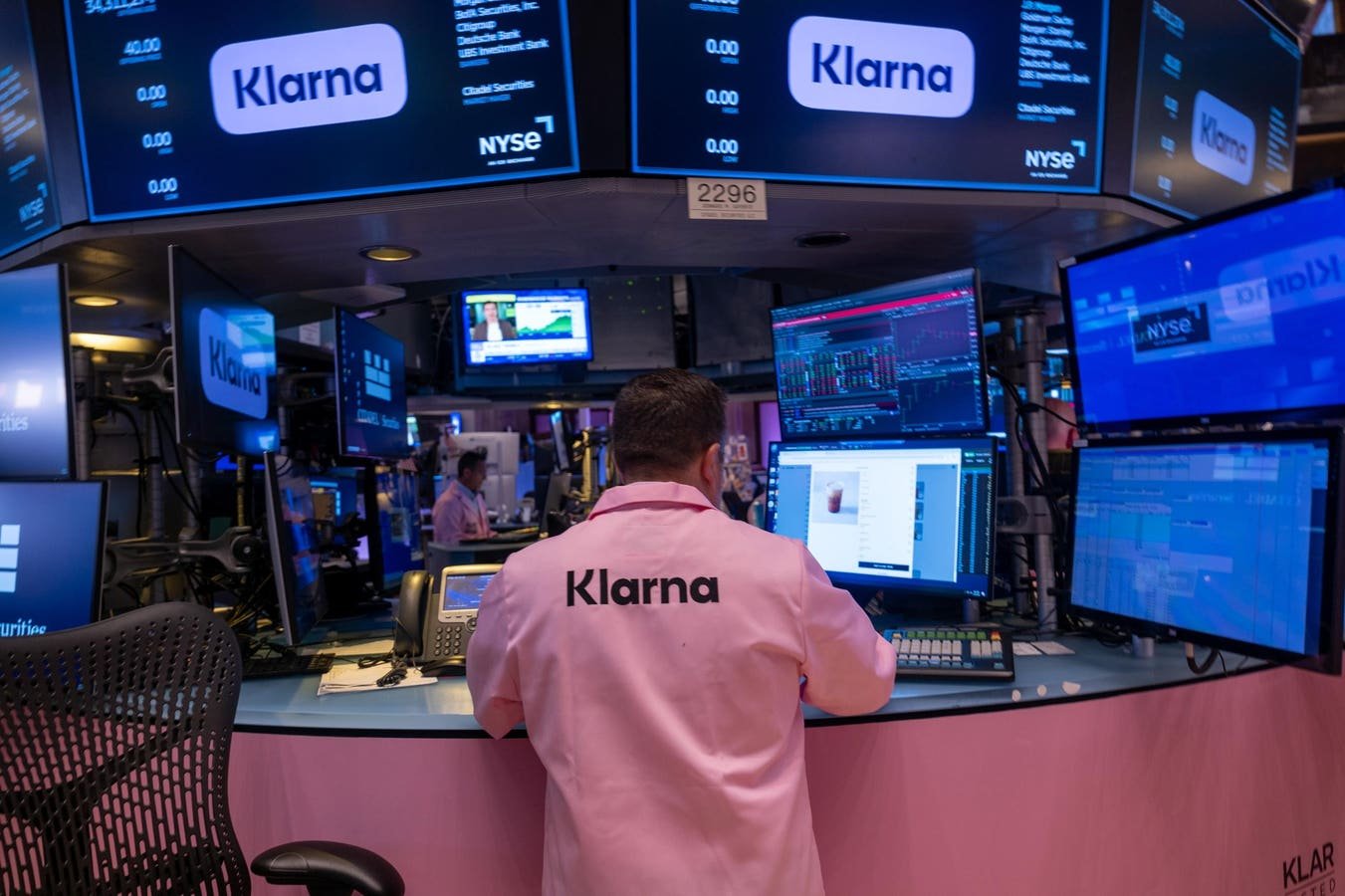
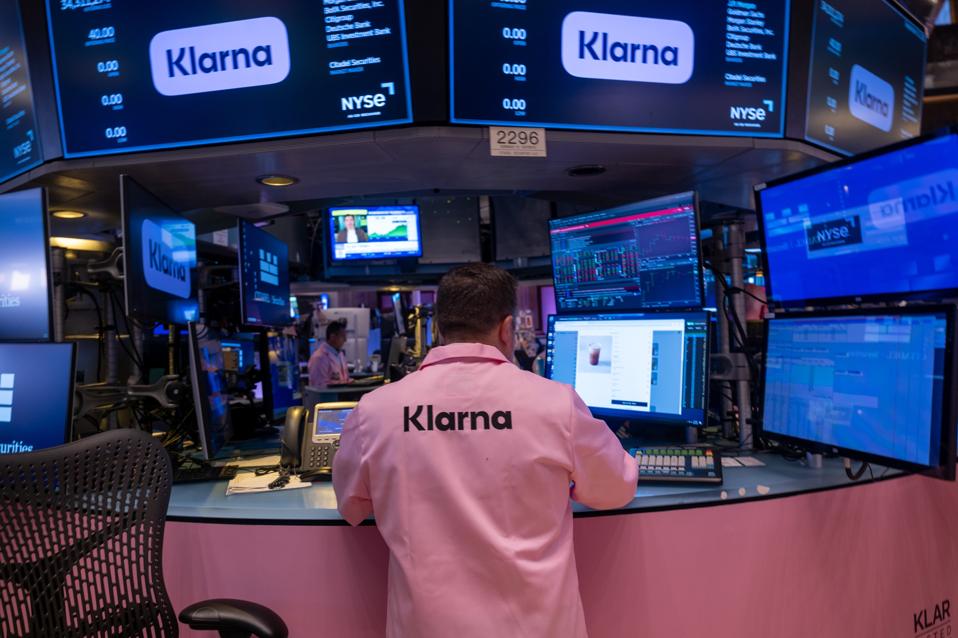
NEW YORK, NEW YORK – SEPTEMBER 10: Traders on the floor prepare for the initial public offering (IPO) of the online lender Klarna at the New York Stock Exchange (NYSE) on September 10, 2025 in New York City.
Getty Images
Stockholm-based Klarna was once among the world’s most valuable fintechs, peaking at a $45.6 billion valuation amid the 2021 buy now, pay later euphoria. By mid-2022, sentiment flipped. Klarna raised $800 million at a $6.7 billion valuation as rising rates, inflation, and regulatory scrutiny tightened the screws on growth-at-all-costs models.
The fall forced a reset on fintech’s boom. Over the next two years, Klarna cut costs, tightened underwriting, reduced headcount, and reoriented towards profitability, showing multiple consecutive quarters of adjusted operating profit and its first annual net profit in 2024.
On September 10, 2025, Klarna listed on the New York Stock Exchange under ticker KLAR, pricing at $40 per share (about $15.1 billion valuation) and raising $1.37 billion. Shares climbed to around $52 (+30%), traded as high as $57.20 (+43%) and closed the day at $45.82 (+15%). The next IPOs will re-rate on spread to SOFR, advance rates, and static pool performance. In the meantime, the market will watch funding spread volatility, non-recourse share of receivables, ABS receptivity, and vintage loss curves.
Why Klarna’s IPO Worked
Valuation ultimately tracks the cost and durability of capital. Anyone can model risk, but few can finance it cheaply and consistently through cycles. Klarna’s return to market was about proving diversified, stable funding (i.e. warehouse lines, ABS, bank partners) against tightened credit standards. Pricing shares at $40 kept expectations realistic. After years of inflated private-market multiples, this restraint was a welcomed change.
Proof of operating progress. Heading into the listing, Klarna reported consecutive quarters of adjusted operating profitability, signaling a more durable model, even as headline net results continue to remain choppy in 2025.
Investor demand. After a long “fintech winter”, a credible story plus conservative pricing drew demand and led to a solid first-day close.
What Klarna’s Success Signals For The Next Wave Of Fintech IPOs
Klarna’s debut is a workable blueprint for peers like Stripe, Chime, and Plaid: balance growth with risk controls and tangible profit metrics. Public markets are again rewarding crisp underwriting, cleaner unit economics, and a credible path to sustainable earnings. The era of sky-high pandemic multiples are out; pragmatic comps are in.
That’s a sharp contrast to earlier listings. Affirm, which went public in 2021 as AFRM, has traded through sharp cycles tied to consumer credit. Publicly traded fintechs like Block (Afterpay), and Paypal have also labored to refine their narratives amid BNPL, wallets and merchant services converging. Klarna’s measured entry suggests a reset in how fintechs should tell and price their stories.
Regulatory Risks Still Define Fintech Markets
The billion dollar word — regulation. BNPL oversight remains fluid. In the U.S., the current Consumer Financial Protection Bureau has adjusted its approach since 2024’s interpretive rule, while Europe’s tougher Consumer Credit Directive will capture BNPL broadly. Translation: compliance burdens are rising, even if the U.S. is soft-pedaling near-term enforcement.
Competition is not slowing down. Affirm and PayPal remain aggressive, and banks are embedding installments at checkout. Apple has shut down Apple Pay Later and shifted to offering installments via card issues and lenders inside Apple Pay, still a competitive distribution channel for BNPL-style financiers.
Klarna is still rebuilding trust on service quality. After touting that its AI chatbot could replace 700 support roles, the company has moved to ensure its customers can talk to humans again. An important reminder that consumer fintech lives or dies on experience.
For founders and investors, Klarna’s journey — the rise, fall, recalibration, and eventual rebound — shows the IPO window isn’t closed, but just selective. Valuations have to meet the market and profitability (even adjusted) must go beyond slides in the deck. The industry may never again see the ebullience of 2021, but if Klarna is a tell, the next wave of listings will be built on sturdier footing, with disciplined pricing, cleaner credit, and clearer operating leverage.