

CEO says success behind the multi-utility model is due to a single team that is able to respond across all four utilities.
Article content
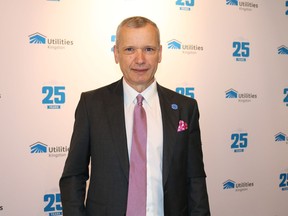
Utilities Kingston on Wednesday marked a quarter century of providing residents with electricity, water, wastewater, natural gas and fibre.
Advertisement 2

Article content
The multi-utility model adopted in 2000 is not only unique in Ontario but across Canada as well.
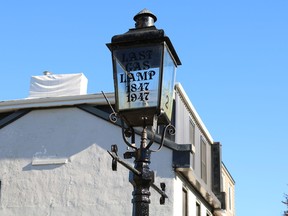
The multi-utility approach has grown from a long legacy dating back to the 1800s when gas first lit Kingston’s streets and the Water Works Company began supplying safe drinking water. It was first adopted when the province decided that utilities such as electricity needed to be run independently by municipalities.
According to David Fell, the president and chief executive officer of Utilities Kingston, that prompted the city to make a bold decision on what that restructuring would look like.
“The city of Kingston made a different decision than many other cities and they actually put together the multi-utility model. So not just electricity, but gas water, wastewater and eventually fibre,” said Fell. “There are a number of multi-utility models that have electricity and water. Some of them have water and wastewater, but none of them have electricity, gas, water, wastewater and fibre.”
Article content
Advertisement 3
Article content
Fell said the success behind the multi-utility model is due to a single team that is able to respond across all four utilities.
“For example, for our customers, they get one bill. Then if there’s an emergency, a weather emergency or something and we have outages, we have staff that can be redeployed to work on whatever one of the utilities that is most in need of support at that time,” Fell said.
Over the years, Fell said, Utilities Kingston has changed a lot and evolved in the sense that the industry is becoming more technical due to the younger generation of employees.
“They are more tech savvy, and the utilities are not just pipes, poles and wires. They’re actually support for economic development for the community as well,” said Fell.
Advertisement 4
Article content
While Utilities Kingston has only been around for 25 years, Fell said there are pipes underground that are more than 100 years old. While some will need replacing over time, there are some that continue to work really well.
“In our King Street Water Station, we actually have pumps in the station that are from the 1940s and the cast on the pumps is several inches thick. Those pumps work fantastically. There’s no point replacing them,” said Fell.
With Kingston aiming to build 8,000 new homes by 2031, Fell said Utilities Kingston is in the midst of creating a new wastewater masterplan. He said it involves making sure there will be enough electricity and gas for the new areas of intensification.
“There’s lots of planning and lots of collaboration with our partners at the city,” said Fell, who continued to speak about the completion of a major upgrade to the Cataraqui Bay Wastewater Treatment Facility a couple of years ago, along with the project along Front Road.
Advertisement 5
Article content
“The planning for it began in 2013. The current project will probably wrap up by the middle of next year in 2026 and then we will start another phase of that, twinning our water treatment plants and re-directing some of the sewage out to Cataraqui Bay,” said Fell, referring to a multimillion-dollar project that will take years to complete but will result in taking sewage from the downtown core and bringing it to Cataraqui Bay Wastewater Treatment Facility rather than Ravensview Wastewater Treatment facility, which is further away.
It will also be more efficient and allow for more capacity for the downtown core.
Utilities Kingston is also working to support Kingston’s vision for a carbon-neutral community by 2024, having created the Utilities Kingston’s Climate Action Leadership Plan, which includes conservation and anticipating the impact of climate change.
Advertisement 6
Article content
The four strategic pillars include reducing operational greenhouse gas emissions, supporting climate action, exploring low-carbon business ventures and climate-informed planning.
According to Kingston Mayor Bryan Paterson, who is also the chair of the Kingston Hydro board, the success of Utilities Kingston over the years comes down to those who help keep it going.
“Let’s face it. What really makes it special is the people. We have tremendous people at Utilities Kingston over the years. Tremendous leadership with our former CEO Jim Keech and of course our current CEO David Fell. Amazing leaders, managers, directors, people around the board table but also the front-line employees who are out there every day making sure the services are reliable, making sure we are innovative. Creating solutions for everyone in our community,” remarked Paterson with a sense of pride.
Today, there are nearly 300 employees working across Utilities Kingston’s multi-utility model.
Mkulchar@postmedia.com
Article content