
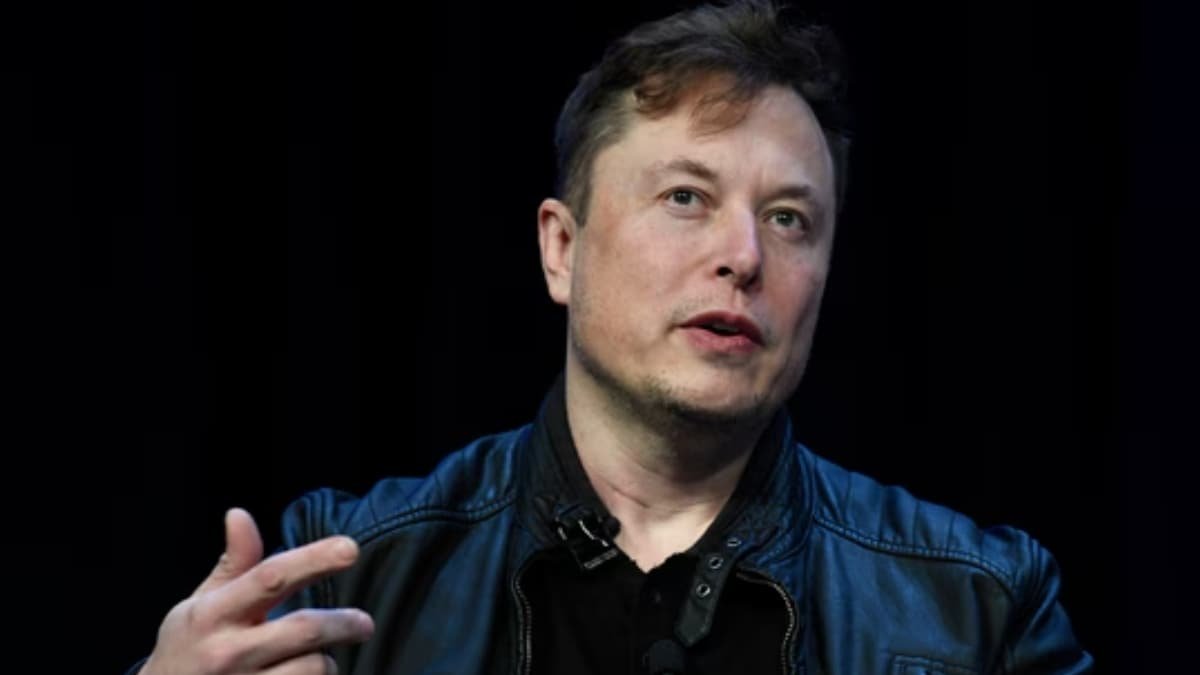
In a recent interview with Elon Musk, who is the CEO at Tesla, X, SpaceX, and Neuralink, has made a bold prediction about AI. After overseeing the release of Grok-4 a while ago as xAI’s most powerful AI model, Musk now says that artificial intelligence chatbots are on the way to becoming more intelligent than a single human at anything by next year, i.e., by 2026.
The statement, which Musk made in the ‘All-In’ podcast, suggests that his team at xAI is on the way to releasing a more powerful version of Grok chatbot by next year, with a move towards Agentic AI. Elon Musk even went on to say that by 2030, AI will be as intelligent, if not smarter, than the sum of all humans. That’s saying something!

Elon Musk says AI to be smarter than you by 2026
Musk believes that prowess in AI will to such an extent that it will be smarter than any average human being by 2026. As the head of xAI, Musk has a better point of view on all things AI, considering he is involved with the teams working on the next major version of Grok. Grok’s current version has already proven its capabilities in creative work, and with the next iteration, xAI’s Grok could include more agentic functions to make life a tad easier.
Does the idea of AI being smarter than you next year make you worried? Are you worried that AI will claim more jobs next year? Fret not, as Musk has been known to make bold claims with aggressive timelines that are full of optimism and skepticism.
However, the pace at which tech firms are working on AI can lead to achieving artificial general intelligence (AGI) in the near future.
Will Grok-4 lead the way to AGI?
At the moment, Musk’s hopes seemed to be pinned on Grok-4 – xAI’s latest AI model. Grok 4 focuses on first-principles reasoning, leading to more logical and accurate responses while claiming a notable reduction in hallucinations than the previous model. The model is available in two variants – a standard single-agent version for day-to-day tasks and a more powerful multi-agent architecture called Grok 4 Heavy.
Grok-4 boasts a massive 130,000-token context window, allowing it to handle and remember a vast amount of information in a single conversation. In addition to text, the model also supports vision and image generation, thus making it multimodal.