
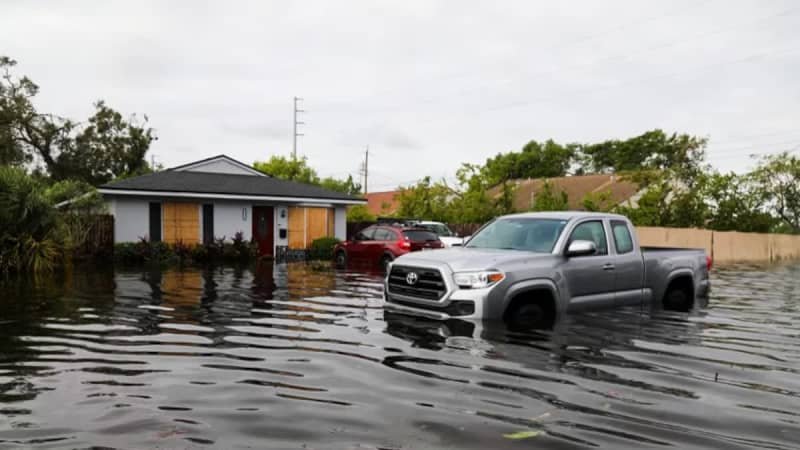
Dangerous flooding has damaged neighborhoods in almost every state in 2025, leaving homes a muddy mess. In several hard-hit areas, it wasn’t the first time homeowners found themselves tearing out wet wallboard and piling waterlogged carpet by the curb.

Wanting to rebuild after flooding is a common response. But for some people, the best way to stay in their community, adapt to the changing climate and recover from disasters is to do what humans have done for millennia: move.

Researchers expect millions of Americans to relocate from properties facing increasing risks of flood, fire and other kinds of disasters in the years ahead.
What people do with those high-risk properties can make their community more resilient or leave it vulnerable to more damage in future storms.
We study flood resilience and have been mapping the results of government buyout programs across the U.S. that purchase damaged homes after disasters to turn them into open space.
Our new national maps of who relocates and where they go after a flood shows that most Americans who move from buyout areas stay local. However, we also found that the majority of them give up their home to someone else, either selling it or leaving a rental home, rather than taking a government buyout offer. That transfers the risk to a new resident, leaving the community still facing future costly risks.
Government buyout programs can help communities recover after disasters by purchasing high-risk homes and demolishing them. The parcel is then converted to a natural flood plain, park or site for new infrastructure to mitigate future flood damage for nearby areas.
The Federal Emergency Management Agency (FEMA) has been funding such efforts for decades through its property buyout program. It has invested nearly $4 billion to purchase and raze approximately 45,000 flood-prone homes nationwide, most of them since 2001.
Those investments pay off: Research shows the program avoids an estimated $4 to $6 in future disaster recovery spending for every $1 invested. In return, homeowners receive a predisaster price for their home, minus any money they might receive from a related flood insurance payout on the property.
But this assistance is now in jeopardy as the Trump administration cuts FEMA staff and funding and the president talks about dismantling the agency. From March to September, governors submitted 42 applications for funding from FEMA’s Hazard Mitigation Grant Program, which includes buyouts — all were denied or left pending as of mid-September.
Our recommendation after studying this program is to mend it, not end it. If done right, buyouts can help maintain local ties and help communities build more sustainable futures together.
Our team at Rice University’s Center for Coastal Futures and Adaptive Resilience developed an interactive mapping tool to show where buyout participants and neighbors living within a half-mile of them moved after FEMA initiates a buyout program in their area.
The maps were created using individual data, down to the address level, from 2007 to 2017, across more than 550 counties where FEMA’s buyout program operated nationally.
Zoomed out, they show just how many places the program has helped across the U.S., from coastal cities to inland towns. And, when zoomed in, they reveal the buyout locations and destinations of more than 70,000 residents who moved following FEMA-funded buyouts in their area.
The maps also show which people relocated by accepting a federal buyout and which ones relocated on their own. Nationwide, we see the vast majority of movers, about 14 out of every 15, are not participants in the federal buyout program. They are neighbors who relocated through conventional real estate transactions.
This distinction matters, because it implies that most Americans are retreating from climate-stressed areas by transferring their home’s risk to someone else, not by accepting buyouts that would take the property out of circulation.
Selling may be good for homeowners who can find buyers, but it doesn’t make the community more resilient.
Our interactive map offers some good news and insights for buyout programs going forward.
Regardless of how they occur, we find that moves from buyout areas average just 5 to 10 miles from old to new home. This means most people are maintaining local ties, even as they relocate to adapt to rising climate risks.
Nearly all of the moves also end in safer homes with minimal to minor risk of future flooding. We checked using address-level flood factors from the First Street Foundation, a nonprofit source of flood risk ratings that are now integrated into some online real estate websites.
But many homes in risky areas are still being resold or rented to new residents, leaving communities facing a game of climate roulette.
How long that can continue will vary by neighborhood. Rising insurance costs, intensifying storms and growing awareness of flood risks are already dampening home sales in some communities — and thus opportunities to simply hand over one’s risk to someone else and move on.
The U.S. can create safer communities by expanding federal, state and local voluntary buyout programs. These programs allow communities to reduce future flood damage and collectively plan for safer uses of the vacated lands that emerge.
Giving residents longer periods of time to participate after the damage could also help make the programs more attractive. This would provide property owners more flexibility in deciding when to sell and demolish their property, while still taking risky property off the market rather than handing the risk to new residents.
James R. Elliott is a professor of sociology, and Debolina Banerjee is a research analyst at the Kinder Institute for Urban Research, both at Rice University.
This article is republished from The Conversation under a Creative Commons license. Read the original article.