
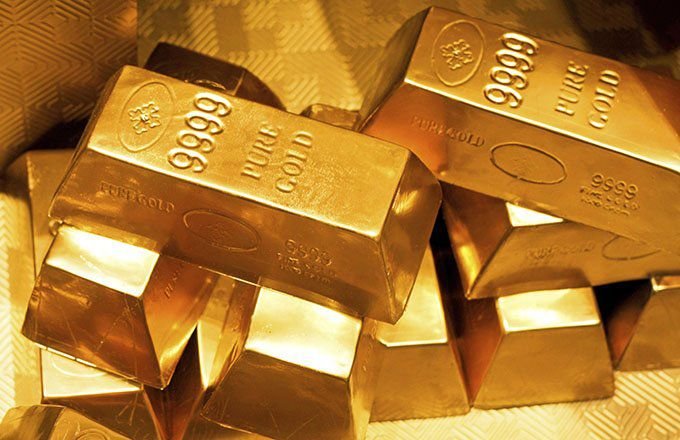
Gold has a long history as a store of value and is often viewed as a safe haven during economic uncertainty, which helps explain its enduring appeal. But that reputation also contributes to sharp price swings, since gold reacts to shifts in supply and demand, investor sentiment, and broader influences like central bank policy or inflation expectations.
Its price has moved dramatically at various points in history, reminding investors that even a centuries-old asset can rise or fall quickly in the short term.
Key Takeaways
- Gold prices are influenced by supply and demand, with excess production leading to price drops.
- Speculation and shifts in investor sentiment can cause rapid price fluctuations in gold.
- A strong dollar and rising interest rates can negatively impact gold prices.
- Improvements in mining technology can increase the supply of gold by making mining more efficient.
- Gold serves as a hedge against inflation but is not immune to market conditions and economic shifts.
How Supply and Demand Affect Gold Prices
A permanent bull market for gold is impossible. If the price of gold had risen consistently and measurably in value since the days of Tutankhamun, its price would now be infinite. The metal’s price clearly rises and falls, so what makes one day’s supply and demand intersect at one price, then the next day at another?
Impact of Supply Increases on Gold Prices
The supply of gold is largely static from one period to the next. Gold mines are large and plentiful, but almost the entirety of what they produce is wasted. As technology improves, ore with lower concentrations of gold becomes more economically feasible to mine. Discard all the billions of tons of worthless ground rock, and it has been estimated that all the gold discovered thus far would fit in a cube that is 23 meters wide on every side.
As a long-standing commodity, gold is not a security for the speculative. No one, or at least no one sane, buys physical gold in the hope that it will sextuple in value over the next year. Instead, buying gold is a defensive measure: a guard against inflation, currency devaluation, the failure of less tangible assets, and other woes.
Unlike many other commodities—light sweet crude oil, ethanol, cotton—precious metals differ in that, for the most part, they are not consumed. Less than 10% of gold is mined for technology/industrial purposes (e.g., rheumatoid arthritis drugs and dental bridges), leaving the rest to be held and later sold at the buyer’s will, whether in bullion, coin, or jewelry form. Fundamentally, the total supply of gold is more or less static.
Important
It is worth noting that gold mining comes with environmental costs. As technology improves, more environmentally friendly ways of extracting gold (such as using bacteria to mine) can be adopted. These methods reduce the environmental footprint of more traditional methods.
How Market Conditions Influence Gold Prices
Speculation is one reason for changes in gold prices. Investors speculate as to what governments and central banks are going to do and then act accordingly. Gold prices dropped when the Federal Reserve announced in 2014 that it was wrapping up its stimulus program after the financial crisis of 2008.
That announcement, coupled with the preternaturally low inflation rates of the time, rendered gold’s role as a hedge against rising price levels moot. Throw a red-hot stock market into the mix, and the temptation for increasing returns contrasted with maintaining one’s store of value becomes too great. Why sit on the sidelines with an inert shiny metal when other investors are getting at least temporarily rich?
In the late 1990s, gold was hovering in the $360 range. That’s per ounce, not per milligram. People who have been shrewd and patient enough to hold onto their gold stashes throughout terrorism, war, prolonged recession(s), and other assorted global upheaval are justifiably proud—and probably still not selling—particularly when you consider that worldwide economic and political distress are often the norm, not the exception.
What are the main reasons why gold prices may experience a fall in value?
The reasons why gold prices may experience a fall in value include an excess of supply relative to demand and shifts in investor sentiment. A strong dollar and rising interest rates can also hurt the price of gold, as can low inflation. When the economy is healthy and growing, stocks and other investments may become more appealing to investors, who may sell their gold holdings, which can lead to a fall in gold prices.
Can gold prices continue to rise forever?
Probably not, but it may continue to trend upward over the long run, interrupted by pullbacks and bear markets. It’s important to note that gold prices have historically been volatile and have fluctuated quite a bit over time. The price of gold, like any other commodity, is subject to the laws of supply and demand. When the supply of gold is low and demand is high, the price will rise. Conversely, when the supply of gold is high and demand is low, the price will fall. Additionally, other factors like interest rates, inflation, currency value, geopolitical events, and economic conditions can have an impact on gold prices.
What is the role of mining technology in the supply of gold?
Improvements in mining technology can affect the supply of gold by making it more economically feasible to mine lower-grade ore with lower concentrations of gold, thus increasing its supply. As mining technology improves, it becomes possible to extract gold from previously uneconomical deposits. Also, technological advances can improve the efficiency of existing mines, which can lead to increased production of gold.
For example, cyanide leaching, heap leaching, and bioleaching are some of the technologies that have been used to extract gold from low-grade ore. These technologies can extract gold more efficiently and at a lower cost than traditional mining methods.
What is the main use for gold?
While a small proportion of gold is used for industrial purposes or in electronics, the majority of the stuff is held and later sold for uses such as bullion, coins, or jewelry.
The Bottom Line
Gold is widely seen as a safe haven and hedge against inflation, but its price still rises and falls with supply, demand, and shifts in investor sentiment. Overproduction can push prices lower, while changes in confidence or speculation can cause quick moves.
Though less volatile than many assets, gold’s price still reflects expectations about inflation, currencies, and market conditions, so it’s best viewed as one part of a broader strategy rather than an untouchable measure of wealth.