
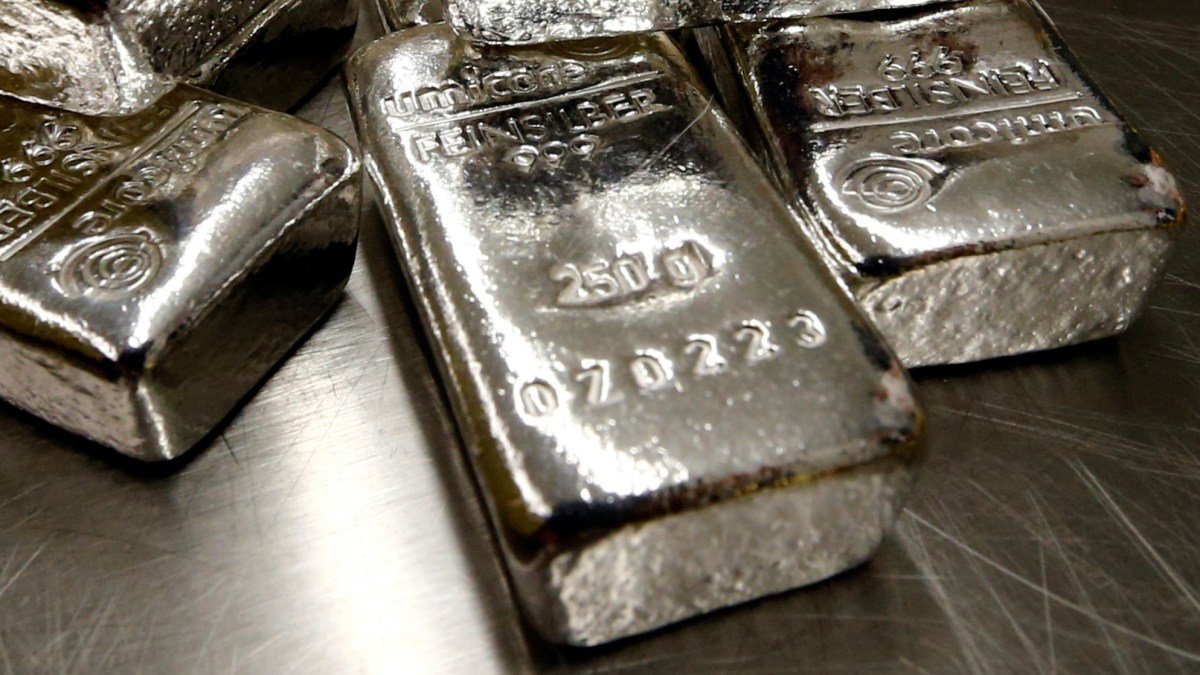
Prices have risen particularly steeply over the past couple of years, according to experts
Silver prices hit their highest level in 14 years on Friday, reaching $40 (£29.60) per ounce – a price not seen since 2011.
According to the Royal Mint, the price of silver has risen by an average of 10.82 per cent a year since 1999. If you had invested £1,000 into silver five years ago, it would be worth £1,540 today.
But prices have risen particularly steeply over the past couple of years.
It follows a recent surge in gold prices, which are currently sitting close to their all-time peak of just over $3,400 (£2,513) per ounce.
Prem Raja, head of trading floor at Currencies 4 U, said the main factors pushing up prices of silver are a sudden increase in demand, coupled with limited supply, and the price of gold rising.
He said: “There are several reasons why silver has gained momentum over the last year, including a supply deficit, huge demand from an industrial and technological perspective, and, most importantly, the rally in gold.
“Typically, investors buy silver once gold has risen as a beta, and recently, we have seen gold fall while silver surges, so this remains true.”

While gold prices are considerably higher than silver, experts say that silver is gaining traction as a ‘safe haven’ asset that has more uses than gold and is more affordable.
Chris Beauchamp, chief market analyst at IG, explained: “Traders often refer to silver as ‘poor man’s gold’, reflecting its traditionally lower price point, while offering similar diversification and safe-haven benefits.
“When gold prices rise substantially, silver typically follows, often with amplified percentage gains due to its smaller market size and greater price volatility.
“Investors seeking exposure to precious metals but deterred by gold’s high price point have increasingly turned to silver trading, providing additional price support.”
Anita Wright, chartered financial planner at Ribble Wealth Management, added that there are several geopolitical and economic factors at play this year that are driving investors towards silver.
She said: “The wider backdrop is also helpful. Stock markets look fragile beneath the surface, the Fed is shifting towards rate cuts, the dollar is weakening, and long-dated bonds remain unstable. In past cycles, that mix has pushed money towards metals.”
Mr Beauchamp added: “The continuing appeal of silver as a safe-haven asset has been bolstered by persistent geopolitical tensions and economic uncertainties throughout 2025.
“In times of market stress, investors typically increase their allocations to precious metals as a hedge against currency devaluation and financial market turbulence.
“Silver’s dual role as both a precious and industrial metal gives it unique characteristics as a safe-haven asset. Investors seeking to diversify their portfolios against inflation risks and currency depreciation have found silver trading increasingly attractive.”
Will silver prices keep rising – and should you invest?
While no one can know for certain whether prices will keep rising, experts believe that the direction of travel will continue, as demand is expected to continue to outstrip supply in the short-term.
Ms Wright said: “Near-term supply looks tight. The spot price briefly rose above near-dated futures – a flip that signals immediate scarcity.
“The next real test is the $50 (£37) area (last seen in 1980 and 2011). If that level breaks, a reasonable target for this cycle is $60 (£44) – $70 (£51) before year-end, with silver likely to outpace gold in percentage terms.”
Mr Beauchamp said other factors to watch that could influence silver prices include inflation data, Fed interest rate decisions and the strength or weakness of the US dollar.
“The precious metal’s rally has developed steadily throughout the year, with several pushes higher followed by periods of consolidation,” he said.
“This pattern suggests sustainable momentum rather than speculative excess, potentially indicating further upside if current supportive factors remain in place.”
He added: “Inflation data will continue to influence silver’s appeal as an inflation hedge. If inflation proves more persistent than expected, this could enhance silver’s attractiveness and potentially drive further price gains as investors seek to protect purchasing power.”
If you are interested in investing in silver, Ms Wright said there are a number of ways to do so, but the most accessible way for most people would be to invest in an exchange-traded fund (ETF) that tracks the price of silver.
“ETFs tend to be the cheapest way to invest in silver. You can also invest in it through regular investment funds, but this is slightly more expensive,” she said.
“You can also buy silver bullions – physical silver – but you have to pay to store them, which is an added cost to factor in.”
Speak to a professional financial adviser if you need help making decisions about your investments.