
Unlock the Editor’s Digest for free
Roula Khalaf, Editor of the FT, selects her favourite stories in this weekly newsletter.
Britons, we are frequently told, just don’t have it in us to risk our hard-earned cash on spicy endeavours such as speculating on stock markets. Unlike our American cousins, we are supposedly too timid, too risk averse, much happier parking our funds in safe, boring bank deposits for a measly return.
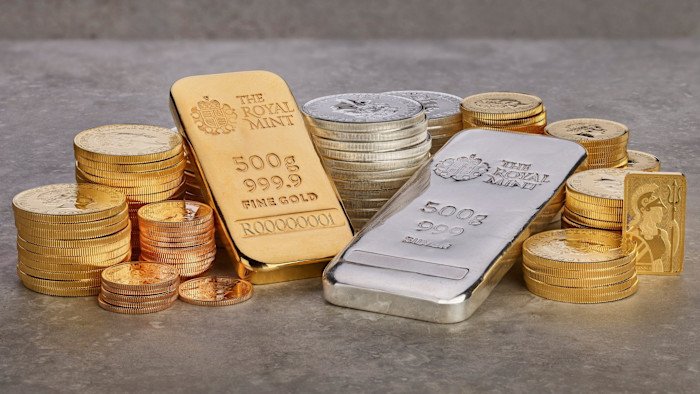
There is a grain of truth here. But try telling it to the Royal Mint, which sells gold and silver coins and bars to the nation. Earlier this week, it broke its daily record for online bullion sales. Demand for plastic tubes filled with silver Britannia coins is, it tells me, “huge”. Unprecedented numbers of people are seeking out its guidance, and the website has had to post apologies for any delays in service as the system creaks under the weight. So much for leaving money festering in the bank.
Once again, the UK is in the grip of a global feeding frenzy in precious metals. It is easy to see why.
Silver, gold’s scrappier little cousin, which rarely enjoys any time in the public eye, has been the breakout star of global markets in 2026. It blasted 150 per cent higher last year, taking out the previous record of $50 an ounce with ease. This January, though, it has gone truly bonkers, adding a further 50 per cent in price to well above $100. No wonder Britons have Fomo.
To a large extent, the silver price is playing catch-up with gold, which has been on its own spectacular tear, taking its price as high as $5,300 an ounce.
The power behind these extraordinary market moves comes from a heady combination of both fear and greed.
The fear is that other more mainstream assets are losing their reliability. The US dollar, of course, is under heavy pressure almost across the board, hitting its lowest point against sterling — supposedly a crisis candidate itself — since 2021 and crumbling against the Swiss franc, one of the last refuges in the system for many. With Japan’s yen vacating its usual haven role due to the perception that the central bank there is a step behind inflation, gold is taking an unusual amount of the strain, and pulling silver along for the ride.
This is drawing in investors of all stripes, including central banks. Last month, Poland’s central bank trumpeted its role as a leading buyer of gold, describing it as “the only reliable national reserve asset” in “the search for a new financial order”.
The beauty of precious metals, unencumbered by the usual valuation metrics like cash flow, dividends or interest payments, is that you can paint your own adventure on to them and construct a kaleidoscope of reasons to buy. For some, it is an alternative to bonds, which are compromised by waves of new government borrowing and the still-present risk that the US central bank will, under Donald Trump, allow inflation to run hot.
For others, it is an escape from overly large allocations to US stocks. Many wealthy investors, especially in the Middle East and Asia, find it a huge psychological hurdle to lean out of the US and into Europe. “It’s like climbing Everest,” said Geraldine Sundstrom at Pictet Wealth Management. Precious metals present less of a mental leap.
But it’s not just seeking diversity from core US assets at play here. As the rampant traffic at the Royal Mint suggests, swiftly rising prices have generated their own momentum, similar to the meme stock craze in the US in 2021. Curiously, bitcoin is not invited along to this particular dollar debasement party, with that speculation seemingly ending up here instead. A lot of this appears to be underpinned by borrowed money, or leverage.
“You don’t see price action like this unless there’s leverage involved,” said Fredrik Repton at investment house Neuberger Berman. The amount of gold and even more so, silver, that is available to trade, is actually pretty small, especially with unusually high levels of stockpiling ahead of US potential tariffs. Debt-fuelled, retail-heavy, Fomo-driven moves into illiquid assets do have a habit of creating parabolic market ascents (and, buyer beware, some painful pullbacks).
What can break the spell? One thing would be a return to normal US financial policy — a belief in currency stability, a robust Federal Reserve, predictable regimes and prudent borrowing. An outbreak of common sense. So let’s safely assume that’s not going to happen any time soon. A more plausible test would come from a drop in stocks, for any reason, that prompted marginal gold and silver buyers to close out debt-funded bets.
Until then, fortune favours both those thinking big thoughts about US institutional resiliency, and punters snapping up tubes of silver coins on their phones.