
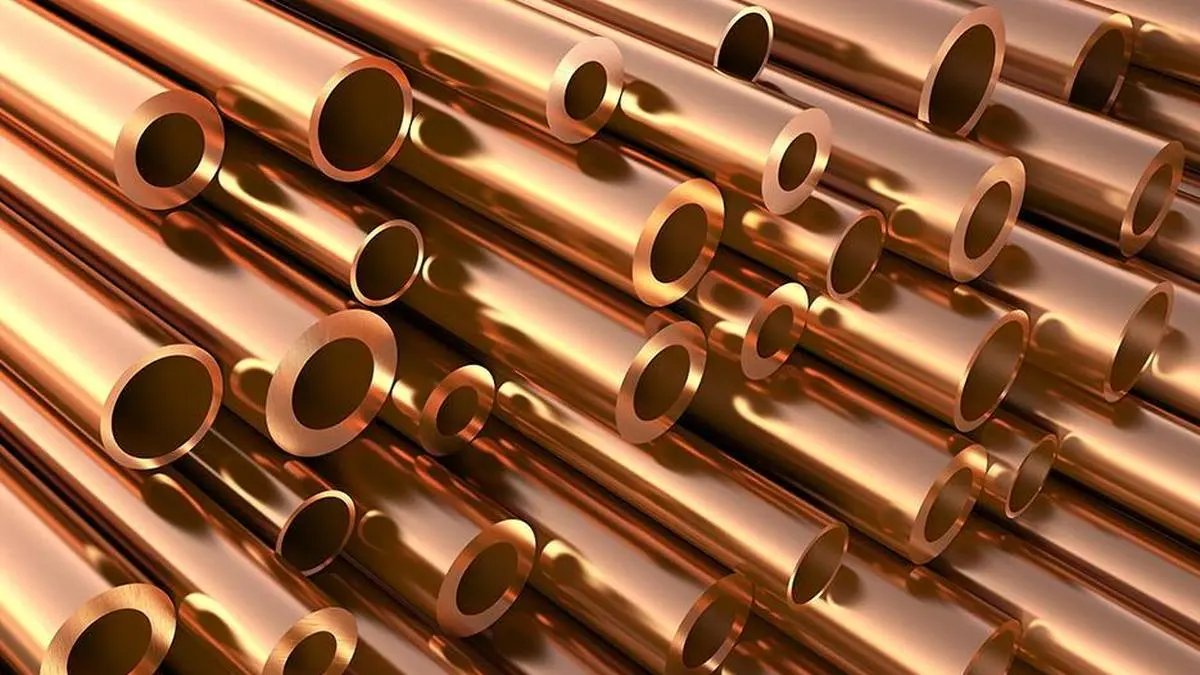

Copper has quietly become one of the most valuable economic enablers of the modern age.
India’s ambition to lead in electric vehicles, renewable energy and digital infrastructure rests on an uncomfortable contradiction. The country is racing to dominate copper-intensive industries while remaining structurally dependent on imported copper. As global demand for the metal accelerates on the back of the energy transition and digitalisation, the question facing policymakers is no longer whether India should produce copper, but how it should do so responsibly.
It is against this dilemma that the Madras High Court’s recent direction on a proposed green copper facility in Tamil Nadu must be read. The Court has asked Vedanta to initiate a formal application process for setting up such a facility, moving the debate away from ideological extremes and towards institutional scrutiny. In doing so, it has opened space for a more serious conversation on how India balances industrial growth with environmental responsibility in a resource-constrained world.
Heavily relying on imports
Copper has quietly become one of the most valuable economic enablers of the modern age. An electric vehicle uses nearly four times more copper than a conventional petrol car, while data centres, smart grids, semiconductors and digital infrastructure all depend on the metal’s conductivity and durability. Global demand for copper is expected to rise sharply over the next decade, with several estimates projecting supply deficits if new capacity is not created. For India, this is not a distant concern. Despite being one of the world’s fastest-growing consumers of copper, the country remains heavily dependent on imports, exposing domestic manufacturers to price volatility and geopolitical risk.
In an era where critical minerals increasingly shape national competitiveness, copper has moved beyond the category of a basic industrial input. It is now a strategic resource. Countries that control sustainable and secure copper supply chains are better positioned to attract investment, scale clean technologies and build resilient manufacturing ecosystems.
Tamil Nadu already enjoys a first-mover advantage in several future-facing sectors. It is among India’s leaders in electric vehicle manufacturing, renewable energy capacity, and electronics exports. What it lacks is proximity to a critical raw material that anchors these industries.
Decisive factor
Local availability of responsibly produced copper could significantly lower logistics costs, stabilise supply chains, and strengthen industrial clustering. For global investors increasingly focused on clean, traceable and resilient supply chains, such integration is becoming a decisive factor.
In this context, a green copper ecosystem could enhance Tamil Nadu’s appeal as a manufacturing destination—not by diluting environmental norms, but by embedding sustainability into industrial design.
The significance of the green copper proposal lies not in scale alone, but in approach. Globally, recycled copper already accounts for nearly one-third of total copper usage, with a carbon footprint dramatically lower than that of primary smelting. Hybrid production models that emphasise recycling, e-waste recovery and advanced pollution controls are increasingly seen as the future of the industry.
Benchmark for industrial revival
For Tamil Nadu, this represents an opportunity to demonstrate that heavy industry and environmental responsibility need not be mutually exclusive. A rigorously evaluated, tightly regulated project could set a benchmark for how industrial revival can align with sustainability rather than undermine it.
The green copper proposal warrants rigorous scrutiny, scientific assessment, and public accountability. But dismissing it without evaluation would ignore the deeper challenge India faces: how to secure critical resources while pursuing a clean and competitive industrial future. Handled with care, transparency, and institutional discipline, Tamil Nadu has an opportunity to show how industrial ambition and sustainability can reinforce each other. The Madras High Court has created a framework to ask the right questions—an essential first step in today’s industrial landscape.
The author is a former IAS officer of the 1977 batch belonging to the Tamil Nadu cadre
Published on January 4, 2026