
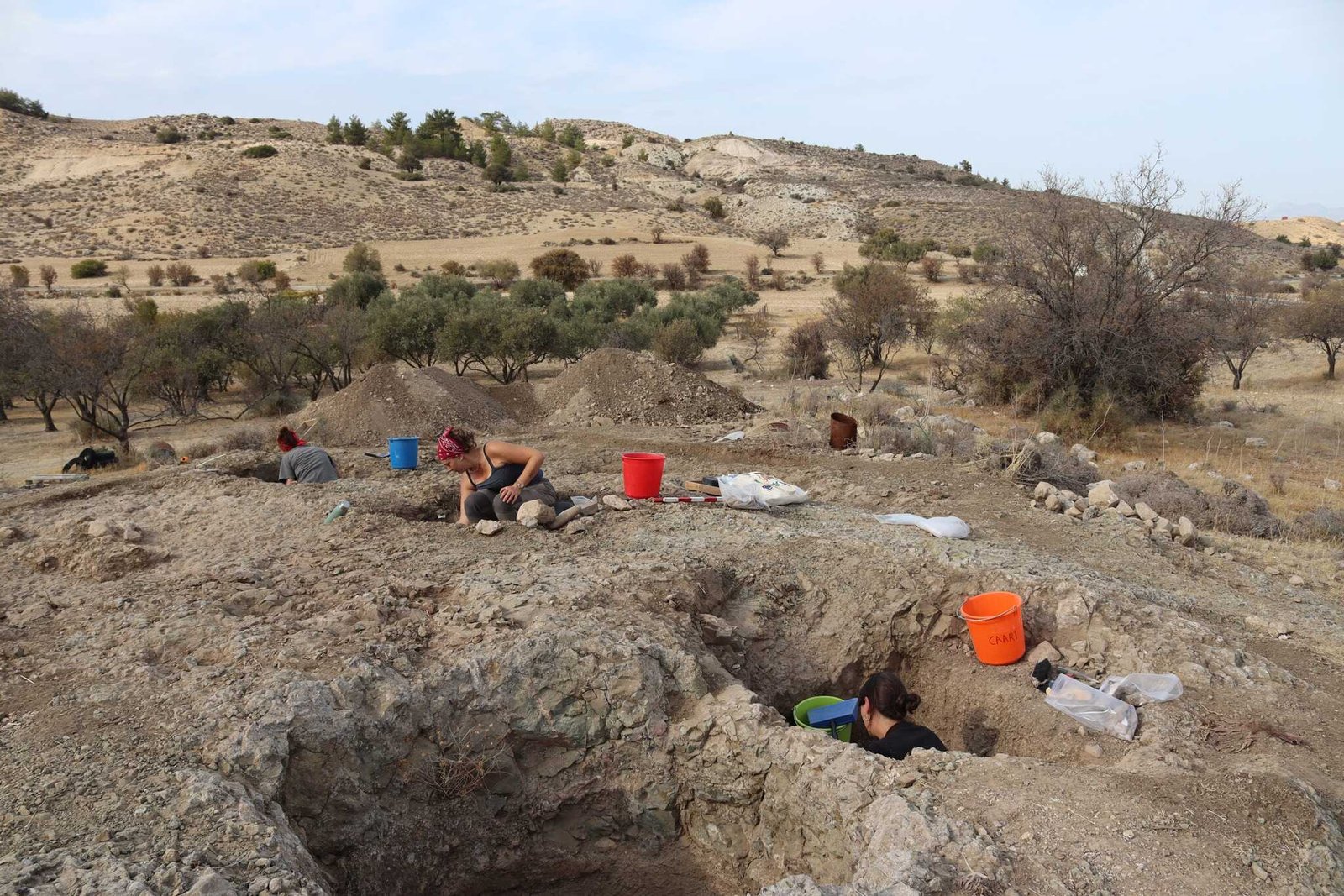

Archaeologists working in the Troodos foothills have uncovered new evidence of copper production dating back to the Roman period, offering fresh insight into the island’s role in ancient industry. The findings come from the “Life at the Furnace” program, which completed its 2025 research season in early November. The study focuses on Cyprus and its significance in Roman-era copper production, particularly in the Peristerona River valley.
Directed by Dr. Kristina Winther-Jacobsen of the University of Copenhagen and Dr. Angus Graham of Uppsala University, in collaboration with the Cyprus Institute, the project examines how copper manufacturing shaped both the environment and local communities.
Excavation efforts are led by Dr. Roser Marsal of the Universitat Autònoma de Barcelona. The program is funded by the Carlsberg Foundation and the Enboms Foundation.
Excavations reveal advanced water system in mountain settlement
This year’s work concentrated on Agia Marina Xyliatou-Mavrovouni, where researchers began formal excavation following surface cleaning completed in late 2024. The team uncovered a sophisticated water management system consisting of artificial terraces, tanks and stone-built plumbing features.
Materials found at the site date from the Late Hellenistic to Middle Roman periods, suggesting the settlement was active during those centuries. Researchers are currently analyzing whether the system supported copper smelting.
Surveys in the surrounding area also revealed key discoveries. On a plateau just north of Agia Marina Xyliatou, fragments of handmade figurines, including horses, a bull and human-shaped idols, identified the remains of an Iron Age shrine.
A cast figure of the goddess Astarte was also recovered. Over time, the shrine was replaced by a settlement, possibly linked to copper activities, as suggested by traces of slag in the area.
Ancient Cyprus site linked to Roman-era copper production
Additional fieldwork was carried out at a Peristerona River crossing near Kato Moni and Orunda. There, the team mapped the wider Chalcolithic site known as the Cross of Kuntis.
Department of Antiquities of Cyprus explains that this year’s campaign has strengthened the understanding of the region’s industrial history and its role during Roman rule.
The project is expected to continue building on these findings in future seasons.