
As global demand for critical minerals accelerates, ensuring that these resources are sourced responsibly is essential to reducing opportunities for organised crime to infiltrate international supply chains. The current volatile and weak pricing of critical minerals presents a narrow window of opportunity to introduce the necessary safeguards, before prices rise. Nonetheless, the risks of criminality in critical mineral supply chains remain poorly understood and, in many cases, overlooked.
Gold provides an instructive, cautionary example of the dangers of failing to address these risks early. In gold mining hotspots in the Amazon Basin and parts of sub-Saharan Africa, soaring prices have turned illegal gold mining into a major source of revenue for organised crime and conflict actors, harming communities and the environment.
To consider how critical mineral supply chains can prepare for similar risks of criminal infiltration and exploitation, RUSI and the International Council on Mining and Metals (ICMM) held a roundtable discussion on 15 October 2025 with 35 experts from the mining industry, the financial sector, UK government departments – including the Department for Business and Trade (DBT), the Foreign, Commonwealth & Development Office (FCDO) and His Majesty’s Revenue and Customs (HMRC) – and intergovernmental organisations and civil society.
The roundtable was divided into two sessions. The first discussed the effectiveness of interventions to date to tackle two core dimensions of criminality in gold supply chains: the infiltration of artisanal and small-scale mining (ASM) by crime and conflict actors, and their use of gold as a money laundering vehicle. The second session explored whether the same risks can be mapped to critical mineral supply chains as demand increases, and to what extent the sector is prepared to tackle these challenges.
Methodology
This Insights Paper is mainly derived from unattributable discussions from the roundtable. However, open sources are used in some cases to corroborate and supplement participants’ insights. Given space limitations, this paper does not aim to address the full spectrum of market challenges but instead highlights the key observations made by participants.
Reviewing Interventions Against Illegal Gold Mining
Speakers from RUSI and ICMM opened the session by observing that the soaring price of gold, combined with weak governance and poor traceability, have made it an increasingly attractive commodity for organised crime and conflict actors active in fragile, gold-rich geographies with limited state presence.
The spot price of gold has skyrocketed over the past decade, more than doubling from roughly $40,000 per kg in 2015 to $85,000 per kg in 2024. By November 2025, one month after the roundtable, the price had risen to just over $130,000 per kg. The price boom has largely been attributed to the appeal of gold as a safe financial asset amid growing geopolitical uncertainty and economic instability. By diversifying into illegal gold mining and laundering illicit gold into legal supply chains, these groups have gained a lucrative income stream and a money laundering mechanism through which to legitimise proceeds from other illicit activities.
Participants from the mining sector recognised that to gain access to this lucrative enterprise, illegal armed groups have increasingly infiltrated ASM communities in their areas of operation – many of which were previously operating relatively sustainably and on a small scale, but without official licences. Criminal actors are known to finance and source mining inputs such as fuel, equipment and mercury and provide protection for ASM operations. In exchange, they extort illegal miners, taking the lion’s share of the proceeds. Although little is left for ASM communities, participants observed that gold mining still generates more income than other livelihood options, which can be limited in rural areas.
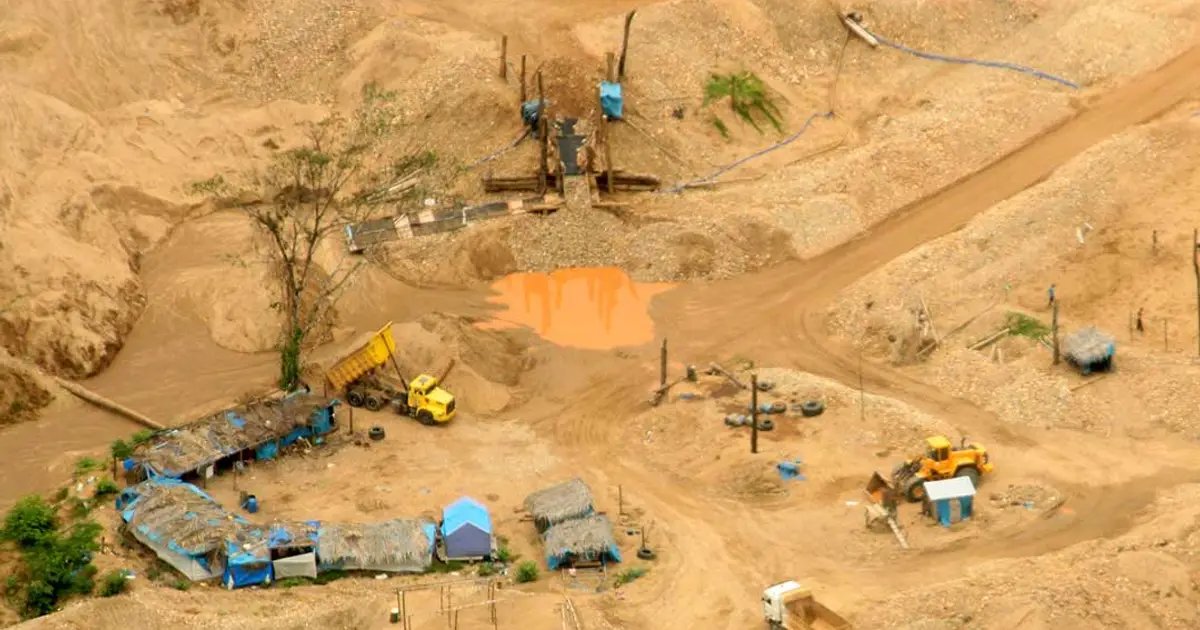
In many areas, organised crime involvement in ASM has caused illegal gold mining to balloon, both in terms of geographic scope, with the invasion of protected environmental areas or encroachment on large-scale mining (LSM) concessions, and in terms of sophistication, with the employment of machinery such as bulldozers, excavators and dredgers. Participants from the mining sector recognised that this, combined with harmful methods of extraction, such as mercury use, has had devastating consequences for human health and the environment. Illegal gold mining has also become increasingly violent in many cases, with lethal clashes arising between armed illegal miners and LSM workers or security personnel.
Addressing Criminal Infiltration and Exploitation of ASM
Participants acknowledged that governments in gold producing countries have largely responded to the criminal infiltration of illegal gold mining through punitive militarised strategies that have had limited effectiveness. In Ghana, corruption was reported to have undermined militarised interventions against illegal miners. Other participants observed that such strategies invariably end up penalising the lowest-hanging fruit – ASM actors with limited alternative livelihood options – rather than the real beneficiaries of these crimes. It was noted that recent efforts in Colombia showed promise, including a focus on targeting illegal mining through seizures of large machinery and investigations into financial assets. They do not, however, appear to have meaningfully quelled the activity. Elsewhere, such as in Brazil, raids against illegal miners have reportedly displaced illegal gold mining to neighbouring Venezuela, providing a temporary fix in one location while driving the problem elsewhere.
Faced with these limitations, several participants emphasised the need for more holistic, context-specific approaches. These include efforts to apply more incisive enforcement techniques such as financial investigation, address the root causes of criminal infiltration of the ASM sector and build greater trust and cooperation between government, the corporate sector and communities.
Civil society representatives observed that ASM has historically been widely stigmatised. Governments often see ASM as an inconvenient barrier to formal investment, sector modernisation and economic growth. In turn, elite capture and misappropriation of mineral-related revenues by state officials has led to widespread mistrust of government among many ASM communities. For their part, mining companies were observed to view ASM as a reputational and investment risk and an obstacle to natural resource access.
Criminal actors are reported to instrumentalise these frictions, and in some places have armed and galvanised illegal miners to encroach on LSM concessions and attack workers, providing ASM with access to resources of which they have historically been deprived. Risk aversion in the financial sector has also led investors and creditors to overwhelmingly perceive ASM as a compliance risk, restricting access among ASM communities to legitimate sources of finance. Because of these perceptions, participants observed that ASM has struggled to find legal pathways to market to date. In this vacuum, organised crime and conflict actors have often taken on state-like functions, providing ASM with the finance, security provisions and social safety net required to generate income.
Participants therefore emphasised the need and potential to engage ASM communities as a positive and strategic partner. According to the World Gold Council, the ASM sector is responsible for about 80% of gold mining employment, providing an important source of wealth creation in fragile contexts. In engaging with the sector, industry participants recognised that effective interventions must provide incentives for ASM that out-compete those offered by criminal actors. This may include the formalisation of their activities through licensing, a competitive wage, safer operating conditions and access to finance, according to participants. Some mining company representatives reported having introduced incentives, such as better pay and safety guarantees. An intergovernmental representative noted that regional banks in the Democratic Republic of the Congo (DRC) had begun to offer microfinance services to ASM to improve the sector’s access to finance and creditworthiness.