
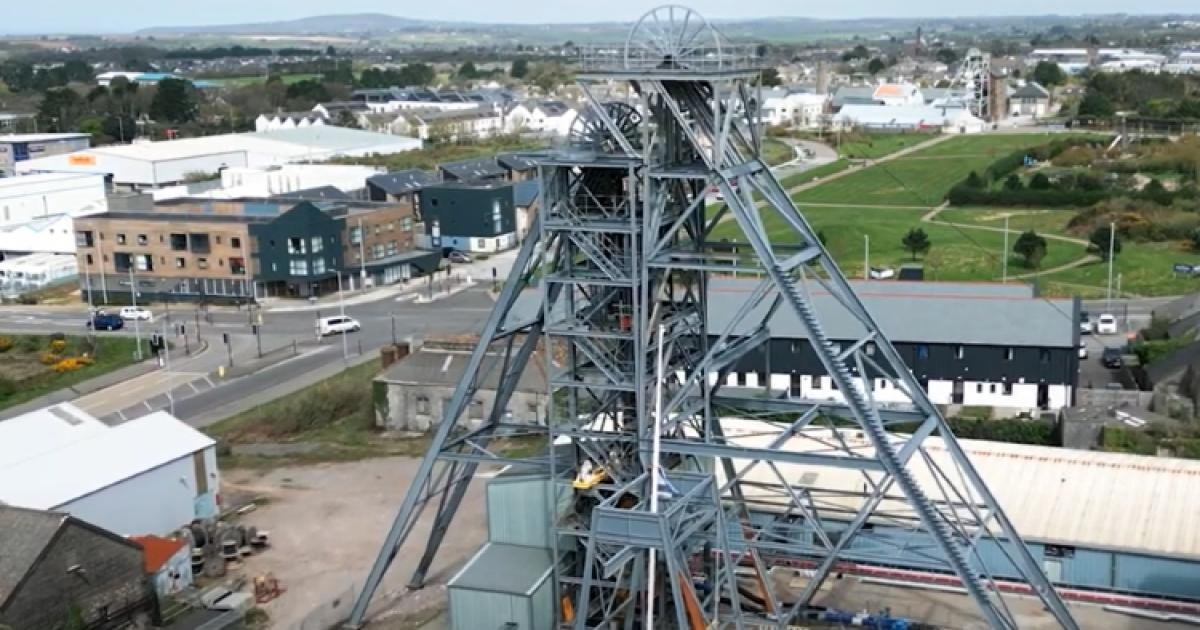
Cornish Metals has received a significant boost in its efforts to revive the historic South Crofty tin mine, after securing a non‑binding Letter of Interest (LOI) from the Export-Import Bank of the United States (EXIM) outlining up to US $225 million in potential financing support.
The LOI, issued under EXIM’s Supply Chain Resiliency Initiative, highlights South Crofty’s potential role in strengthening the United States’ access to critical minerals—specifically, responsibly sourced tin concentrate.
The potential financing is contingent on South Crofty supplying tin to the U.S. as part of efforts to build more resilient supply chains.
South Crofty, near Pool, operated for more than 400 years before closing in 1998 due to falling metal prices and a lack of investment.
Cornish Metals acquired the site in 2016 and has been working toward reopening it, with the company previously signalling hopes for commercial production beginning by mid‑2028.
The mine is regarded as one of the world’s highest‑grade known tin deposits not currently in operation. EXIM’s interest reflects the growing strategic importance of tin, which is classified as a critical mineral in both the UK and US due to its widespread use in electronics and electrical infrastructure.
Cornish Metals confirmed it is actively engaged in discussions with multiple potential project financiers, including EXIM, as it moves toward a final investment decision. The company emphasised that the LOI is not a financing commitment, but signals substantial progress in financing negotiations.
Don Turvey, CEO of Cornish Metals, said the LOI “is a testament to the quality and strategic importance of South Crofty,” adding that it reflects the growing momentum behind the project amid favourable tin markets and significant on‑site progress.
South Crofty has previously attracted government support, including a £29 million commitment from the UK government in 2025. Once operational, the project is expected to generate annual earnings of around £70 million, according to earlier company statements.
Additional technical assessments indicate the mine’s long‑term economic potential, with independent reviews affirming strong project economics, substantial cash‑flow forecasts, and the capacity to support hundreds of direct and indirect local jobs.
Greenland contains significant deposits of critical minerals and rare earth elements, used in technologies such as EV batteries and defence systems. However, Trump publicly denied wanting Greenland because of minerals, and reporting indicates national security was his main focus.
EXIM’s interest underscores broader geopolitical trends: countries are increasingly seeking secure, ethically sourced supplies of minerals crucial to modern technologies. For Cornwall, the LOI represents both a symbolic and practical step toward restoring the county’s historic mining industry.