

The global bioleaching market was worth $10.14bn as of 2024 and is expected to grow to $21.37bn by 2033. The method is already used to produce up to 20% of the world’s copper and promises to offer cost-effective extraction, a new revenue stream and a rare environmental win for mining.
However, adoption is relatively slow, with varying time frames, high initial capital costs and a focus on low-grade ores largely pigeonholing the practice as a second-rate technology, sidelined in favour of high-grade ore smelting. With the exception of Latin America and China, bioleaching companies have generally struggled to reach commercial feasibility across markets.

Discover B2B Marketing That Performs
Combine business intelligence and editorial excellence to reach engaged professionals across 36 leading media platforms.
Yet the metal picture is rapidly changing, and soaring demand for critical minerals and rare earth elements (REEs) means the appetite is there, albeit tentative. A pivot towards large-scale bioleaching is on the cards.
Plenty of major companies are investing in their own technologies, such as Rio Tinto’s Nuton venture. Driven by soaring demand, copper comprises the largest bioleaching market revenue share at more than 47.8%. Extraction involves the use of thermophilic, acidophilic bacteria such as aidithiobacillus ferrooxidans to metabolise sulphides in low-grade ores.
The biochemistry behind bioleaching for copper
In copper extraction, scientists employ chemolithoautotrophic microorganisms that use sulphur and iron as energy sources, or heterotrophic bacteria, which use organic compounds. At biomining company BiotaTec, operations also use archaea, bacteria and filamentous fungi.
In the case of chemolithoautotrophs, some microorganisms oxidise iron, some sulphur and some both. Those that oxidise iron generate energy by oxidising ferrous iron (Fe2+) into ferric iron (Fe3+), which reacts with copper ores, such as chalcocite or chalcopyrite, to release soluble copper ions. Meanwhile, those that oxidise sulphur produce sulphuric acid, maintaining the low pH required to keep the copper in the solution. Solid copper can then be extracted from the resultant pregnant leach solution, either through solvent extraction and electrowinning, or by cementation, which uses iron.
Heterotrophic bioleaching (using microorganisms that eat sugars) is used for non-sulphidic materials such as oxide ores (including malachite and chrysocolla), carbonate-rich ores and industrial waste. The bacteria metabolise carbon sources to produce organic acids, which react with copper oxide or carbonate ores to form soluble copper ions.
President and CEO of bioleaching company BacTech, Ross Orr, explains the process succinctly: “Our tagline is ‘our bugs eat rocks’.”
In BacTech’s case, the “bugs” in question are local. “You tend to use the indigenous bacteria because they are there for a reason; they tend to be thermophiles or mesophiles. These are not patentable or anything,” says Orr. “Bioleaching is more a game of know-how, as opposed to trade secrets. It is nuance.”
Nuance is achieved by matching the needs and economics of an operation with the bioleaching method. Heap and vat bioleaching are the two most commonly used methods, not only for copper but for all metals. However, the two offer opposing financial and logistics benefits and challenges.
Heap leaching is cheaper: crushed copper ore is piled up (‘heaped’) onto impermeable pads before bio-lixiviant is directly applied. The liquid copper percolates, and is collected and processed at low capital and operating costs. Comparatively simple logistically, heap leaching allows rapid startup and can be used for large volumes, usually of low-grade ore. However, copper recovery rates are low – usually between 70% and 90% – and the process takes months, or occasionally years, to complete.
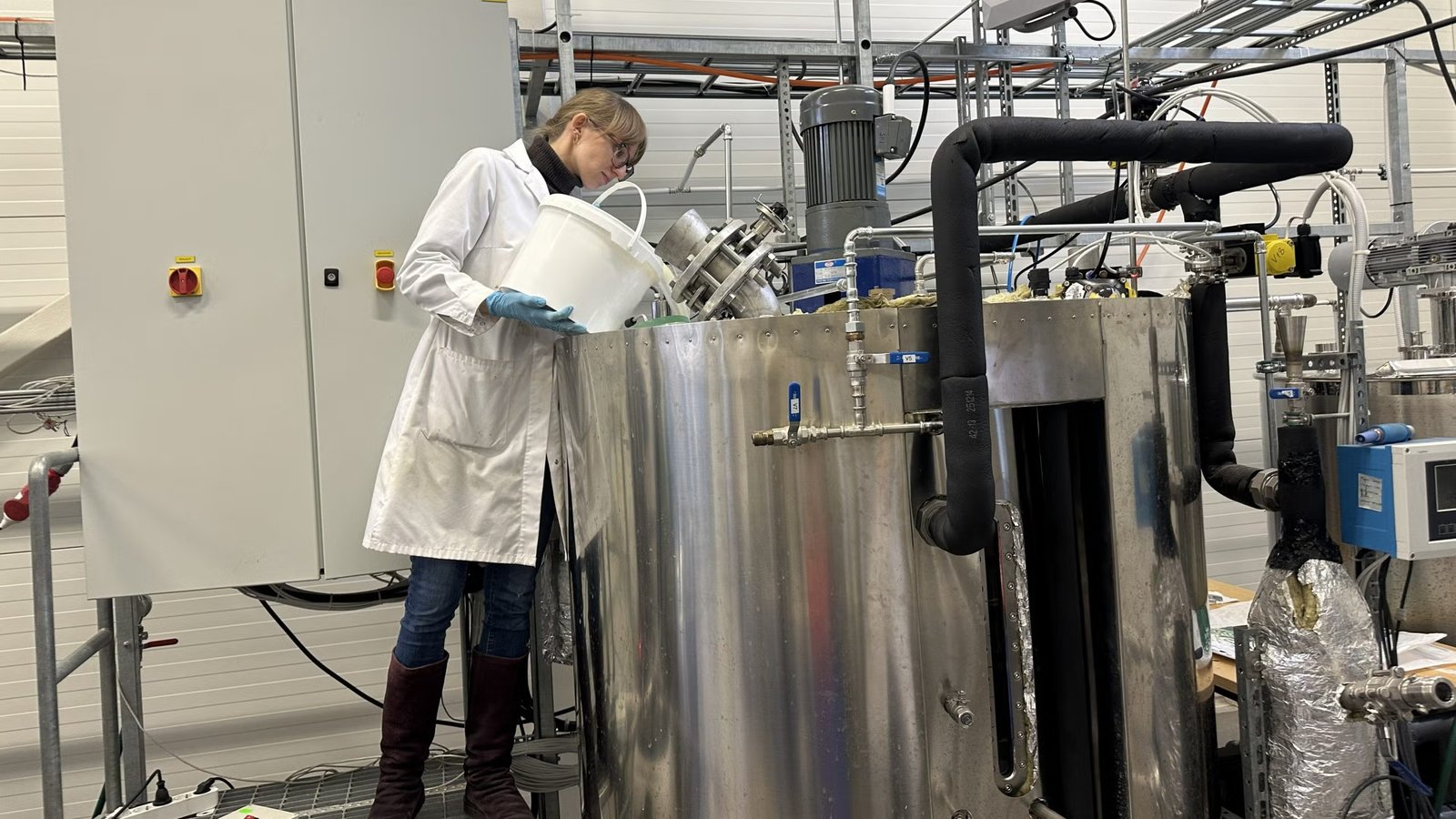
In comparison, vat leaching involves fully submerging crushed copper ore in a bio-lixiviant, inside a vat. The solution percolates through the stationary ore bed, is collected and processed. Typically used for higher-grade ore, the technique offers a higher recovery rate and is a faster process, with processes spanning a period of days or weeks. While it avoids expenses associated with crushing ore, vat leaching is more expensive, as Orr notes: “We use vat leaching, which deals with stainless tanks with impellers that are about a million bucks a pop.
“We end up with this heavy soup of material that is agitated,” he explains. “We have big impellers that keep the concentrate suspended so the bacteria can get at it, because you don’t want it all sitting on the bottom. We add some nutrients, depending on which strain we are using, and we get them to do in six days what would take them 20 years to do in nature. We speed up the process by giving them the Garden of Eden, and they work non-stop.”
Commercial struggles in the global bioleaching market
The copper question is inextricable from the larger bioleaching trend, meaning the sector is rife with both opportunities and commercialisation challenges. In short, bioleaching copper will become mainstream when bioleaching generally moves from viable to lucrative. It is happening, but slowly.
“Bioleaching breaks up the matrix. The metals that are contained are really a function of the economics of pursuing them. You could have a little bit of copper in that soup, but it wouldn’t be economically viable to produce a copper sulphate unless you had a percentage that was worth going after,”explains Orr.
Around the world, some countries have been racing ahead with copper bioleaching commercialisation. As the world’s largest copper producer, Chile is leading the way, and bioleaching is commonly used to extend mine life by making lower grade ore profitable. For example, at Codelco’s Radomiro Tomic mine in northern Chile, bioleaching plans were central to the decision to extend the site’s operational life from 2022 to 2030.
Elsewhere, however, there has been more industry sluggishness. In Europe, for example, there has been some interest in copper bioleaching from mining operators, but interest doesn’t equate to profit.
“We have worked with hundreds of mining companies all over the world already,” says Darina Štyriaková, founder and CEO of Slovakian bioleaching company ekolive. “Everybody was interested in trialling it, but it was getting stuck at the corporate level. We did big pilots, presented it to the industry, but nobody was interested in financing it, so it never reached the industrial level.”
Ekolive tried to target the copper market, and Štyriaková explains that the company developed technology to create sulphidic or oxidic forms of copper, noting: “We even offered the technology to a very big copper processing plant, but somehow they were not interested in additional, local copper sources.”
Instead, the company now focuses on the use of bioleaching for the remediation of soils and the production of ecological biostimulants, selling these as a product in the agricultural sector.
Orr echoes Štyriaková’s sentiment around the struggles of commercialisation: “Our balance sheet is not strong. Our market cap is about C$10m [$7.34m]… but it’s a hell of a driver’s seat to be in.”
Where ekolive has forged a new path, pulling away from what should be a copper goldmine, BacTech is moving decisively into the downstream. The Canadian company has already built three bioleaching plants for operators including Allstate Exploration and Sino Gold Mining, and is now working on constructing its own in Ecuador, steering clear of the slow European market. Moving with the demand, and keeping all metals on the table, has been BacTech’s most successful strategy so far.
“We did a demonstration plant 20 years ago in Mexico with Peñoles on chalcopyrite [copper ore], but we have never used the technology, mostly because copper was very cheap,” reflects Orr. “Next, we are looking at Peru, because Peru has enargite, which is a cousin of arsenopyrite. The difference, however, is that it includes copper, which is now a critical mineral, as well as gold and arsenic.”
He adds that a bioleach plant dedicated specifically to copper is unlikely to ever be a core part of the vat-leaching company’s corporate strategy, because copper bioleaching requires vast quantities, which are best processed through bioheapleaching. However, he notes that the production of copper sulphate as a byproduct of gold and silver processing from enargite remains definitively on the cards.
Versatility boosts viability
There are several examples globally of copper-only bioleaching operations. Rio Tinto has been investing in Nuton for more than 30 years and announced first copper production from its Arizona Johnson Camp mine in December 2025. Elsewhere, the Zijinshan copper mine in China has been using large-scale bioheapleaching to process low-grade copper ores since 1998.
However, for bioleaching providers, copper might be an attractive market, but versatility is the name of the game.
In the case of BiotaTec, versatility has been the cornerstone of commercial success. “The bioleaching sector is rapidly expanding to include all other types of materials. We are not talking about the low-grade ores anymore, but we are talking about industrial waste streams, phosphogypsum and bauxite residue,” explains Priit Jõers, chief scientific officer at BiotaTec.
This versatility promises to be the key to the slippery European market. Although huge-scale industry operations and corporate bureaucracy can make adoption slow, Europe needs to strengthen its critical mineral supply chains, and it would be loath to turn down a readily accessible cache.
Jõers highlights phosphogypsum – a byproduct of phosphate fertiliser – which houses REEs including neodymium, praseodymium, dysprosium and terbium, often containing more than 60% of the REEs originally in the phosphate. Around four billion tonnes (bt) of phosphogypsum are stored around Europe.
BiotaTec already has several business cases in the rare earth space, developing bioleaching as a economically feasible option in contrast to technically doable but unrealistically expensive chemical leaching methods. However, Jõers explains that the company has its fingers in lots of pies: “There are also end-of-life materials like wind turbine magnets and e-waste. People usually think of bioleaching as something that you apply for the low-grade stuff, but it is governed by the economic incentive.
“We have successfully degraded end-of-life wind turbine magnets, which have 30% neodymium, which is higher than any of the ore that you can imagine. We can get over 80% of the neodymium-praseodymium out in three days, using only bacteria.”
However, bioleaching isn’t only a question of metal extraction; in some cases, it also offers a tailings management solution, offering the double whammy of decarbonisation and additional revenue streams.
This has been the case for BacTech, which has worked with Vale on nickel recovery from pyrrhotite, produced at its Sudbury site in Ontario, Canada. Pyrrhotite oxidises itself aggressively, and Vale has historically buried it under clay or in lakes, favouring the processing of high-grade pentlandite. It now has between 80 and 100 million tonnes of pyrrhotite tailings, which it approached BacTech with a view to processing via bioleaching.
“It is predominantly iron, so we can make a magnetite, which we can direct ship to green steel. We add ammonia to the process after the bioleaching and it marries the sulphur to produce an organic fertiliser.
“We found that only 25% of the value of one tonne of waste came from the nickel, copper and cobalt; 50% came from the fertiliser and the other 25% came from the iron. In the end, we are left with silica (sand), which can be used for paste backfill underground, or in geopolymers. It is truly a zero tailings process,” explains Orr.
“Why would you dig another hole in the ground for an iron ore mine when you have got 80bt of tailings sitting on surface globally?”
For ekolive, commercial viability sits in biofertilisers, which it produces using a patented, EU-certified eco-bioleaching technology that uses bacteria to break down minerals, replicating natural soil-formation processes and creating a nutrient-rich, probiotic agricultural solution.
“We are focusing on agriculture because we have commercial success there; it is easy and we have been in the space for a long time already,” says Štyriaková. “We will always cooperate with mining companies in bioleaching, but so far it is not reaching commercial application.”

Sign up for our daily news round-up!
Give your business an edge with our leading industry insights.
Frequently asked questions
-
What is copper bioleaching and how does it work in mining?
Copper bioleaching is a metal extraction method that uses microorganisms to convert copper locked in rock into soluble copper ions that can be recovered as commercial product. In sulphide ores, chemolithoautotrophic microbes gain energy by oxidising iron and sulphur. Ferrous iron (Fe²⁺) is oxidised to ferric iron (Fe³⁺), which helps to break down minerals such as chalcocite and chalcopyrite, releasing copper into solution. Other microbes oxidise sulphur to generate sulphuric acid, keeping the pH low so copper stays dissolved. The copper-rich pregnant leach solution is then processed, commonly via solvent extraction and electrowinning (SX-EW) or by cementation using iron.
-
Which bacteria are used for copper bioleaching and why are indigenous microbes important?
Copper bioleaching commonly relies on acid-loving, heat-tolerant microbes, including thermophilic and mesophilic species that thrive in low pH environments. A frequently cited example is acidithiobacillus ferrooxidans, which supports the iron and sulphur chemistry that drives sulphide breakdown. Some operators prefer indigenous microorganisms already present at the site because they are naturally adapted to the local ore, temperature, water chemistry and acidity, which can improve resilience and stability during operations. In practice, success often comes less from trade secrets and more from know-how: selecting compatible microbial communities, maintaining the right conditions and tuning nutrients and process controls to keep leaching fast and consistent.
-
What is the difference between heap leaching and vat leaching for copper bioleaching?
Heap bioleaching places crushed copper ore on lined pads and irrigates it with a bio-lixiviant; dissolved copper percolates through the heap and is collected for processing. It is typically the lower-capex option, relatively straightforward to scale for large volumes of low-grade ore, and can start up quickly. However, recovery is usually around 70% to 90% and leaching can take months or even years. Vat leaching submerges crushed ore in tanks containing bio-lixiviant, keeping solids suspended so microbes can access the mineral surfaces. It tends to be faster, often days to weeks, and can achieve higher recoveries, but equipment and operating costs are higher.
-
Why is copper bioleaching adoption slow despite growing demand for critical minerals?
Adoption is slowed by long and variable leach times, high upfront capital in some configurations and a persistent perception that bioleaching is mainly for low-grade ores while high-grade material goes to smelting. Commercialisation can also stall inside large organisations: many companies trial bioleaching, but financing and internal decision-making may not follow. Profitability depends on ore grade, scale, recoverable by-products, and downstream processing routes, so a technically successful pilot does not automatically become a bankable project. Uptake is strongest where it extends mine life and monetises lower-grade resources, such as in Chile, while other regions remain cautious despite interest.
-
Where is copper bioleaching used worldwide, and what’s next for the global bioleaching market?
Copper bioleaching already contributes up to around a fifth of global copper production, with major adoption in Latin America and China. Chile, the world’s largest copper producer, has used bioleaching to make lower-grade ore profitable and extend mine life, while China has operated large-scale bioheapleaching at sites such as Zijinshan for decades. Major miners are also pushing new deployments, including Rio Tinto’s Nuton technology, which announced first copper production at Johnson Camp in Arizona in late 2025. Next growth is expected not only from copper ores but from wider biomining of industrial waste, tailings, e-waste and rare earth-bearing materials, where bioleaching can combine recovery with remediation and new revenue streams.