
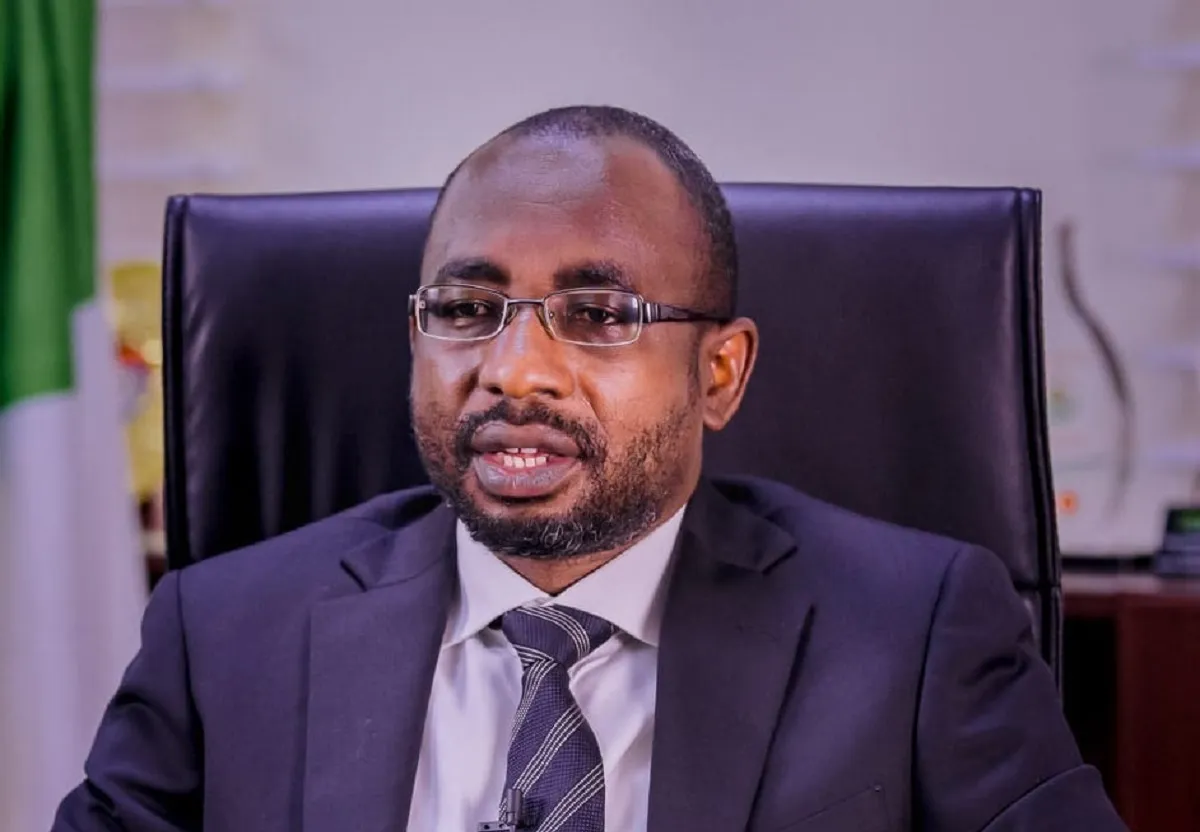
The Director-General of the National Information and Technology Development Agency (NITDA), Kashifu Inuwa Abdullahi, has stressed the importance of cashless policy in the phenomenal growth and revolution witnessed in the financial technology (FinTech) sub-sector of Nigeria.
Abdullai said the fintech revolution started in Nigeria about 13 years ago, triggered by the government’s cashless policy, where startups, technology firms and banks latched on to and created a viable industry.
Speaking at the just-ended GITEX Nigeria 2025 Conference and Exhibition in Lagos, he said the revolution over a decade ago had enabled the birth of five unicorns from Nigeria, stressing that the government’s policies had further triggered the evolution behind Andela, Flutterwave and Paystack, among others.
Indeed, the cashless policy, first introduced in 2012, aimed to reduce the amount of physical cash in circulation and promote electronic transactions.
While its primary goal was to enhance financial efficiency and curb corruption, it has inadvertently sparked a revolution in the fintech space. The policy has created a fertile ground for fintech innovation by increasing demand for digital payment platforms and services.
As individuals and businesses face charges for cash withdrawals and deposits above certain thresholds, they are incentivised to adopt alternative payment methods.
This has led to a surge in the use of point-of-sale (PoS) terminals, mobile banking apps, and online payment gateways. At the GITEX event, it was revealed that Nigeria was home to about 600 startups, building one solution or another.
The NITDA Director-General said: “The policy mandated our banks to digitalise their processes, while doing that, gaps were identified and our startups latched on to that to start building fintech solutions.
“That is why, today, Lagos is not just Nigeria’s commercial hub; it is the capital of Africa’s tech ecosystem. Lagos is the factory of unicorns. Lagos is the place where people use their talents and come up with solutions without infrastructure.
“In other places, they use capital, infrastructure to fuel innovation, while in Nigeria, we use our resilience because there is no option, and we need to create the solution. Out of eight or nine unicorns from Africa, five originated from Nigeria.
“This shows that it didn’t happen by accident; it was intentional, and there was a policy from the government that led to that happening. It means our potential is not just fintech, we have seen how Andela proved to the world how talents are evenly distributed, but opportunities are not and when we have the right opportunity, Nigeria can compete with any nation in the world.”
Meanwhile, the International Finance Corporation (IFC) has invested over $6 billion in Africa’s digital infrastructure over the past decade, with a focus on helping the continent quantum leapfrog into a globally competitive digital economy.
IFC’s Regional Director for Central Africa and Anglophone West Africa, Dahlia Khalifa, shared this commitment at the GiTEX Nigeria conference.
Khalifa highlighted significant obstacles to digital adoption in Africa, noting that businesses face technology costs up to 35 per cent higher than in other regions. She stressed that despite a high rate of mobile and internet access (86 per cent of firms), a small fraction fully utilises these tools due to inadequate infrastructure, digital literacy gaps and limited financing.
She stated that a recent IFC report, the ‘Digital Opportunities in African Businesses,’ addressing these challenges could transform over 600,000 formal businesses and 40 million micro enterprises.
This transformation is projected to boost productivity, raise wages, and create higher-quality jobs across the continent. Khalifa emphasised the critical role of the private sector and public-private partnerships in building the necessary foundation.
The IFC’s investment strategy focuses on three key areas, including infrastructure, skills and training and entrepreneurship programme. On infrastructure, she disclosed that over the past decade, the IFC had invested more than $6 billion in digital infrastructure, including data centres, fibre networks, and affordable broadband.
Last year, over $1 billion was invested in connectivity, including a $100 million commitment to Raxio Group’s data centres and support for WIOCC’s fibre expansion in Nigeria, the Democratic Republic of Congo (DRC), and South Africa.
The IFC also backs Rack Centre in Lagos, which is setting new standards for green data facilities. According to her, the IFC is committed to preparing Africa’s youth for future jobs by investing in skills and training programmes.
She said through its Venture Capital Platform and Startup Catalyst Programme, the IFC supports over 100 startups in various sectors like fintech, healthtech, edtech, and e-commerce.
Khalifa cited companies such as TradeDepot, Andela, and Wave Mobile Money as examples of IFC-backed ventures that are creating jobs and expanding access to digital services across the continent.
Khalifa emphasised by framing Africa’s digital journey as a story of “quantum leapfrogging,” not just catching up. She stressed that by responsibly harnessing AI and other digital technologies and fostering the right partnerships, Africa could create an inclusive, innovative, and globally competitive digital economy.