
Here’s what executives, investors, and policymakers expect in 2026.
One of the clearest paths for fintech firms to boost margins next year is by cutting out the middlemen. To gain access to the Fed’s core payment systems and take deposits, cryptocurrency exchanges and neobanks must rely on licensed banks — unless they have their own charter. Now fintechs are lining up to get one.
“When it comes to the bank-fintech environment, regulators are in their year of yes,” Amias Gerety, partner and head of US investments at fintech investment firm QED, said in a statement. “Banks and fintechs should go directly to Washington to get feedback on their ideas; they shouldn’t wait for their next exam.”
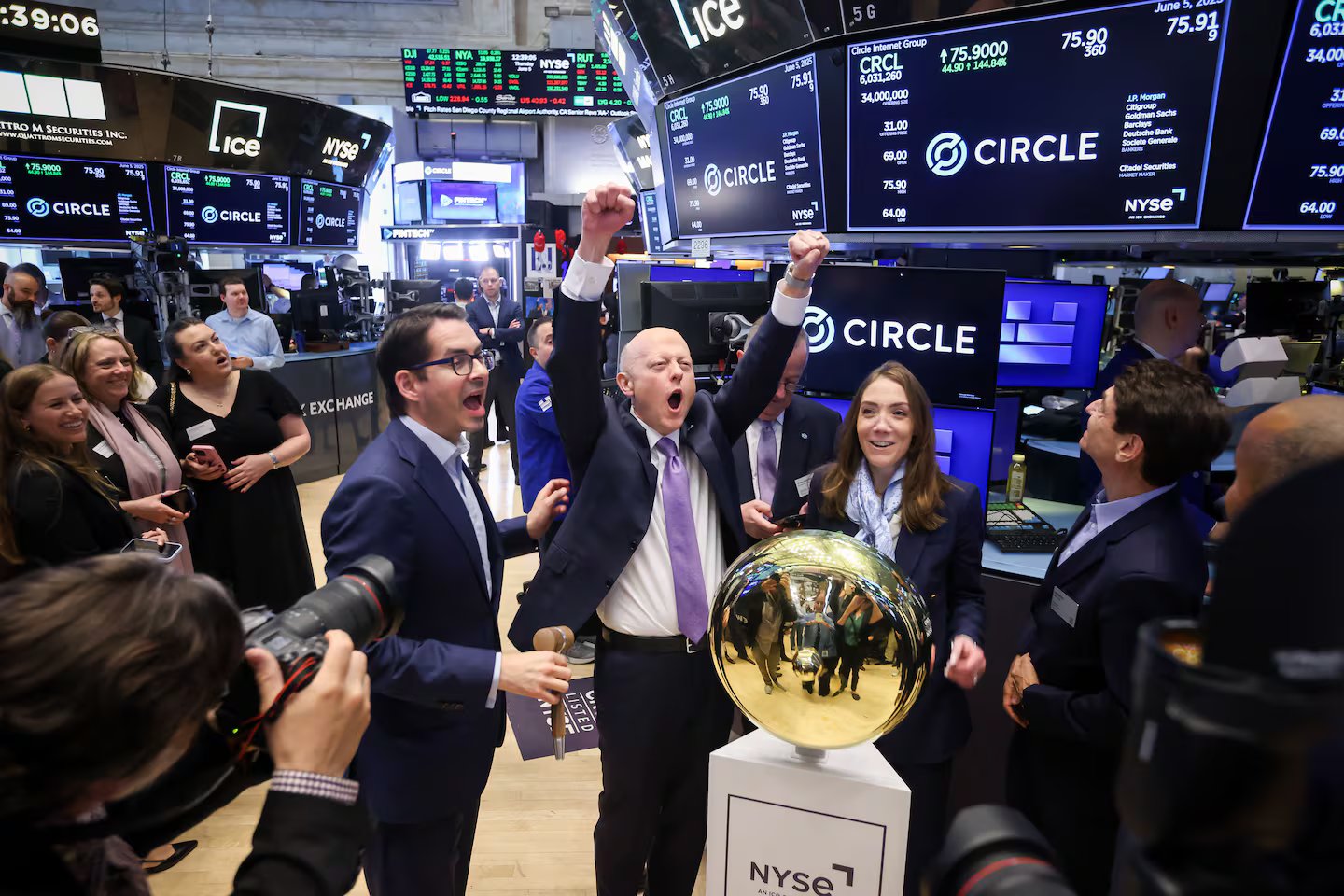
Under the regulatory about-face of the crypto-friendly Trump administration, preliminary bank charter approvals have been granted to five crypto companies, including Circle Internet Group Inc. and Ripple Labs. Crypto exchange Coinbase Global Inc. has its own application, as do online payments giant PayPal Inc. and neobank operator Mercury Technologies Inc.
The rewards are potentially significant. Federal Reserve Governor Christopher Waller floated the possibility of a “skinny” master account, which would grant these firms direct access to federal payment rails like the automated clearing house and Fedwire networks.
More approvals are expected next year, according to Phil Goldfeder, chief executive of the American Fintech Council.
“2025 was a lot of testing of the waters,” Goldfeder said. “In 2026, you’re going to see a lot of fintech companies, innovative banks, and regulators all finally moving in the same direction.”
To everyone, a stablecoin
Stablecoins — which maintain a consistent value, typically backed by US dollar-denominated assets — are poised for a big 2026 as companies across the retail, banking, and technology sectors pile in with the hope of achieving faster and cheaper transfers on blockchain.
Credit card giants Visa Inc. and Mastercard Inc. have both announced plans for stablecoin settlements this year and expect the trend to accelerate next year. Mastercard said that “crypto may be the financial story of the early 21st century.”
Oliver Jenkyn, Visa’s group president of global markets, said in a post on the company website this month that he expects to see significant stablecoin growth across emerging markets such as Argentina, where demand for US dollars is high as a hedge against inflation.
“I am confident that 2026 is the year we will see it truly take off,” Jenkyn wrote.
Firms including Stripe Inc.’s Bridge, Coinbase, and Anchorage Digital have also launched stablecoin issuing platforms to meet rising demand.
“You get so much free buzz if you’ve got stablecoin in your company description,” Will Robinson, chief technology officer of fintech data aggregator Plaid Inc., said during a company webinar on Dec. 17.
Plaid cofounder and chief executive Zach Perret predicted on the same webinar that 2026 would see a boom in crypto-native financial platforms. “Half of the neobanks that we will see launched worldwide will be stablecoin-first,” he said.
AI may not be completely running people’s lives yet, but it may soon be handling shopping carts.
“2026 is when agent-native commerce goes mainstream,” Mastercard chief product officer Jorn Lambert told Bloomberg. “We’ll move beyond assistants — AI agents will research, negotiate, and complete secure purchases on behalf of consumers.”
Lambert envisions a future in which someone planning a birthday party might ask an AI agent to compile an inventory list and complete the purchases. Mastercard, PayPal, and others are already partnering with AI firms to make it happen.
Earlier this month, Visa’s Jenkyn told Bloomberg, “We’re going to have full mainstream of AI-supported shopping” in 2026, with consumers relying on these agents for routine purchases.
Concerns about an AI bubble still loom large, however, with the potential to derail some of this momentum if funding dries up.
“There’s only so much discussion of a bubble that can occur before prices start to adjust back down,” QED’s Gerety said. “Absent a recession, I don’t expect a crash, but peak periods tend to be short-lived.”