
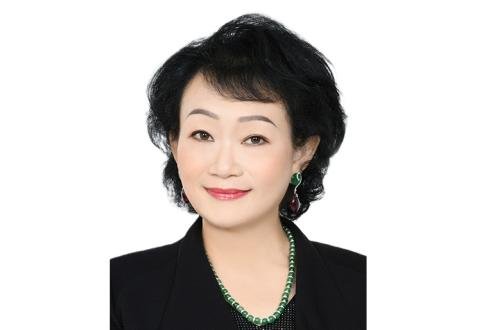
As UHNW and HNW families face rising regulatory scrutiny, cross-border complexity and generational transition, private wealth management is shifting decisively away from product-led advice toward structurally resilient, institution-grade solutions. In her contribution to the Asian Private Wealth Management Outlook 2026, Dr Kimmis Pun, Managing Director of Asia Green Family Office, outlines how economic substance, governance and fintech-enabled precision are becoming core expectations rather than differentiators. She explains why the future of UHNW advisory lies in combining institutional infrastructure with human judgment—delivering scalable, compliant and deeply personalised solutions that protect legacy, unlock long-term value and support families through increasingly complex transitions.
How are the expectations of UHNW and HNW clients evolving as we enter 2026, and what changes is your organisation making to deliver a more differentiated, personalised and seamless client experience?
The most significant shift is that clients are no longer looking for products, they are looking for structural resilience.
UHNW and HNW families today are far more sophisticated and globally exposed. They expect advice that integrates investments, governance, succession planning, tax, philanthropy, and risk management into a single coherent strategy, rather than managing these as fragmented silos.
Crucially, expectations now extend beyond financial performance to include robust economic substance and operational legitimacy. Families are acutely aware of increased scrutiny from tax authorities, regulators, and counterparties. They no longer accept “brass-plate” structures. Instead, they demand entities with demonstrable economic substance, real governance, and decision-making substance, not only for compliance, but to future-proof their legacy.
At the same time, principals are increasingly time constrained. They expect highly personalised advice delivered seamlessly across jurisdictions, generations, and asset classes, with minimal friction.
Essentially the agility of a FinTech combined with the discipline of a private bank.
Personalisation is now a baseline expectation. What differentiates leading firms is their ability to deliver bespoke, cross-border solutions efficiently, transparently, and consistently with digital precision, while reducing cognitive and administrative burden for families and preserving peace of mind.
How will your organisation leverage AI, data, automation and digital tools in 2026 to enhance advisory capabilities, improve productivity, and scale high-touch private wealth services?
We see FinTech, data and AI as structural foundations and force multipliers for high-touch advisory, not replacements for human judgment.
In 2026, digital tools are most powerful when they deliver precision at scale, enhancing advisory quality and freeing relationship managers from administrative complexity. We leverage AI-assisted analytics for portfolio diagnostics, multi-dimensional stress testing (modelling liquidity, regulatory and legacy scenarios) to enable more informed and genuinely forward-looking client conversations.
Automation plays a critical role in our operational integrity, which covers onboarding, KYC lifecycle management, reporting, and compliance. Digital onboarding platforms integrate entity-level due diligence, ownership mapping, document execution, and suitability configuration allowing portfolios and structures to be established holistically and compliantly rather than sequentially.
Importantly, technology also enables scalability without dilution. By automating non-value-adding processes and centralising data, we can scale UHNW services while preserving personalisation, governance standards, and advisor attention. Looking ahead, we see strong momentum in tokenisation of private assets, smart contract-enabled fund administration, and interoperable wealth platforms connecting banks, trustees, fund managers and family offices.
These developments will reshape how private assets are accessed, governed, and monitored.
What are your priorities for attracting, developing and retaining top relationship managers and leadership talent, and how are you reshaping your operating model to support them in 2026?
Talent remains the ultimate differentiator in private wealth, but the archetype of the advisor has evolved. We prioritise attracting advisors who think like stewards of family wealth and legacy, rather than product distributors.
The most effective relationship managers today combine emotional intelligence with deep structural fluency. They understand that wealth preservation now rests on guiding clients towards professional decision-making (Governance) as well as doing their part to strengthen operations and our footprint (Substance).
We seek professionals who understand that asset protection is now a structural discipline, requiring deep literacy in both cross-border governance and digital asset frameworks.
Retention and development are equally critical. We invest heavily in continuous education across private markets, regulatory developments, digital tools, and cross-border structuring, while providing clear career pathways into leadership and specialist advisory roles. This ensures long-term alignment between our people, our clients, and the organisation.
From an operating perspective, we have integrated governance and economic substance as core advisory capabilities, rather than back-office functions. This means every investment decision is structurally vetted for legitimacy in real-time. Our fintech platforms act as the connective tissue, automating the necessary checks so our professionals can focus entirely on judgment-driven advisory.
Which investment themes, products and strategies do you expect will resonate most with UHNW and HNW clients in 2026, and why?
Client demand is increasingly shaped by a desire for resilience, control, and long-term value. Private markets remain central, including private equity, private credit, infrastructure, and direct operating businesses. There is strong appetite for co-investments and club deals, where families benefit from transparency, governance rights, and strategic influence.
Capital preservation and income strategies are also gaining prominence amid macroeconomic and geopolitical uncertainty. Private credit, asset-backed strategies, and structured yield solutions are increasingly viewed as core allocations rather than alternatives.
The most transformative theme for 2026 is Real-World Asset (RWA) tokenisation. For our clients, the conversation centres around utility. Families are increasingly looking to tokenise legacy assets, such as real estate or operating businesses, to unlock trapped liquidity and facilitate smoother, fractionalised intergenerational transfer. Sustainable and impact investing has similarly matured. Clients are less interested in labels and more focused on data-driven integrity, seeing past vague ESG promises to seek out measurable and verifiable outcomes, governance integrity, and risk-adjusted returns. Underlying these preferences is a broader desire for investments that are understandable, governable, and defensible, particularly as wealth transitions to the next generation.
As competition intensifies across private banks, EAMs, MFOs and digital wealth platforms, what are your top strategic priorities to future-proof your business and sustain growth over the next 12–18 months?
The private wealth industry is becoming increasingly polarised. Generic offerings will struggle to remain relevant. Our strategic priority is deep differentiation, particularly in serving complex UHNW needs cross-border structuring, private markets, governance, and intergenerational planning. A core pillar of this is our expertise in ensuring that the structures we manage have a genuine operational footprint (Substance). We see this not just as a compliance checklist, but as essential value protection.
Over the next 1218 months, our focus is on scaling our fintech backbone, strengthening our governance (professional processes) and substance capabilities, expanding access to high-quality private market opportunities, and growing selectively with families aligned to our long-term philosophy.
We are also deliberate in balancing platform efficiency with advisory judgment. Pure relationship models lack scalability and systematic governance, while pure digital platforms lack trust. The future lies in combining both using technology to execute and monitor what experienced advisors have designed.
Strategic partnerships, whether with fund managers, fintech providers, or fiduciary specialists, remain an important growth lever, alongside disciplined client selection. Ultimately, this will allow us to deliver institutional reach without institutional rigidity.
How would you summarise the future direction of private wealth management?
Private wealth is becoming more institutional in infrastructure, but more human in purpose.
On the infrastructure side, wealth management is increasingly built on institutional-grade foundations. Robust governance frameworks, advanced fintech platforms, disciplined risk management, and professionalised operating models that resemble those of asset managers and institutional investors are now foundational tenets to operate and are essential for managing complexity, regulatory scrutiny, and cross-border wealth in a credible and sustainable way.
Yet the purpose of advisory remains deeply human. Behind every balance sheet is a family navigating succession, differing generational values, geopolitical uncertainty, and increasingly complex personal responsibilities. Technology and institutional processes create stability and efficiency, but they do not replace judgment, trust, or empathy.
The firms that succeed will be those that combine the computational agility of a FinTech with the fiduciary soul of a private bank. They must apply rigour in how portfolios are constructed, risks are governed, and structures are designed, while exercising empathy in understanding family dynamics and long-term aspirations.
Ultimately, alignment with families is what sustains relevance over generations. The future belongs to organisations that see themselves as long-term partners, strong enough to endure market cycles, yet human enough to guide families through moments of profound change.