
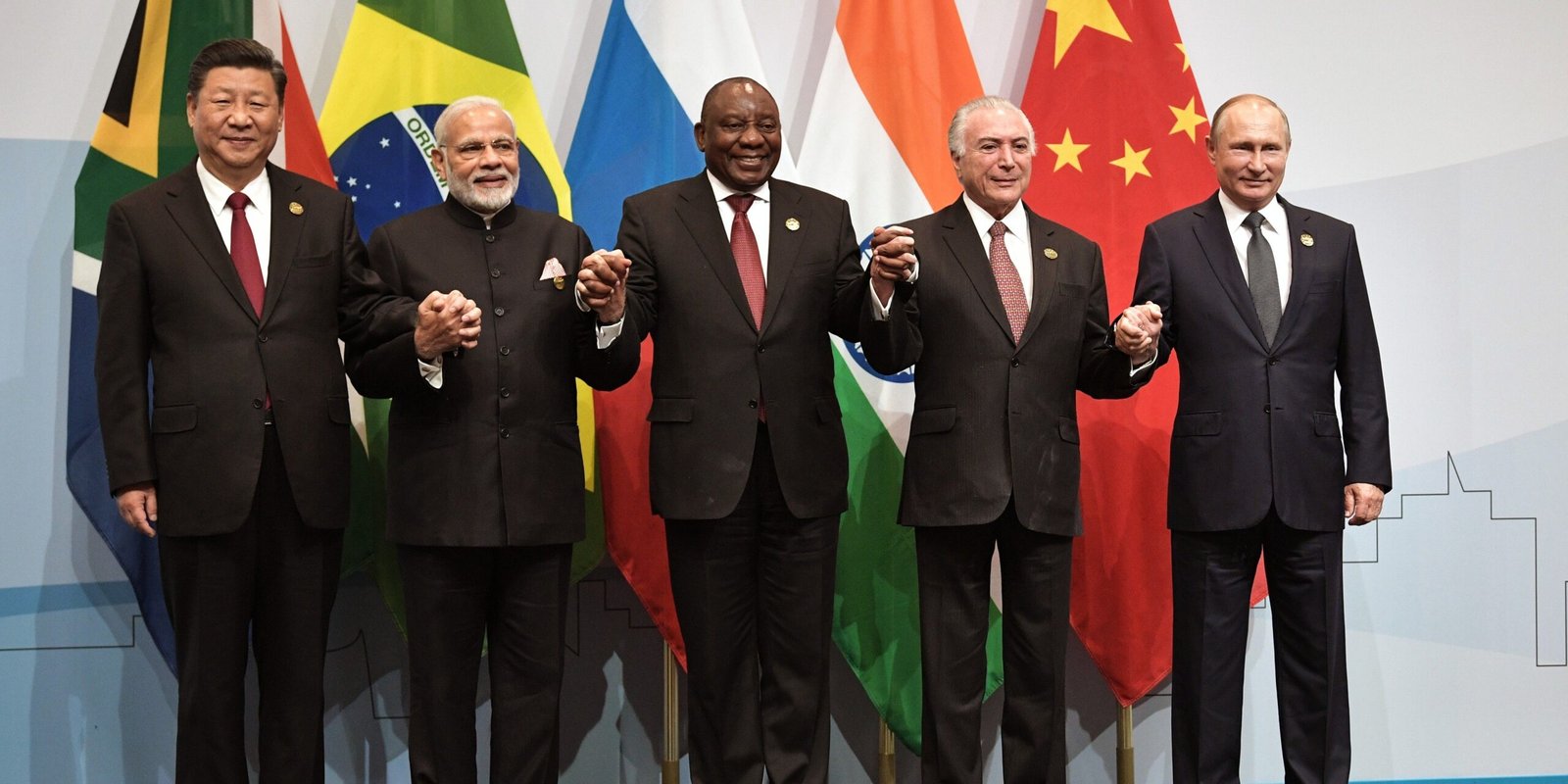
India’s central bank has proposed linking BRICS countries’ digital currencies to ease cross-border payments in trade and tourism, potentially reducing reliance on the US dollar, according to Reuters. The RBI wants this on the agenda for the 2026 BRICS summit, which India will host.
But why is India pushing for this now? The answer lies in a bigger shift happening in global finance.
India’s central bank has a problem. Around the world, companies are discovering they can move money across borders using stablecoins at a fraction of the cost and time of traditional banking. Stablecoins are digital tokens pegged to the dollar or other currencies, but mostly dollars.
And stablecoins are eating the world. Coin issuer Circle’s USDC circulation grew 108% year-over-year to $73.7 billion. Overall stablecoin issuance reached over $315 billion as of January 2026, according to an S&P report, while JPMorgan projects it could reach $500-750 billion soon. Stablecoin transaction volumes topped $700 billion monthly in 2025. Major banks like JPMorgan, Citi, and Bank of America are building their own dollar-backed tokens. Visa is running cross-border pilots. Deutsche Bank is onboarding stablecoin payment processors.
How stablecoins make a difference
Currently, the most popular way to send money overseas is via a complex network called the Society for Worldwide Interbank Financial Telecommunication, or commonly known as SWIFT.
Imagine you have to accept payments from a customer based in Tokyo. Likely, your current bank does not have existing relationships with your customer’s bank in Tokyo, so it must opt for the SWIFT route to make the transaction happen. In that case, your money may pass through one or more intermediary correspondent banks, hopping between financial “waypoints.” For example, it may first land at a large international bank in New York, which then passes the message to a correspondent bank in Hong Kong, which finally hands it off to your customer’s bank in Tokyo.
This process can take anywhere from one to five business days, depending on the banks and countries involved. On top of that, each correspondent bank deducts a small fee for moving the money.
In the case of stablecoins, all your customer has to do is open a digital wallet, purchase some stablecoins and hit send, and the money will appear in your account almost instantly. While you can achieve such speeds with almost any cryptocurrency, using stablecoins means there is much lower volatility, and there isn’t a risk of the currency you just received being valued lower than when it left the customer’s wallet.
There are also political risks associated with traditional cross-border payment systems. Russian businesses were effectively banned from SWIFT starting on March 1, 2022. This decision followed a series of discussions and agreements among Western nations, including the European Union, the United Kingdom, Canada, and the United States, in response to Russia’s invasion of Ukraine.
Why India is worried
For India, this creates several headaches. In December, RBI Deputy Governor T. Rabi Sankar laid out the case against stablecoins in blunt terms. They fail basic tests of what money should be, he argued. They’re not issued by sovereigns. They create hundreds of competing currencies in a single economy. They let people bypass capital controls. They drain deposits from banks, weakening the financial system.
India’s alternative is its own central bank digital currency, already in pilot phase. CBDCs offer the same technological benefits as stablecoins like programmability, instant settlement, and lower costs, but under government control. The RBI argues this is the only safe path forward.
The BRICS solution
The BRICS proposal extends that logic internationally. If member countries link their CBDCs, they could handle tourism and trade payments without touching the dollar or private tokens.
There has been no official communication from BRICS governments or their central banks on how such a system would work. The idea has not yet been formally discussed or agreed upon. But based on how digital payments are being designed around the world, this is how it could take shape:
Each country already issuing or piloting a central bank digital currency would allow limited cross-border use of that CBDC through a shared settlement layer. Think of it as a common digital switch operated by the central banks, rather than private banks or crypto firms.
A tourist from India visiting Brazil, for example, would pay in digital rupees from a wallet approved by the Reserve Bank of India. On the backend, the payment would be instantly converted into Brazil’s digital real at a pre-agreed exchange rate and settled directly between the two central banks. The merchant receives local currency. The tourist never touches dollars.
The same applies to trade. An Indian importer paying a Russian exporter could send digital rupees that are converted into digital rubles through the shared system. Settlement happens in real time on central bank balance sheets, not days later through correspondent banks.
Crucially, no private stablecoin issuer sits in the middle. There is no need for USDC, USDT or a New York correspondent bank. The dollar is bypassed entirely.
Thus, control remains with the central banks. Each country sets its own rules on who can use the system, for what purpose, and how much money can move. Capital controls, transaction limits and compliance checks can be coded directly into the system.