

He said this shift could significantly reshape how currencies function, as digital money gives central banks far greater control over how currency is issued, tracked and used, even as decentralised cryptocurrencies like Bitcoin continue to appeal to those seeking independence from state oversight.
Mobius described the coexistence of central bank digital currencies and private crypto as a defining and potentially transformative development for the global financial system in the years ahead.
These are edited excerpts of the interview.
Q: 2026 has been the third consecutive year of gains for the S&P 500 and even gold. Gold, in fact, in the last three years, has given a compounded return of 140%; it’s been phenomenal. But as we look ahead to 2026, the big question on everyone’s mind is, is artificial intelligence (AI) a bubble right now, given what we’ve seen and what happens to these AI-related stocks, and if that bubble bursts, then maybe the US economy is in trouble. So, let’s start this discussion with your thoughts on what’s happening with AI. Is it a bubble, and where does it go from here?
A: There is no question that AI has been pushed and pushed and pushed by so many people that it is quite a bubble-like territory. But at the same time, you must remember that AI is here to stay and is expanding. More and more people are adopting AI systems. I myself am using AI almost every day. So, there’s no question that the AI revolution is here to stay and will continue. But some companies have been emphasising their AI expertise, and that may be a little bit too much. Some of these companies are not really into AI directly. And so, we have to watch it and pick and choose those companies that are really into AI systems and developing AI.
And you must remember that in addition to the software, there is the hardware, the chips, which are very important to develop AI, and of course, the power systems used to drive this whole system. So, there is a lot more to it than what we can see now. And I think going forward, AI will continue to be a very important element in the market.
Q: But you said it’s in an AI bubble-like territory. Do you want to elaborate on that? Does that mean a correction is due? And do you want to mention some of the stocks in the AI theme, which you like? Because you said there is sort of this AI-washing which is taking place, where everything is brushed and called AI, and how similar is where we are right now to what happened in 2000 and the dot-com bubble?
A: As the AI systems are penetrating almost every industry that you can speak of, that’s a big difference from what we saw at the dot-com bubble. The thing we have to do is differentiate between those companies that are very, very engaged and expanding into AI and those that are on the periphery. Now, for example, if you take companies like the chip companies, let’s say TSMC. TSMC, of course, is the most sophisticated company in the world for chips, and they are very much involved in AI because they are doing the actual foundry work for AI chips. So that’s something to watch. In other words, it’s a good idea to look at the peripheral companies that are serving the AI revolution.
Q: You spoke of AI, but you’ve been a very avid watcher of emerging markets. You’ve seen them over the years now, but as of now, India, coming to specifics here, it’s been a forgettable year, if you could call it that, when you would compare it to other EM peers. You’ve been speaking about the reforms that need to happen in the country to stimulate the economy and then the markets as well. You’ve spoken about this in your previous interactions, but now with this slate of reforms that have taken place, be it the income tax cuts, be it the rate cuts from the central bank, or be it the GST rationalisation as well. Do you still believe that a lot more still needs to be done to stimulate the economy? Or have we come a fair distance from where we were 12 months ago?
A: Oh, no, there is a lot more to be done, and one of the most important things is to allow more and more investments to come into India. The bureaucracy involved in entering India is very complex and difficult now, but as that begins to fade away, as the Indian government begins to loosen these restrictions, you’re going to see incredible growth in the Indian hardware market in addition to software. So, India has a long way to go. There’s much more development that we can see going forward. I am very optimistic.
Q: What is your weightage on India right now in your portfolio, and would you be looking to increase it?
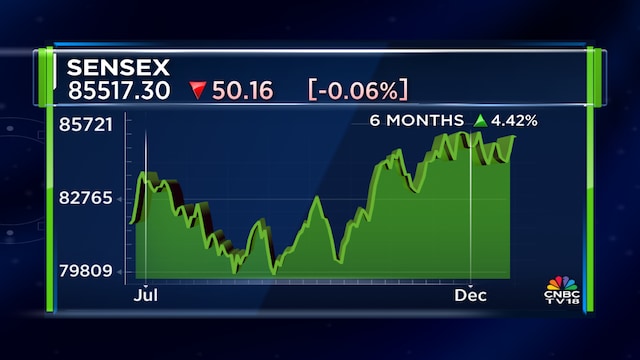
A: Now it’s about 20% of the portfolio, and we expect to increase it as we go forward.
Q: If you look to increase it, what would be the level you’re comfortable with, and what would you be looking to buy in India?
A: Probably 30% would be a good weighting. And where we would want to focus is on the software companies as well as the hardware. In other words, computer hardware companies, which I think will be growing at a very fast rate going forward. Now, of course, many of these are not listed yet, but as we go forward, this will be a good development area.
Q: Software and hardware are what you’re pointing out to, but do you believe that India is going to be that consensus anti-AI trade, because we may not have as many direct AI plays, but when it comes to adoption of AI, India has been one of the fastest? Do you believe India could be one of such proxy plays as well?
A: There are two things. One thing you must remember, you’ve got 1.4 billion people, the largest population in the world. So, there’s no question that AI will be in India and will grow in India very rapidly. That’s one side. The other side is the development and production side, the software, the hardware. All of this will be expanding in India, not only because the Indian market is absorbing all of this technology, but because the global market will be absorbing more and more of that. And as China begins to fade away or begins to reduce its impact on these markets, India will take over.
Also Read: AI’s rapid rise puts fresh pressure on the crypto market
Q: Can you share some names which interest you in India in software and hardware?
A: I think a company like Infosys is a very good company. I am looking at companies that are doing the hardware for Apple, companies that are not yet listed, but are going to be listed going forward. That would be a very interesting area to develop.
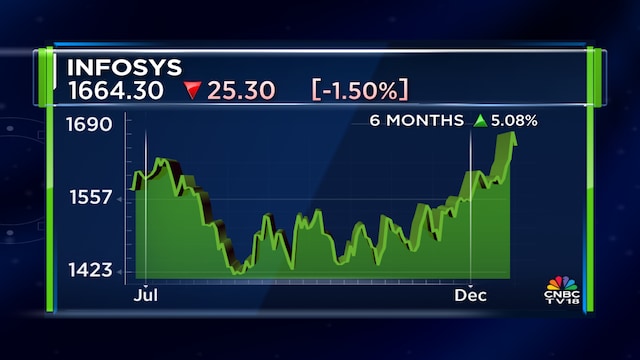
Q: On Infosys and generally broadly the Indian IT sector, the view is that India is sort of a net AI loser as of now, which is what explains why India has underperformed many of the emerging markets in 2025, so what explains your bullishness on Indian software companies and Infosys in particular, if you could share your thoughts?
A: You must remember that there are listed software companies in India already, but there’s a lot of software taking place in companies that are not yet listed. So, this is where we want to look. Because if you look at the chip development, for example, the software that goes in the chips, a lot of that is being developed in India, but in companies that are not yet listed. So, this is an area which we think will be a very important one to focus on.
Q: Have you taken a look at all of these new-age companies that have gone public? Very recently, there have been a lot of concerns with regard to their valuations and so on. Have you looked at any of them, be it in the consumer servicing space or in the e-commerce space as well? The recent listings?
A: Of course, we are focusing on those companies that are using AI in their development, whether it be in consumer goods, whether it be in entertainment, whatever you want to look at, AI will be hitting these companies, and those that are behind will be in trouble. Will have problems. So, there’s no question that this AI revolution is hitting all companies, and we want to focus on those companies that are able to use AI effectively, without spending too much money, by the way, but using it effectively. So, this is a very important area that we can go for.
Q: Many of the areas which interest you in India appear to be a bit unlisted. You spoke about companies doing hardware for Apple, for instance, or involved in chips. So, in the listed universe, can you tell us some of the stocks which you have in your portfolio, or any recent additions that you’ve made in India?
A: I can’t give you what we’re going to be adding going forward, because obviously that would be somewhat problematic.
Q: In the last three months, what have you added in India?
A: No, what we’ve done is we’ve added those companies that are going into the AI revolution, but in a very systematic way. I can’t give you names, but generally speaking, that’s where we want to focus.
Also Read: India needs clear crypto rules to stop capital flight, says policy expert
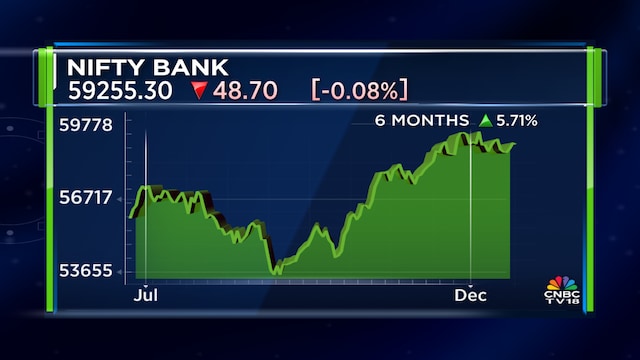
Q: What about financials? Financials seem to be quite the consensus going into 2026. When we speak to experts, they say that it’s a good scenario for financials. Do you like Indian banks, non-banking financial companies (NBFCs)?
A: Generally speaking, we shy away from financials, from banks, because yes, they’re somewhat opaque, very difficult to look behind the scenes and look at, for example, non-performing loans, etc. Now, of course, some new financials are coming in using AI to service customers that could be interesting going forward, but we haven’t really focused on any particular one at this stage.
Q: You are shying away from financials despite the slew of large deals that have taken place in the Indian financial space in 2025, almost $11 billion, including one mega $4.5 billion deal concluded just a couple of days back. Other than the non-performing loans, is there anything? Because the balance sheets are now very strong compared to what they were five years back. Still do not wish to look at the Indian financial space?
A: The fact that you see these mergers and these acquisitions is not necessarily a healthy development. It means some of these companies need help, need to be merged into other companies to survive. So, you have to be very careful in thinking that there is an optimistic scenario. I would be very cautious about that.
Q: You’ve also been bullish on traditional assets like gold. Gold is at $4,500 an ounce. What is your view on gold after this kind of an astounding run?
A: I still like gold. I think gold should be part of any portfolio. I hold 10% of my personal assets in gold. And I think going forward, gold will continue to be very good. Now it doesn’t mean that it’s going to go up in a straight line. There will be corrections along the way, but there’s no question that in US dollar terms, at least, gold will be doing very well simply because of the proliferation of dollars around the world. And now with AI, you’re going to see a lot more development in terms of literal gold, in other words, gold that is not necessarily hard, but soft gold and embedded in some of the currencies. So, this is going to be a very interesting development going forward.
Q: So, $5,000 an ounce, a realistic prospect over the next 12 months?
A: Why not? There’s no reason why it can’t get to that level.
Q: Where does India feature in your pecking order among other emerging markets, because when it comes to Korea, Brazil, they have been outperformers this year. Do you believe that India will turn the tide in 2026 and outperform a lot of these EMs?
A: As far as we are concerned, India is number one. It’s the most important market in emerging markets, not only because of its size, but because of the youth of the population, and because of the developments that are taking place in India that will be revolutionary. Very important.
Q: Your book, The Digital Currency Revolution. We spoke of traditional assets. Now this one speaks of the non-traditional assets like crypto. There has been so much talk about crypto all through the year, and even companies have started to put them on their balance sheets. Banks are beginning to open up. ETFs are beginning to open up. Is crypto as an asset class here to stay, part one, and part two? Would that be one of the de-dollarisation triggers going into the years ahead? Or are they two separate things?
A: There’s no question that crypto is here to stay, because there are so many different things happening in the crypto space. However, probably the most important element of this entire process is the fact that central banks around the world are looking at crypto to develop their own systems to back up and to combat the crypto space that is being taken up and is challenging the central banks’ currencies. So, this is a very important thing, as every country in the world now is looking at crypto and developing its own cryptocurrency for its own currency. This is very critical going forward.
Q: What does that do to currencies as a traditional asset class? You mentioned it is going to be a challenge for a lot of these currencies, but would that then become a key feature of shaping monetary policy going forward and so on and so forth?
A: Most definitely, because now with the issuance of digital currency, central banks will have much more control of how this currency is being used, who is using it, how it’s being used, etc. So, in some ways, it’s going to be a very good way for central banks to control the whole system. However, there are also on the other side, those people who say, No, we don’t want central banks to be interfering with our money and how we use it and where we use it, and that’s why you can see on the other side things like Bitcoin and other crypto, independent crypto activities taking place. So, it’s going to be a very interesting development going forward.
Watch the interview in the accompanying video