
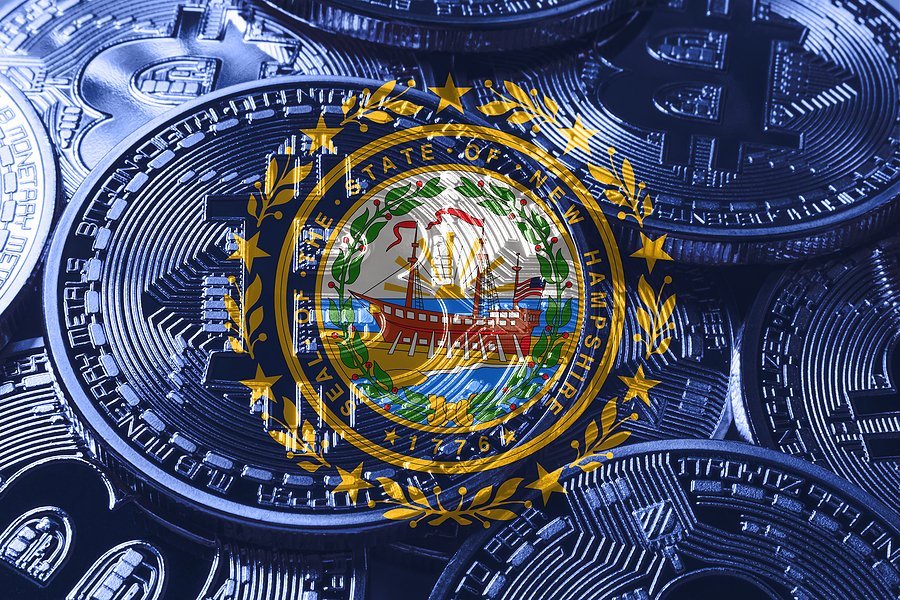
At its July 2024 national convention in Milwaukee, the Republican National Committee added this statement to its platform: “We will defend the right to mine Bitcoin, and ensure every American has the right to self-custody of their Digital Assets, and transact free from Government Surveillance and Control.”
Including Bitcoin and other digital assets in a major political party’s platform signals a significant turning point in how politicians view these assets. What was once considered a fringe interest is now being taken seriously at the national level, indicating a significant shift in mainstream thinking.
While the Republican Party has taken a clear stance on Bitcoin, the Democratic Party is grappling with its approach to it and other blockchain technologies. On July 26, Democratic members of Congress, candidates, and other officials, including two candidates for New Hampshire’s second congressional district, wrote to the Chair of the Democratic National Committee, urging a forward-looking approach to digital assets and blockchain technology. Their letter emphasized the benefits of these technologies and called for the selection of leaders knowledgeable about digital asset policy. Their letter stated, “Over 52 million Americans have embraced digital assets, seeing them as a means to democratize finance, spur innovation, and create new economic opportunities. According to recent polls, 19% of voters have bought crypto, 19% self-identified as Democrats, 18% as Republicans, and 24% of crypto-owning voters are independents.”
Bitcoin and crypto holders are becoming a significant voting bloc. This is also evidenced by Vice President Kamala Harris’ campaign team reaching out to top crypto companies to “reset” relations between the Democratic party and the industry. According to the Financial Times, the move aims to improve relations and build a constructive relationship to counter the perception that Democrats oppose the industry.
At the recent Bitcoin Conference in Nashville, Tennessee, held from July 25 through 27, independent presidential candidate Robert F. Kennedy Jr. and former President and G.O.P. nominee Donald Trump both delivered keynote speeches outlining their visions for Bitcoin in America. Kennedy said he would end the Biden-Harris administration’s “war on Bitcoin.” Trump proposed a federal “Strategic National Bitcoin Stockpile” beginning with the more than 200,000 bitcoins already held by the U.S. government and compared the rising Bitcoin industry to the steel industry of a century ago.
Using Bitcoin as a strategic reserve asset is gaining traction across varying levels of government. The blue state of Michigan and the purple state of Wisconsin have added modest Bitcoin holdings to their state pension systems. The predominantly liberal city of Jersey City, N.J., is in the process of making a similar move. The Republican Speaker of the House of North Carolina recently endorsed the idea of a national Bitcoin stockpile on X, formerly Twitter.
On July 31, U.S. Senator Cynthia Lummis introduced the “BITCOIN Act of 2024.” The legislation would establish a Strategic Bitcoin Reserve to securely store and manage the U.S. government’s Bitcoin holdings if adopted. It authorizes the purchase of up to one million bitcoins over five years and mandates using advanced security measures to protect these assets. The Act also ensures transparency through quarterly reports and independent audits and would allow states like New Hampshire to voluntarily store their Bitcoin holdings in segregated accounts within the Reserve. This bill has since been formally introduced to the Senate Banking Committee.
This bipartisan interest underscores the growing prominence of Bitcoin and other digital assets in our national discourse. It’s gratifying to see the issue of Bitcoin adoption, which I’ve championed in the New Hampshire state legislature for years, finally gaining national attention. But why should you care about Bitcoin as a Granite Stater? The answer lies in its potential to reshape New Hampshire’s economic landscape and safeguard individual financial freedom.
What Makes Bitcoin Unique?
On July 29, the U.S. national debt topped $35 trillion for the first time in history, reflecting an alarming fiscal trajectory. Remarkably, the interest paid to service this debt is now the equivalent of 75 percent of all personal income taxes collected by the federal government. In the past several years, we’ve experienced the highest inflation levels since the early nineteen eighties. Bitcoin was invented as a hedge against the mismanagement of our monetary systems.
Bitcoin and blockchain technology could be as revolutionary for the global economy as the Internet, and we are still in the early stages of their adoption. Unlike traditional money, Bitcoin is an open-source digital protocol that exists online, is decentralized, and is controlled by no single entity. Transactions occur directly between parties via its blockchain, a public ledger recording all transactions transparently and permanently. Bitcoin uses private keys and digital wallets, ensuring a level of digital privacy and security.
Bitcoin has gained popularity as a payment and investment option due to its unique properties and fixed supply of twenty-one million units, acting as a potential hedge against inflation. Unlike traditional money, which loses purchasing power over time, Bitcoin resists inflation and wealth erosion on longer time scales. As the original digital asset, Bitcoin has had fifteen years to grow its network and organically harden its codebase against attacks. Its digital nature enables quick, easy, and inexpensive transfers, enhancing its global value and utility as adoption grows.
The U.S. Securities and Exchange Commission’s approval of Bitcoin Exchange-Traded Funds (ETFs) by Blackrock, Fidelity, and others in January of this year has facilitated easier buying, selling, and securing of Bitcoin. While specialized custodial institutions and other solutions cater to those requiring more advanced options, ETFs offer a more traditional investment experience, allowing individuals and institutions to gain exposure to Bitcoin without needing direct asset management, making it a more accessible and regulated choice.
New Hampshire’s Unique Opportunity
New Hampshire is renowned for hosting the historic 1944 United Nations Monetary and Financial Conference in Bretton Woods, where delegates from 44 Allied nations converged to shape the global economic order. The resulting Bretton Woods Agreement created the International Monetary Fund (IMF) and the World Bank and established the U.S. dollar as the world’s reserve currency, initially pegged to the value of gold. Although this gold standard was eventually abandoned in 1971, when President Nixon allowed the dollar to float, the legacy of the Bretton Woods Agreement continues to underscore New Hampshire’s significance in international economic history.
Our state has already shown early foresight around digital assets. In 2017, we became the first state to exempt Bitcoin and other virtual currencies from our money transmitter laws by enacting HB436. This exemption was a positive move as it reduced regulatory burdens, encouraging innovation and investment in the cryptocurrency sector within New Hampshire. During the signing ceremony, the governor placed a cryptographic fingerprint of the bill’s text onto the Bitcoin blockchain, immortalizing our commitment to innovation. (You can see this by uploading the bill’s text hosted on the state’s website (16) into a website like proofofexistence.com.)
New Hampshire has established a progressive regulatory framework to support cryptocurrencies and digital assets by adopting the Uniform Commercial Code (UCC) Article 12. This article clarifies the rules for transferring and owning digital assets, providing legal certainty and encouraging investment and innovation in our state’s digital economy.
The laws are now in place to support the potential integration of cryptocurrencies into our state financial ecosystem. These laws allow banks chartered or doing business in New Hampshire to offer custodial services for digital assets. This is bolstered by responsive and supportive state regulators who work closely with businesses to encourage compliance while ensuring New Hampshire remains a hub of financial innovation.
In 2022, the governor established a Commission on Cryptocurrencies and Digital Assets to study and make recommendations regarding the state’s approach to the burgeoning field of digital finance and blockchain technology. The Commission’s findings emphasized the potential economic benefits of embracing blockchain technology and digital assets, such as fostering innovation, enhancing financial services, attracting tech-savvy businesses, and creating twenty-first-century job opportunities. It also highlighted the importance of regulatory clarity and consumer protection to ensure a thriving digital asset ecosystem. The Commission recommended deliberate investments in blockchain infrastructure and education to position New Hampshire as a leader in the digital economy.
Furthermore, New Hampshire’s long-standing partnership with El Salvador through the National Guard’s State Partnership Program presents a unique opportunity for collaboration and knowledge exchange. Interestingly, the government of El Salvador is mining Bitcoin sustainably using geothermal energy from local volcanoes. As the first nation to adopt Bitcoin as a legal tender in 2021, El Salvador could offer valuable insights into implementing Bitcoin at a governmental level, including using the asset to back bonds or facilitate international trade.
As Bitcoin gains traction and adoption, more candidates and political groups, including the N.H. Committee to Elect House Republicans and my campaign now accept Bitcoin for donations. This move aligns with our commitment to embracing innovative technologies and providing donors with more options to support causes they care about.
What Can New Hampshire Do Next?
While some recommendations from the Governor’s Commission on Cryptocurrencies and Digital Assets have been implemented, including enacting a state legal enterprise law (HB645) to provide transparency, limited liability, and legal status for blockchain-governed organizations known as “DAOs” which stands for decentralized autonomous organizations, and continuing to update the Uniform Commercial Code to address basic rules for custodying digital assets (HB584, HB1503), other recommendations are yet to be realized.
Recommendations waiting to be implemented: 1) establish a Blockchain Dispute Docket within the New Hampshire Superior Court for blockchain-related disputes; 2) create a Legislative Standing Committee to examine issues under current state securities laws and federal law developments, and monitor developments impacting privacy and property rights in crypto-asset transactions; 3) issue guidance on how state banking statutes and regulations apply to cryptocurrency activities by state-chartered banks, credit unions, and trust companies; 4) investigate using blockchain for government records; finally 5) fund a Blockchain Quality Assurance Center at the University of New Hampshire’s Interoperability Laboratory.
Another area in which New Hampshire can compete is increasing education about Bitcoin among our population. Our universities could launch Bitcoin-focused programs like Wyoming University’s Bitcoin Research Institute, which aims to produce high-quality peer-reviewed publications about Bitcoin from various academic disciplines. Another option is to integrate the “My First Bitcoin” curriculum, developed in El Salvador, into our Department of Education’s “Learn Everywhere” program. Pending State Board of Education approval, this curriculum will provide students with a comprehensive foundation in Bitcoin, preparing them for a future where digital currencies play a significant role.
Since energy is a large driver of our local economy, we should investigate energy partnerships leveraging Bitcoin mining to enhance our energy grid. By acting as a large flexible load, Bitcoin mining operations can adjust their energy consumption in real-time based on grid demands, thus stabilizing and optimizing the grid’s efficiency. Some proposed dynamic grid models integrate AI-powered software for dynamic load balancing, utilizing battery storage and digital asset mining to smooth generation variability caused by the unpredictability of renewable energy sources like wind and solar power, allowing the grid to tolerate more generation of those types.
Lastly, adopting a Bitcoin Reserve strategy, as discussed at the federal level, could benefit New Hampshire significantly. Directing small allocations regularly over time from our state’s Rainy-Day Fund into a Bitcoin ETF towards a long-term position could provide economic resilience by acting as a buffer for state finances against inflation and economic downturns, supporting our state’s financial stability. Although short-term volatility can be expected and past performance doesn’t necessarily predict the future, Bitcoin’s long-term appreciation could significantly benefit the state treasury. For instance, if New Hampshire had invested $5 million in Bitcoin in 2017 when HB436 was signed and etched onto the blockchain, that amount would be worth around $80 million at the time of this writing, demonstrating the potential financial benefits to the state.
A Bitcoin Reserve could address long-term budgetary issues like those plaguing our state pension system. Putting Bitcoin on the state’s balance sheet could also attract tech-savvy businesses and investors, fostering economic growth and innovation. Because Bitcoin’s total supply is inelastic and finite, our state should not wait to at least seriously consider adding Bitcoin to our financial reserves. This move could position New Hampshire at the forefront of digital financial innovation and economic preparedness.
Embracing Bitcoin and blockchain technology would be a bold move towards a brighter future for New Hampshire. It would be a new declaration of independence, a ‘Live Free or Die’ moment that says we’re ready to break free from the status quo and begin to forge a new path. By harnessing this technology, we can ensure our state remains at the forefront of innovation and progress, bringing tangible benefits to Granite Staters – like more jobs, lower costs, and greater financial freedom. Let’s ensure our state remains healthy, wealthy, and at the forefront of innovation, cementing the “New Hampshire Advantage” for generations to come.