
April 22, 2025
HANOI – In the face of escalating trade tensions and rising protectionism, the Ministry of Industry and Trade and the Ministry of Agriculture and Environment have identified the diversification of export markets for Việt Nam’s agro-forestry-aquatic products as a strategic priority. The long-term objective is to enhance product quality to unlock access to new and promising markets.
Diversification and reorientation
According to the Ministry of Agriculture and Environment (MAE), Việt Nam’s agricultural product exports are inevitably affected by disruptions in global supply chains and the imposition of unilateral, stringent tariff policies by major economies. Nonetheless, these challenges also present an opportunity for Việt Nam to adjust its export strategy and focus more intently on emerging and high-potential markets.
Southeast Asia remains a key export destination for Vietnamese agricultural products.
In 2024, the Philippines was Việt Nam’s largest rice importer, purchasing approximately 3.6 million tonnes, equivalent to 40 per cent of the country’s total rice exports.
Meanwhile, the EU has emerged as Việt Nam’s third-largest export market since the EU-Vietnam Free Trade Agreement (EVFTA) came into effect in August 2020. Vietnamese products such as rice, coffee, and seafood have benefitted from preferential tariffs under the agreement, paving the way for stronger market penetration. In 2024, Việt Nam’s total export turnover to the EU was estimated at US$51.7 billion, an increase of 18.5 per cent compared to 2023.
Japan and the Republic of Korea also continue to favour Vietnamese agricultural products, including rice, coffee, tropical fruits and pepper, thanks to their high quality and alignment with consumer preferences in these countries.
Deputy Minister of Agriculture and Environment Phùng Đức Tiến said the ministry has been actively guiding businesses on the importance of expanding into the Middle East and Islamic markets. These regions represent strategic growth areas amid increasing demand for agricultural products, particularly for processed foods, fruits, and seafood.
Tiến further highlighted the growing demand for Halal-certified products, which presents a significant opportunity for Việt Nam to boost exports, especially in seafood, rice, and processed foods.
Nguyễn Hoài Nam, deputy general secretary of the Vietnam Association of Seafood Exporters and Producers (VASEP), added that Vietnamese tuna and pangasius currently account for a substantial share of the seafood imports into the Middle East.
According to representatives from the Ministry of Industry and Trade, in addition to the Middle East and Islamic nations, Vietnamese agricultural products also have considerable potential in emerging markets such as Africa, India,and Latin America. These regions are characterised by large populations and growing demand for food, particularly in segments such as processed food, rice, seafood, and tropical fruits.
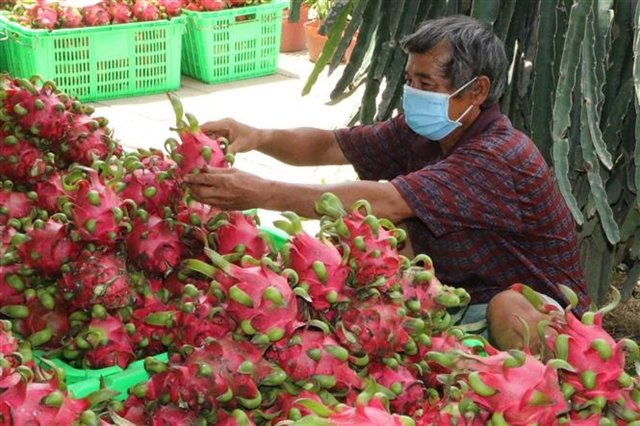
For instance, with a population nearing 1.4 billion, India is a promising market with a high demand for Vietnamese dragon fruit, as noted by Việt Nam’s Trade Counsellor in India Bùi Trung Thướng. However, Vietnamese businesses have yet to fully tap into this market.
Understanding markets and following regulations
Given the intensifying trade conflicts and the growing trend of protectionism, the Ministry of Industry and Trade stressed that expanding into emerging markets will help reduce Việt Nam’s reliance on traditional markets such as China and the US, both of which are currently subject to geopolitical and trade-related uncertainties. While these new markets offer fresh opportunities, they also come with their own sets of challenges.
Ngô Xuân Nam, deputy director of the Vietnam Sanitary and Phytosanitary Notification Authority and Enquiry Point (SPS Vietnam), said that countries such as Japan, the Republic of Korea and EU member states demand high quality standards and stringent production protocols. This compels domestic agricultural exporters to invest in quality improvement and modernise production processes to meet these requirements.
Each emerging market has its own specific characteristics.
While acknowledging the rising demand for seafood in the Middle East, particularly in countries like Israel, the UAE, Saudi Arabia and Qatar, the official cautioned that to effectively enter these markets, Vietnamese businesses must prioritise compliance with Halal standards, as the majority of consumers in the region are Muslims.