
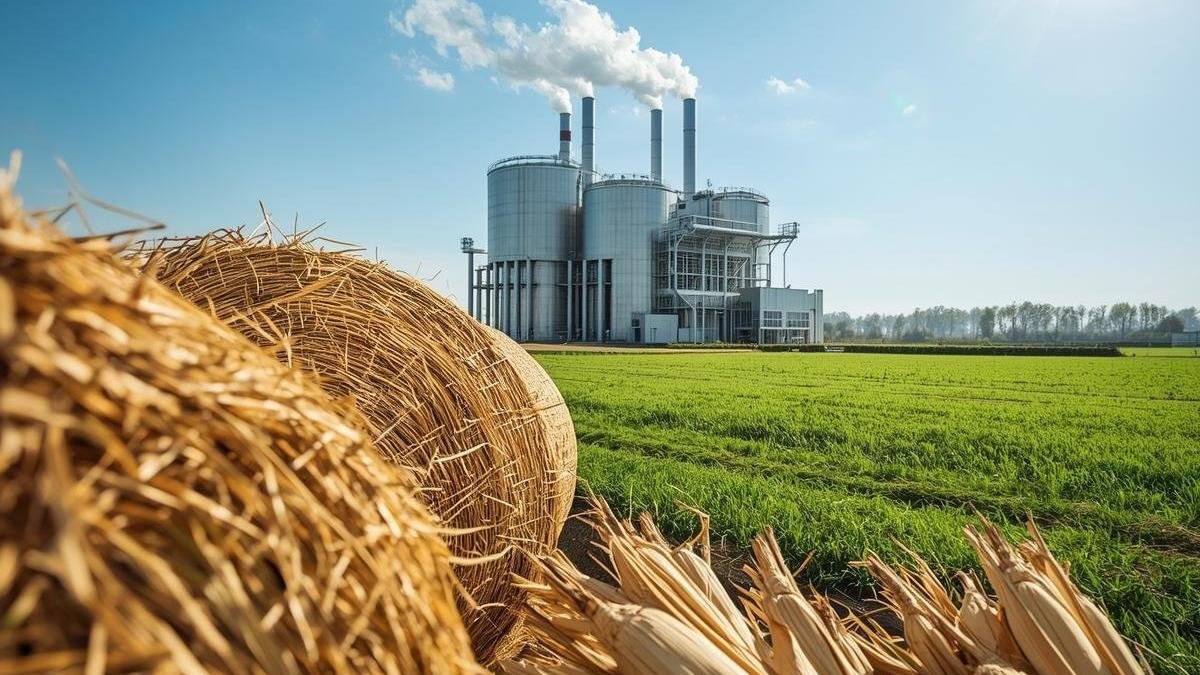

India produces 230 million tonnes of agricultural waste yearly. Converting it into bio-CNG, biofuels, and biomass energy can cut pollution, reduce fossil fuel reliance, and boost farmer income.
To realise India’s vision of energy self-reliance, agricultural waste needs to be treated as a valuable source of energy. Converting crop residues into bio-CNG and biofuels is a strategic move that would supplement the national energy mix with renewable sources and tackle the challenge of pollution caused by improper disposal of agricultural remains.
As an agrarian country, India produces an estimated 230 million metric tons of surplus agricultural waste1. Much of this is dumped in landfills or burned openly by farmers due to a lack of infrastructure, an awareness gap, and economic constraints, thereby polluting the environment. Northern Indian is worst hit by improper disposal, where every year a thick layer of smog clouds the National Capital Region at the onset of winter, leaving people gasping for air. The ‘residue’ or ‘waste’, often treated as a liability by the farmers, is truly an opportunity to generate additional income and increase clean energy production.
Why treating agricultural waste is crucial
Fossil fuels currently comprise over 80 per cent of the global energy mix, running industries and lighting homes. However, burning of fossil fuels is also overwhelmingly the primary cause of the increase in CO2 emissions.
Bioenergy, in all its forms – Solid, Liquid or Gas – is a sustainable alternative to fossil fuels and better for the environment as well as the world. Owing to its extensive environmental merits, the International Energy Agency (IEA) Net Zero Emissions by 2050 Roadmap (NZE) has projected that bioenergy will meet between 15% and 20% of total energy needs.2
3 pathways to energy: Solid, liquid, gas
Agricultural residues can be utilised across various industries and purposes. Solid compost, biochar, pellets, or briquettes can be co-fired with coal in thermal power plants to reduce reliance on fossil fuels and minimise CO₂ emissions. One such example is NTPC in Dadri, Uttar Pradesh, which uses rice husk-based briquettes co-fired with coal in its thermal power plant to reduce greenhouse gas emissions.
The liquid bioethanol, biodiesel, and fertiliser derived through the fermentation and transesterification process can further be utilised across transport, agriculture, and chemical industries as substitutes for conventional energy. Like ethanol has gained substantial traction in India with the launch of the Ethanol Blended Petrol (EBP) programme, which aims to blend ethanol with petrol to reduce reliance on fossil fuels. The initial target is 20% blending by 2030.3. Similarly, biodiesel, produced from non-edible oilseeds like jatropha and from used cooking oil, is utilised in diesel engines.
Compressed Biogas (CBG) generated through anaerobic digestion or gasification is another versatile renewable fuel used for cooking, heating, and power generation. Government policies such as the SATAT initiative and the mandatory Bio-CNG blending obligation require oil and gas marketing companies (OGMCs) to procure and distribute bio-CNG through their existing networks.
Challenges and opportunities
India’s power generation potential from biomass is 1,00,000 MW.4 However, the path to transforming agricultural resources into energy and utilising them presents certain challenges.
While Bio-CNG has received support through a mandated buy-back obligation from oil and gas companies, and with prices fixed by the government, maximising gas yield from various types of agro feedstock remains a difficult task. To support production at scale, an international-quality ecosystem with high-grade machinery and a skilled team is required to ensure efficiency, consistency, and commercial viability. Currently, most of the critical equipment, such as Biogas upgrading systems, dry fermentation digesters, desulphurisation systems, gas analysers for biomethane quality, and others, is imported from European companies, increasing capital expenditure and impacting the bottom line.
Napier grass as a feedstock is another issue of conflict. It is indeed a viable and inexpensive fuel option, but a large portion of agricultural land is now being used for growing Napier grass in place of food crops, which, if not monitored at this early stage, could lead to a shortage of food crops.
Beyond agriculture, millions of tonnes of organic waste are generated daily from kitchens, restaurants, municipalities, food processing units, and dairy farms, and end up in landfills or dumpsites as part of a linear economic model that we follow. This not only leads to a loss of valuable resources but also strains the environment.
Renewable energy has immense potential, and, in realising its significance in achieving Net Zero by 2070, the government is taking proactive measures to promote it. The recent reduction of GST on renewable energy devices and parts from 12 per cent to 5 per cent is a welcome step. More such initiatives, along with a long-term view of using agricultural waste, can help tackle the dual challenge of pollution and energy security. This will also create lakhs of jobs and create a new industrial ecosystem to support growth.
The author is CEO, WOG Technologies.
Published on September 20, 2025