
The government has been urged to implement new ways of reducing energy bills without cutting VAT.
Removing renewables subsidies, reducing system costs and introducing efficiency standards for landlords, could cut the typical household’s annual fuel bill by £178 by 2030, the think tank Green Alliance has said.
Families living in draughty, inefficient rented homes could see even greater savings, potentially up to £587 per year. through these measures.
The recommendations emerge amid reports that the Treasury is considering removing VAT from energy and scaling back efficiency programmes funded through household bills, as it seeks to ease the cost-of-living crisis and address criticism regarding the expense of net-zero policies.
The Green Alliance stressed the immediate need for government intervention, noting that the average household is expected to pay £478 more in October 2025 than four years prior. Currently, an estimated nine million UK households are experiencing fuel poverty, highlighting the critical urgency of the situation.
But the environmental organisation said cutting VAT and energy efficiency programmes would be the wrong way to do it.

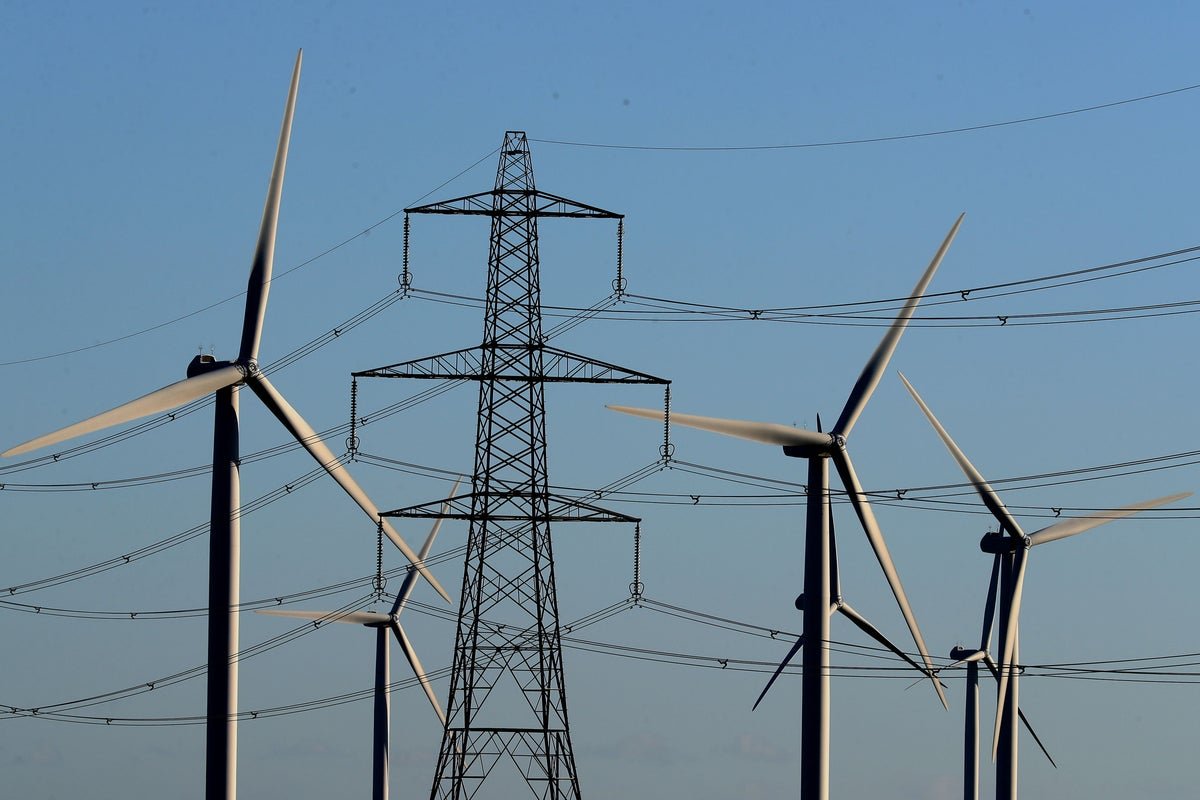
The recommendations emerge amid reports that the Treasury is considering removing VAT from energy and scaling back efficiency programmes funded through household bills (Jacob King/PA)
Green Alliance senior policy adviser Stuart Dossett said: “We are still very much living in a cost-of-living crisis, which has been a fossil fuel-driven energy crisis.
“There are households up and down the country that are being battered by this, and many people, as we move into winter, will be unable to heat their homes to a comfortable temperature because bills are too high.”
While the government has “rightly” recognised the need to bring down costs, Mr Dossett argued that bringing VAT rates down to zero could immediately cut bills, but would be a “forever more move”, as it would be politically difficult to reverse.
Using the £2.3 billion the VAT cut would cost the Treasury to take some green levies – focusing on subsidies for renewables dating back more than a decade – off bills and into government spending would still reduce consumer costs.
These would include the feed-in tariffs for household solar power and some of the “renewables obligation” subsidies for early clean electricity projects such as wind farms.
It would have advantages over zero-rating VAT as the schemes’ costs will decline until their conclusion in 2037, making it a better value move for the government, Green Alliance argues.
And as they are levied on electricity bills, removing them would give greater savings to those who rely on direct electric heating – who tend to be lower income and in deep fuel poverty because of high running costs – while also incentivising take-up of clean electric-powered heat pumps.
Mr Dossett also warned the government should not cut spending on energy efficiency measures, which pay for insulation and other improvements for households in fuel poverty via a levy on bills.
“If the government is serious about lowering people’s bills for good, the way to do that is investing in insulating our homes, not raiding schemes that have helped families lower their energy costs as a way of making their sums add up in the Budget,” he said.

An estimated nine million UK households are experiencing fuel poverty, highlighting the critical urgency of the situation (Alamy/PA)
A new paper from Green Alliance launched ahead of the Budget also says that system costs could be reduced by 2030 with a series of “no regret” options, including lowering voltage levels on the low voltage network as modern appliances are using more power than they need.
Green Alliance also advocates for putting gas power plants in a “strategic reserve”, removing them from the power market and enabling system operator Neso to determining when to generate electricity from gas, to prevent high gas prices pushing up the cost of power.
And measures to reduce the financing costs of new renewables could cut how much they cost to build and the price of the electricity they generate, while boosting their deployment and reducing the UK’s exposure to expensive fossil fuels.
The think tank also calls for the government to implement a private rental sector minimum energy efficiency standard equivalent to Energy Performance Standard (EPC) C by 2030, to help people in rented accommodation who are often the most vulnerable to high bills.
Mr Dossett said the move would be “crucially important for lifting huge swathes of households that are currently experiencing fuel poverty out of it”.
Other measures including installing smart meters that could also help people reduce energy use and cut their bills.
Taken together, a typical household could save up to £178 a year by 2030, and a family in rented accommodation that is improved from an EPC E to a C rating and gets a smart meter, could save up to £587 in total, Green Alliance said.
A spokesperson for the Department for Energy Security and Net Zero (DESNZ) said the government did not comment on speculation over tax changes.
But they said: “The government’s clean energy mission is exactly how we will deliver cheaper power and bring down bills for good.
“Our mission is relentlessly focused on delivering lower bills for the British people, to tackle the affordability crisis that has been driven by our dependence on fossil fuel markets.”
The spokesperson said the government would publish an update on plans to make private rental homes reach EPC C standard by 2030 in “due course”, and was exploring options for rebalancing gas and electricity prices.