

MOUNT STORM, W.Va. — Down a long gravel road, tucked into the hills in West Virginia, is a low-slung building where researchers are extracting essential elements from an old coal mine that they hope will strengthen the nation’s energy future.
They aren’t mining the coal that powered the steel mills and locomotives that helped industrialize America — and that is blamed for contributing to global warming.
Rather, researchers are finding that groundwater pouring out of this and other abandoned coal mines contains the rare earth elements and other valuable metals that are vital to making everything from electric vehicle motors to rechargeable batteries to fighter jets smaller, lighter or more powerful.
The pilot project run by West Virginia University is now part of an intensifying worldwide race to develop a secure supply of the valuable metals and, with more federal funding, it could grow to a commercial scale enterprise.
“The ultimate irony is that the stuff that has created climate change is now a solution, if we’re smart about it,” said John Quigley, a senior fellow at the Kleinman Center for Energy Policy at the University of Pennsylvania.
The technology that has been piloted at this facility in West Virginia could also pioneer a way to clean up vast amounts of coal mine drainage that poisons waterways across Appalachia.
The project is one of the leading efforts by the federal government as it injects more money than ever into recovering rare earth elements to expand renewable energies and fight climate change by reducing planet-warming greenhouse gas emissions.
For the U.S., which like the rest of the West is beholden to a Chinese-controlled supply of these valuable metals, the pursuit of rare earth elements is also a national security priority.
Those involved, meanwhile, hope their efforts can bring jobs in clean energy to dying coal towns and clean up entrenched coal pollution that has hung around for decades.
In Pennsylvania alone, drainage from coal piles and abandoned mines has turned waterways red from iron ore and turquoise from aluminum, killing life in more than 5,000 miles of streams. Federal statistics also show about 470 square miles of abandoned and unreclaimed coal mine lands host more than 200 million tons of coal waste.
The metals that chemists are working to extract from mine drainage here are lightweight, powerfully magnetized and have superior fluorescent and conductive properties.
One aim of the Department of Energy is to fund research that proves to private companies that the concepts are commercially viable and profitable enough for them to invest their own money.
Hundreds of millions of dollars from President Joe Biden’s 2021 infrastructure law is accelerating the effort.
Department officials hope that by the middle of the 2030s this infusion will have spawned full-fledged commercial enterprises.
PAIR OF PROJECTS
The two most advanced projects funded by the department are the one in West Virginia treating mine drainage and another processing coal dug up by lignite mining in North Dakota.
The first could be an important source of a number of critical metals, such as yttrium, neodymium and gadolinium, used in catalysts and magnets. The latter could be a major source of germanium and gallium, used in semiconductors, LEDs, electrical transmission components, solar panels and electric vehicle motors.
Researchers at each site are designing a commercial-scale operation, based on their pilot projects, in hopes of landing a massive federal grant to build it out.
The alternative would be to develop new mines, disturb more land, get permits, hire workers, build roads and connect power supplies, tasks that take years.
“With acid mine drainage, that’s already done for you,” said Paul Ziemkiewicz, director of the Water Research Institute at West Virginia University.
Ziemkiewicz began the mine drainage project almost a decade ago, helped by federal subsidies. He had envisioned it as a way to treat runoff, recover critical minerals and raise money for more mine cleanups in West Virginia.
But the Biden administration’s ambitious funding for clean energy and a domestic supply of critical minerals broadened that goal.
At the facility, drainage from a one-time coal mine — now closed and covered by a grassy slope — emerges from two pipes, and dumps about 800 gallons per minute into a retention pond.
From there the water is routed through massive indoor pools and a series of large tanks that, with the help of lime to lower the acidity, separate out most of the silicate, iron and aluminum. That produces a pale powdery concentrate that is about 95% rare earth oxides, plus water clean enough to return to a nearby creek.
The Department of Energy is funding research on coal wastes in various states.
“There are literally billions of tons of coal ash and coal waste lying around, across the country. And so if we can go back in and remine those, there’s decades’ worth of materials there,” said Grant Bromhal, the acting director of the Department of Energy’s Division of Minerals Sustainability.
Not only coal, but old copper and phosphate mines also hold potential, Bromhal said.
SATISFYING FUTURE DEMAND
The country won’t be able to recover metals from all of them right away, but technologies the department is helping develop can satisfy a substantial part of demand in the next 20 to 30 years, Bromhal said.
“So if we get into the tens of percents or 50%, I think that’s in the realm of possibility,” he said.
Other solutions to obtain more of these metals are retrieving them from discarded devices and shifting sourcing to friendly nations and away from geopolitical rivals or unstable countries, analysts say. For now, there are only a handful of critical or rare earth mineral mines in the United States, although many more are being proposed.
One final subsidy will be required from the federal government: buy the reclaimed metals at a price that guarantees a commercially viable operation, Ziemkiewicz said.
That way China can’t simply buy up the product or use its market dominance to drive down prices and scare away private investors, he said.
Quigley, a former environmental protection secretary of Pennsylvania and a one-time small-city mayor in coal country, hopes to see a facility like Ziemkiewicz’s come to the Jeddo mine tunnel system in northeastern Pennsylvania.
The Jeddo has defied decades of efforts to treat its flow, which drains a vast network of abandoned underground mines.
It is a massive source of pollution in the Chesapeake Bay watershed, producing an estimated 30,000 to 40,000 gallons per minute.
Bringing the Little Nescopeck Creek back to life could put people to work cleaning up the stream and creating recreational opportunities from a newly revived waterway, Quigley said.
“This could mean a lot to coal communities, to a lot of people in the coal region,” Quigley said. “And to the country.”
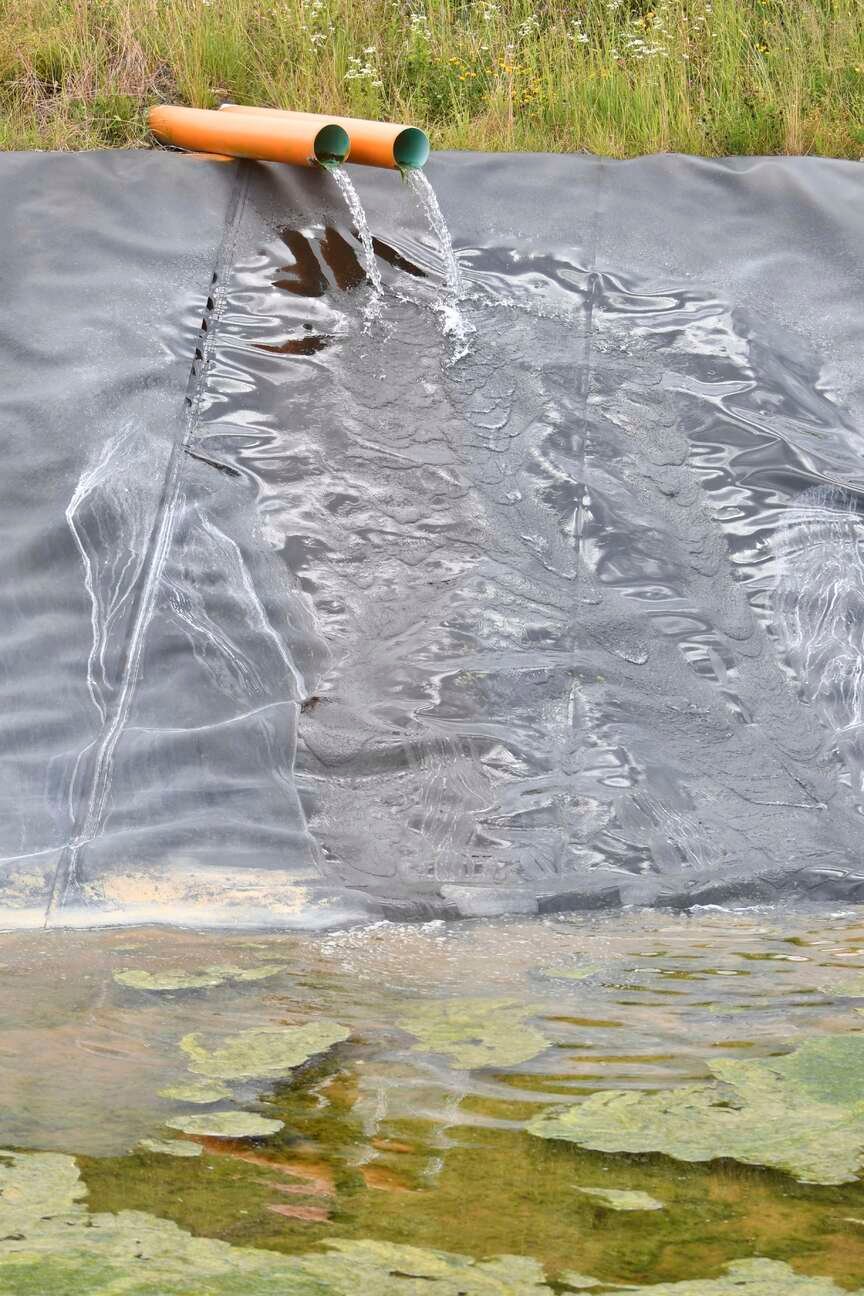 Groundwater carrying iron, aluminum, rare earth elements and other metals from an abandoned coal mine pours into a retention pond at a facility run by West Virginia University’s Water Research Institute, June 25, 2024, in Mount Storm, W.Va. Researchers found that groundwater pouring out of this and other abandoned coal mines contain the rare earth elements and other valuable metals that are vital to making everything from electric vehicle motors to rechargeable batteries to fighter jets smaller, lighter or more powerful. (AP Photo/Marc Levy)
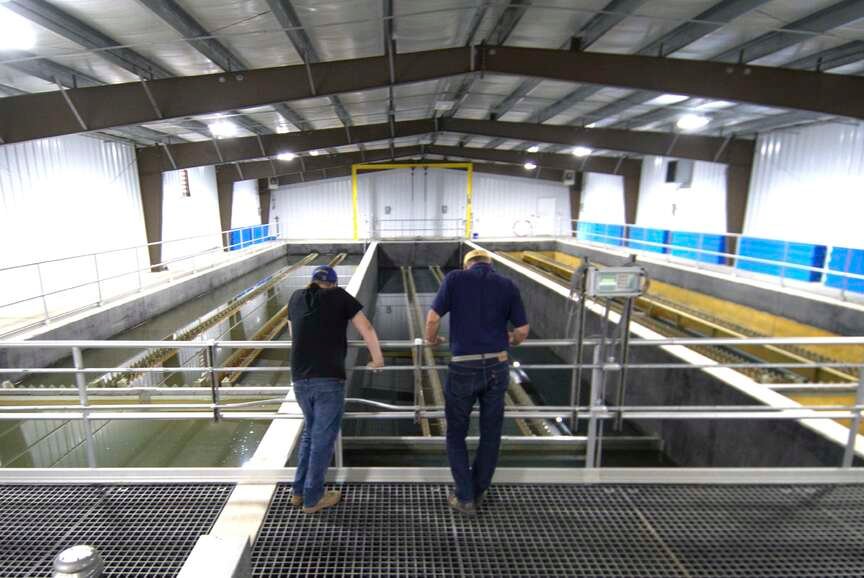 Dave Hoffman, left, and Paul Ziemkiewicz of West Virginia University’s Water Research Institute check on clarifying pools at a facility they run where rare earth minerals are separated from acidic groundwater draining from an abandoned coal mine, June 25, 2024, in Mount Storm, W.Va. Researchers found that groundwater pouring out of this and other abandoned coal mines contains the rare earth elements and other valuable metals that are vital to making everything from electric vehicle motors to rechargeable batteries to fighter jets smaller, lighter or more powerful. (AP Photo/Marc Levy)
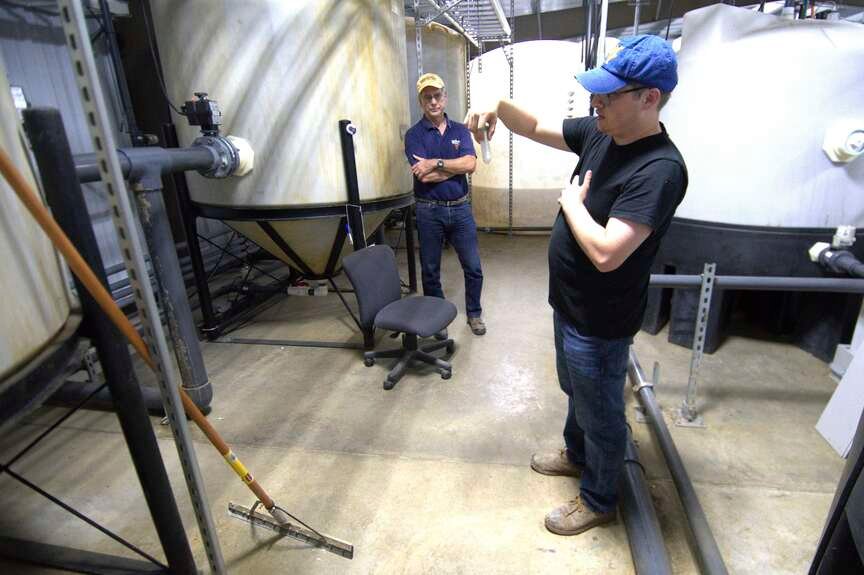 Dave Hoffman of West Virginia University’s Water Research Institute holds up a vial of light rare earth oxides at a facility that separates them from acidic groundwater draining from an abandoned coal mine, June 25, 2024, in Mount Storm, W.Va. Researchers are finding that groundwater pouring out of this and other abandoned coal mines contains the rare earth elements and other valuable metals that are vital to making everything from electric vehicle motors to rechargeable batteries to fighter jets smaller, lighter or more powerful. (AP Photo/Marc Levy)
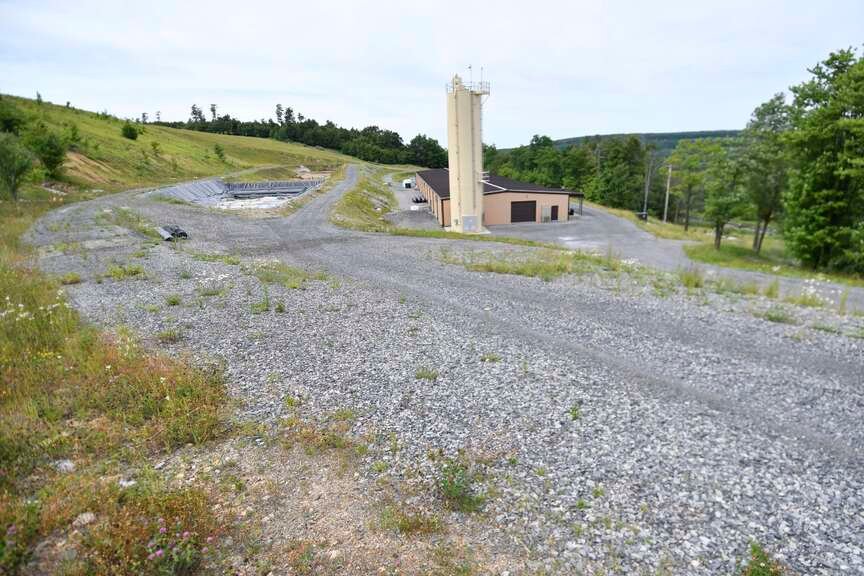 West Virginia University’s Water Research Institute runs this facility where rare earth minerals are separated from acidic groundwater draining from an abandoned coal mine, June 25, 2024, in Mount Storm, W.Va. Researchers are finding that groundwater pouring out of this and other abandoned coal mines contains the rare earth elements and other valuable metals that are vital to making everything from electric vehicle motors to rechargeable batteries to fighter jets smaller, lighter or more powerful. (AP Photo/Marc Levy)