Close Menu
Invest Intellect
    Facebook X (Twitter) Instagram
    Invest Intellect
    Facebook X (Twitter) Instagram Pinterest
    • Home
    • Commodities
    • Cryptocurrency
    • Fintech
    • Investments
    • Precious Metal
    • Property
    • Stock Market
    Invest Intellect
    Home»Commodities»Metal-mining pollution impacts 23 million people worldwide
    Commodities

    Metal-mining pollution impacts 23 million people worldwide

    September 22, 20234 Mins Read


    Victoria GillScience correspondent, BBC News

    Getty Images Aerial view of a tailings dam - embankment used to store by-products of mining operations, in this case of the extraction of copper- of the Minera Valle Central mining company, in Rancagua, ChileGetty Images

    An aerial view of a tailings dam storing waste from a copper-mining operation in Chile

    At least 23 million people around the world live on flood-plains contaminated by potentially harmful concentrations of toxic waste from metal-mining activity, according to a study.

    UK scientists mapped the world’s 22,609 active and 159,735 abandoned metal mines and calculated the extent of pollution from them.

    Chemicals can leach from mining operations into soil and waterways.

    The researchers say future mines have to be planned “very carefully”.

    This is particularly critical as the demand surges for metals that will support battery technology and electrification, including lithium and copper, says Prof Mark Macklin from the University of Lincoln, who led the research.

    “We’ve known about this for a long time,” he told BBC News. “What’s alarming for me is the legacy – [pollution from abandoned mines] is still affecting millions of people.”

    The findings, published in the journal Science, build on the team’s previous studies of exactly how pollution from mining activity moves and accumulates in the environment.

    The scientists compiled data on mining activity around the world, which was published by governments, mining companies and organisations like the US Geological Survey. This included the location of each mine, what metal it was extracting and whether it was active or abandoned.

    Prof Macklin explained that the majority of metals from metal mining is bound up in sediment in the ground. “It’s this material – eroded from mine waste tips, or in contaminated soil – that ends up in river channels or [can be] deposited over a flood-plain.”
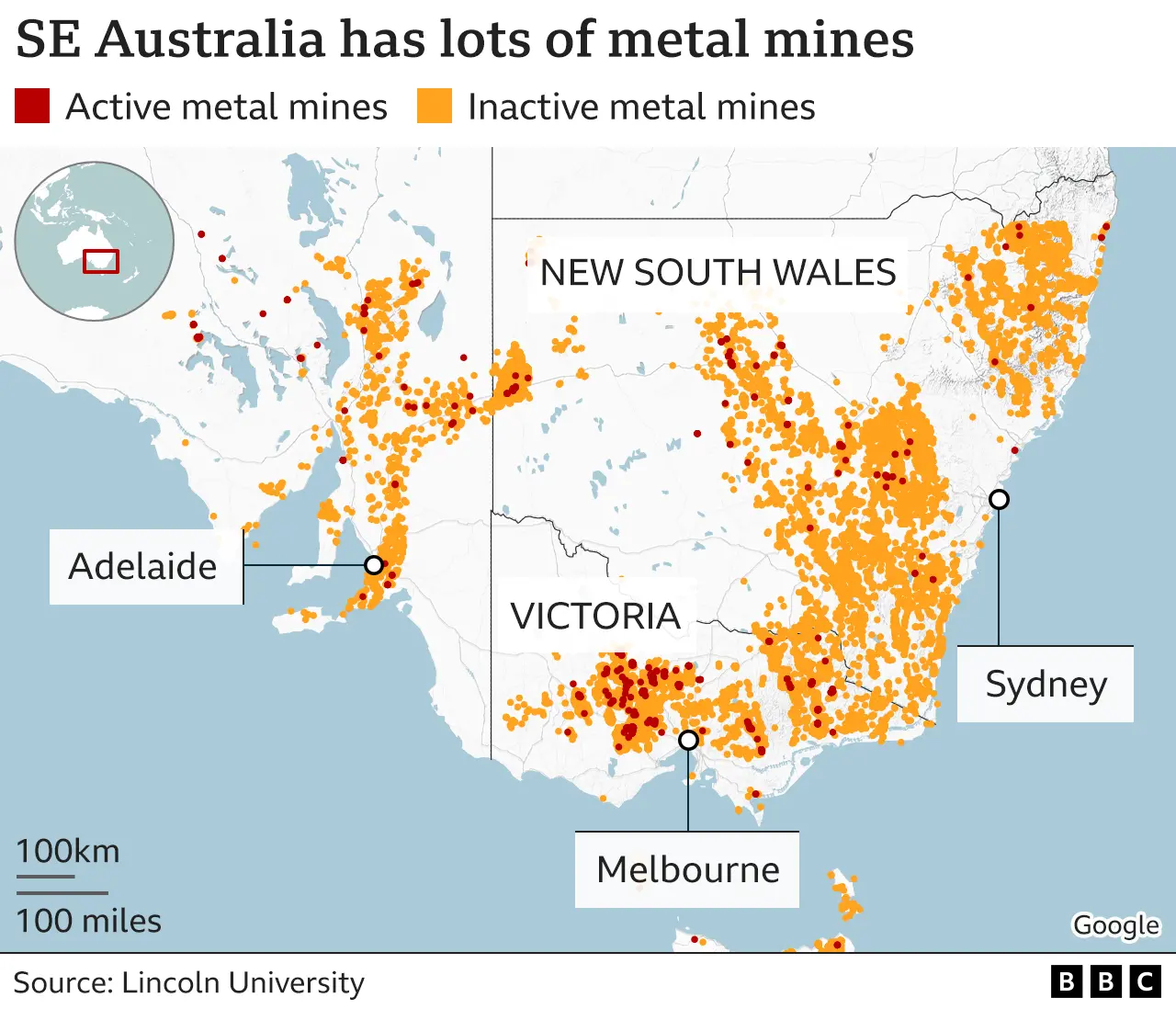
    A map of south eastern Australia showing where active and inactive metal mines are located. There is a large cluster around Melbourne in the state of Victoria and also south west of Sydney in New South Wales. The majority of them are inactive.

    Prof Macklin and his colleagues used previously published field and laboratory analyses to work out how far this metal-contaminated sediment moves down river systems.

    That data allowed the scientists to produce a computer model that could calculate the extent of river channels and flood-plains around the world that are polluted by mining waste – both from current and historical mining activity.

    “We mapped the area that’s likely to be affected, which, when you combine that with population data, shows that 23 million people in the world are living on ground that would be considered ‘contaminated’,” said Chris Thomas, who is professor of water and planetary health at the University of Lincoln.

    “Whether those people will be affected by that contamination, we simply can’t tell with this research, and there are many ways that people may be exposed,” he stressed. “But there is agriculture and irrigation in many of those areas.”

    Crops grown on contaminated soils, or irrigated by water contaminated by mine waste, have been shown to contain high concentrations of metals.
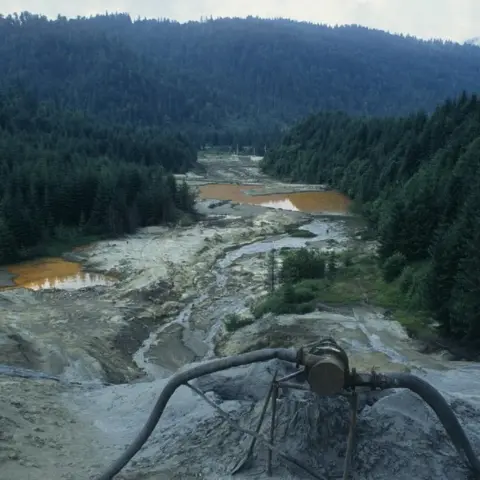
    PAul Brewer/University of Aberystwyth Waste leaks downstream after a dam partially fails at a mine in RomaniaPAul Brewer/University of Aberystwyth

    Waste leaks downstream, after a dam partially fails at a mine in Romania

    “Animals grazing on flood-plains may also eat contaminated plant material and sediment, especially after flooding, when fresh metal-rich sediment is deposited,” the scientists explained in their paper.

    “With climate change and more frequent floods,” Prof Macklin added, “this legacy [pollution] is going to extend and expand.”

    Prof Jamie Woodward from the University of Manchester, who was not involved in the study, said the research highlighted the threat posed by “silent pollution” stored in flood-plains.

    “A good deal of river monitoring is focused on water when the real ‘nasties’ are often associated with river sediments,” he told BBC News.

    “We need to better understand how contaminants are transported in the environment and where they are stored. This allows us to assess hazards and to mitigate against them. Heavily contaminated flood-plain grasslands should not be used for livestock grazing, for example.”

    The researchers point out in their study that metal mining represents “humankind’s earliest and most persistent form of environmental contamination”. Waste from mining began to contaminate river systems as early as 7,000 years ago.

    Data visualisations by Kate Gaynor and Mike Hills


    Source link

    Share. Facebook Twitter Pinterest LinkedIn Tumblr Email

    Related Posts

    India Energy Week 2026 Day 2 | GAIL on Hydrogen, Gas Infrastructure & AI-Driven Energy Future

    Commodities

    AI vs. AI: Using intelligence to solve the energy strain of data centers

    Commodities

    Energy bills forecast to fall – why winter is still costing households more

    Commodities

    Little-known boiler tweak can save on energy bills and keep your home warm

    Commodities

    The Dirty Energy Secret On Your Plate

    Commodities

    Crypto struggles to shake off October blues while commodities steal the show

    Commodities
    Leave A Reply Cancel Reply

    Top Picks
    Commodities

    Megadeth Farewell Tour Dates: Where Are the Cities for the Band’s Last Thrash Metal Ride?

    Cryptocurrency

    Kamala Harris Plans to Boost AI and Crypto Sectors If She Wins – These Specific Stocks Could Benefit

    Fintech

    Elodie Trevillot (Finance Innovation) : «Nous avons de belles fintechs qui pourraient être utiles aux organismes publics»

    Editors Picks

    Binance Invests $53M in Mexican Fintech Expansion Through New Regulated Platform

    September 1, 2025

    All my friends are buying investment properties. Should I buy one too?

    November 29, 2025

    Massive Attack exit Spotify in protest at Daniel Ek’s military investments

    September 20, 2025

    For property investors, one step forward and two steps back

    July 24, 2024
    What's Hot

    Stunning UK village now a ghost town as desperate locals slash house prices by £100k

    June 23, 2025

    Des changements au scrutin du Temple de la renommée du baseball

    March 5, 2025

    Hedge funds profit as Venezuela’s bonds surge

    January 5, 2026
    Our Picks

    Digital currency initiative: HSBC – Central Banking

    March 10, 2025

    Utilities Give Back Some Gains on Treasury Yield Risk – Utilities Roundup

    May 22, 2025

    CFTC Chairman Reiterates That Bitcoin and Ether Are Commodities

    July 12, 2024
    Weekly Top

    Fintech investment company swings to profit – The Royal Gazette

    January 28, 2026

    How the Saks Global bankruptcy could affect restaurant real estate

    January 28, 2026

    India Energy Week 2026 Day 2 | GAIL on Hydrogen, Gas Infrastructure & AI-Driven Energy Future

    January 28, 2026
    Editor's Pick

    Business Banking, Wealthtech, and Cross-Border Payments |

    October 18, 2024

    Dalton Investments détient une participation de 5,01% dans Macnica Holdings, selon des données réglementaires -Le 10 mars 2025 à 07:36

    March 9, 2025

    What Is Roku? Understanding the Technology Behind Streaming Made Simple

    August 19, 2025
    © 2026 Invest Intellect
    • Contact us
    • Privacy Policy
    • Terms and Conditions

    Type above and press Enter to search. Press Esc to cancel.