
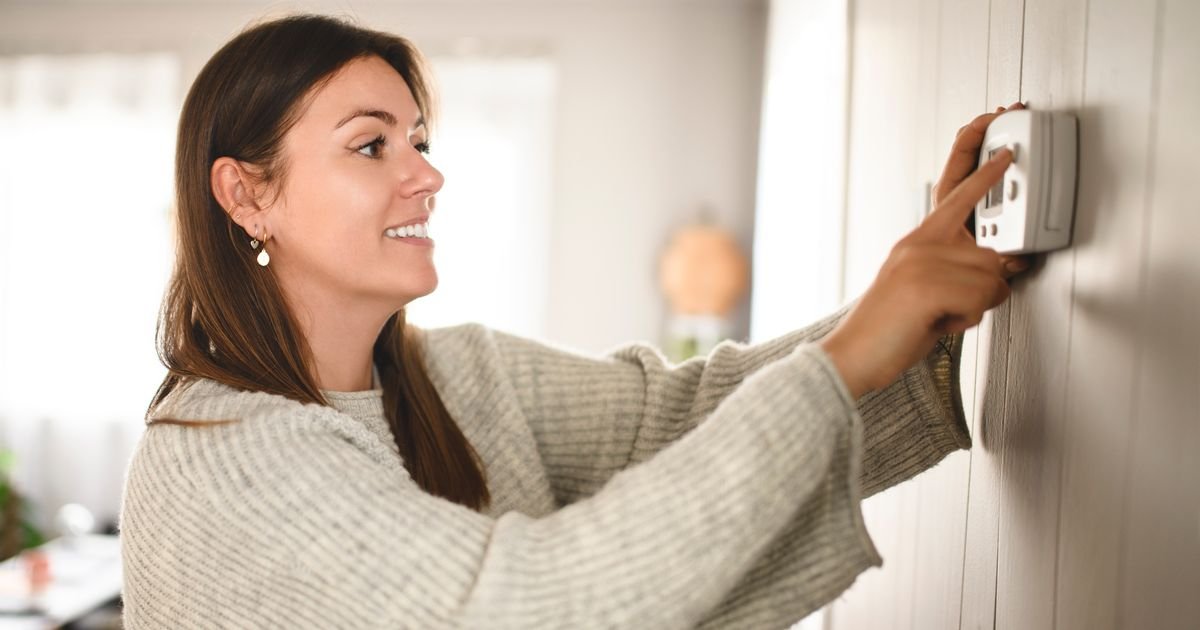
Heating experts have now revealed how to keep your home warm and comfortable as well as fighting mould and damp, and it’s down to one perfect thermostat temperature.

As the temperatures drop this winter and it starts to feel colder and colder, many of us will be reaching for the thermostat to crank the heating up to warm our homes.
Yet it’s a fine line between feeling toasty at home and having to pay huge energy bills; now, experts have urged households to make sure their heating is as effective as possible – it could even save you money on your heating bill in the process.
Setting your home thermostat to an optimum temperature can keep the chill out across winter, whilst still being cost effective and saving money.
Specialists at Your NRG have now revealed the perfect temperature to keep your home toasty, fight off damp and mould and it won’t cost you a fortune. In fact, it can keep your home warm and still mean your heating bill isn’t sky high.
Speaking to the Express, the experts said: “Keep your home’s thermostat over 14C to prevent mould growth – a little higher in tiled rooms.”
Anything lower than this could lead to damp conditions which can harm both your house structure and health. However, there’s no requirement to have the heating on continuously to combat mould, so don’t worry about heating your home at times when you’re not in it.
Instead the NRG experts advise programming your boiler to activate as needed and fine-tuning it to maintain your preferred level of warmth.
This strategic alteration can result in “significant savings” on your energy bills, and even reducing your thermostat by one degree might translate into an annual saving upwards of £100.
To find the sweet spot of being warm and comfortable whilst also saving money this winter, we should be aiming for our homes to be between 18C and 20C.
The consultants said: “This range provides the ideal balance for both well-being and cost-effective heating.”
When the heating is on at home, we’re also encouraged to make the most of their radiators when the heating is switched on. The majority of radiators come equipped with side controls for adjusting the temperature.
If utilised correctly, these thermostatic radiator valves – usually numbered from one to five (occasionally up to six) – can lead to savings. Experts recommend beginning with a setting of three or four.
They also added that bleeding your radiators can help you save money by removing air bubbles that hinder your heating. It’s advised to bleed radiators once a year.