
Key Takeaways
- Agricultural credit includes loans, notes, and bills of exchange tailored to farmers’ financial needs.
- It enables farmers to secure equipment, plant, harvest, and market their products effectively.
- The Federal Farm Credit System (FFCS) provides significant financial support to U.S. farmers.
- Agricultural credit helps farmers compete internationally against subsidized counterparts.
- Ready access to credit allows farmers to invest in new technologies and farming techniques.
What Is Agricultural Credit?
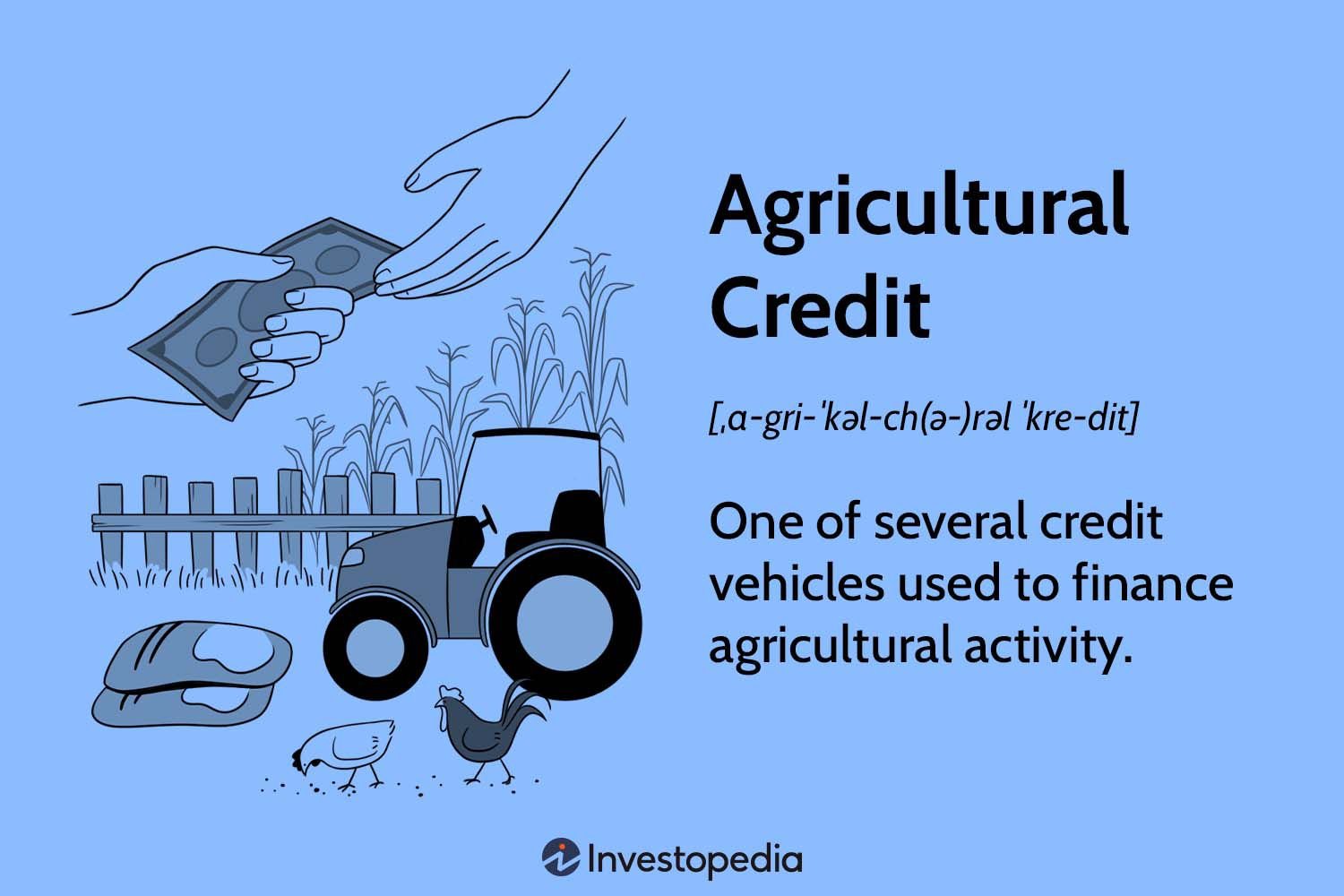
Agricultural credit refers to financing designed specifically for farmers and agricultural producers, using tools such as loans, notes, and bills of exchange tailored to seasonal and operational needs. It helps fund core activities like securing equipment, planning, harvesting, and marketing.
In the U.S., the Federal Farm Credit System plays a central role in providing this support. Access to agricultural credit also helps farmers stay competitive in a global market where prices can shift quickly.
Understanding the Mechanisms of Agricultural Credit
When someone needs credit, they often turn to banks for loans or other credit vehicles. Some industries have special facilities set aside through certain financial institutions as is the case with agribusiness—the business sector encompassing farming and farming-related commercial activities which involve all the steps required to send an agricultural good to market—production, processing, and distribution. This is called agricultural credit, which is available in many different countries.
The Federal Farm Credit System (FFCS) plays a key role in agricultural credit in the United States. The FFCS, which has been around since 1916, is made up of a series of institutions that have more than $180 billion in assets. These institutions range from wholesale banks and retail lenders that provide an estimated 35% of the real-estate and non-real estate borrowing needs of U.S. farmers. Short-term credit finances operating expenses, intermediate-term credit is used for farm machinery, and long-term credit is used for real estate financing.
Agricultural credit, which is also commonly referred to as agricultural finance, is an important component of the economy, especially in countries with arable land since agricultural products can be exported. Credit is vital to agricultural businesses because it gives farmers access to capital that might not otherwise be available to them. It helps them secure the seeds, equipment, and land they need to operate a successful farm. Agricultural credit programs not only help farmers and other agricultural producers, but also supports ranchers and rural homeowners with their finances.
Important
Agricultural credit helps farmers, other agricultural producers, as well as ranchers and rural homeowners.
Credit needs to be made available on competitive terms to allow American farmers who operate in a free market economy to be able to compete with farms that receive state financial subsidies, such as in the European Union (EU) or Russia. If this credit wasn’t available, the U.S. agribusiness sector would face unfair competition when it comes to securing the equipment and arable land needed to produce agricultural products for the global marketplace.
Key Factors Influencing Agricultural Credit
Countries with farming industries face consistent pressures from global competition. Products such as wheat, corn, and soybeans tend to be similar in different locations, making them commodities. Remaining competitive requires agribusinesses to operate more efficiently, which can require investments in new technologies, new ways of fertilizing and watering crops, and new ways of connecting to the global market.
Global prices of agricultural products may change rapidly, making production planning a complicated activity. Farmers may also face a reduction in usable land as suburban and urban areas move into their areas.
Just like any other industry, many entrepreneurs in the agricultural industry also find the need to diversify in order to maximize their profits. So farmers may not just grow single commodities or one type of livestock. Instead, they may need to think beyond existing operations. Doing so requires capital. The availability of agricultural credit helps these borrowers realize their dreams of expanding into more complex businesses.
The Bottom Line
Agricultural credit provides farmers with funding for equipment, seeds, land, and other resources they need to operate. Competitive terms are important for helping U.S. producers keep up with subsidized farms abroad.
This financing can come through loans, notes, or bills of exchange, with the Federal Farm Credit System supplying much of the support. By offering stability amid global competition and fluctuating prices, agricultural credit helps farmers remain viable.