
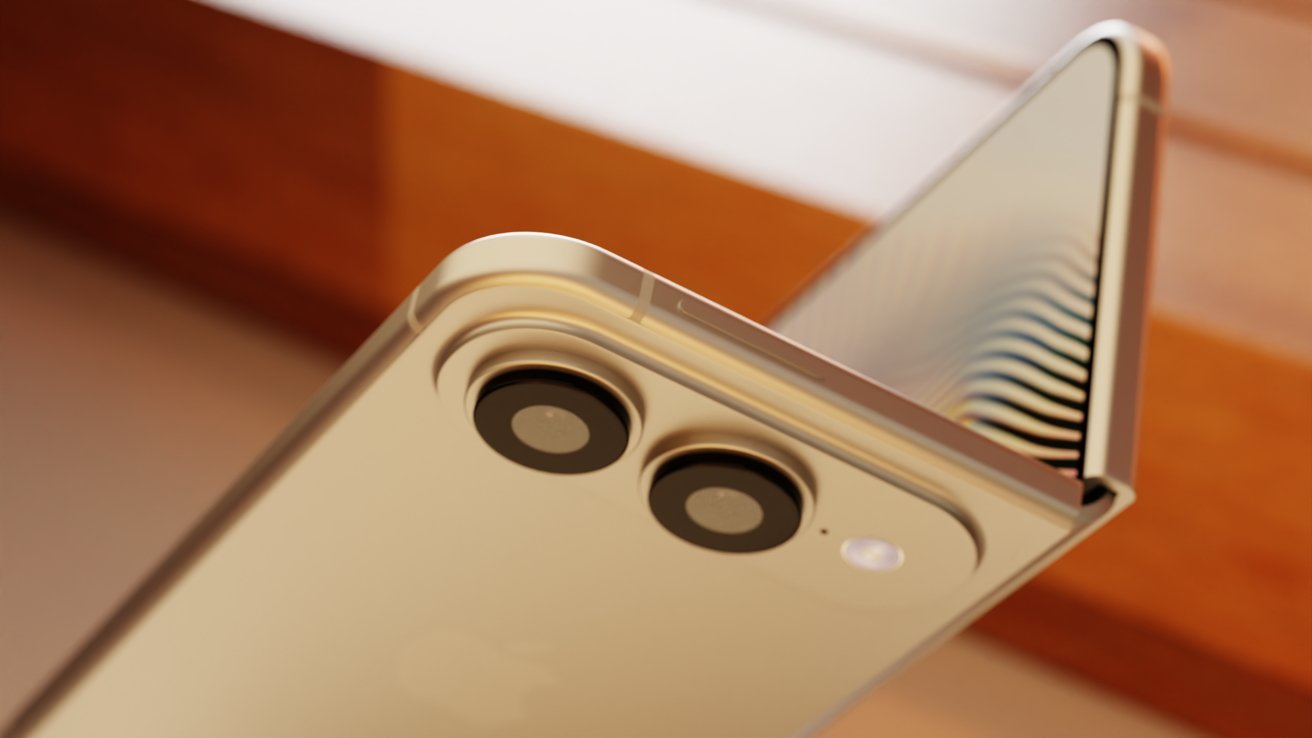
A leaker has reiterated claims about the iPhone Fold using a liquid metal hinge and titanium body, going against the current belief that it will have an aluminum body.
Unlike a regular static iPhone, the iPhone Fold is designed to be folded in half and opened up on a regular basis. This potential point of weakness means Apple has to be extremely careful about the types of material that it uses for the frequently-rumored model.
According to claims made by leaker Yeux1122 in a Naver post on Wednesday, Apple’s choice of materials for the casing and hinge of the iPhone Fold will be titanium and liquid metal, respectively. While the claims about the materials aren’t new, the leaker adds that they are better than in previous versions.
The hinge’s liquid metal material is said to be an improved version of the liquid metal SIM ejection tool Apple previously released. It would have to be, as the SIM ejection tool was shipped a decade ago, and the material has advanced in the interim.
And, a hinge is a far more complex engineering problem than a simple needle with a bend.
The titanium alloy said to be used, will also gain improved strength compared to the previous composites used in earlier iPhones. There will also apparently be an overall weight reduction due to changes in alloy composition and manufacturing processes.
Much like other social media-based leakers, Yeux1122 has a mixed track record when it comes to rumors. The account has a middling hit rate for accuracy, and occasionally makes some big mistakes, such as claiming Apple had abandoned plans to make its own 5G modem.
Material rumors
When it comes to the type of materials used for the casing of the iPhone Fold, titanium and Liquid Metal are frequently brought up as candidates for the job. However, while one seems like a dead cert, the other is somewhat questionable.
When it comes to the hinge, liquid metal is expected to be used, due to its inherent strength compared to its weight. It’s also a material Apple has worked with for about a decade without a real commercial use for it, making it a prime candidate for the hinge.
The use of titanium is a little more suspect. Initial assumptions were that the iPhone Air demonstrated it could be used for an ultra-slim device like the iPhone Fold to great effect.
However, claims from September and October 2025 indicated that a completely titanium case may not happen. Instead, depending on the source, Apple could use a hybrid titanium and aluminum frame, or just stick with aluminum alone.
This could be due to a variety fo reasons, including reducing production costs, supply issues, and cutting the weight of the final device.
With a launch expected in late 2026 or early 2027, mass production for the model could start within months. There’s still time for Apple to make a firm decision or changes when it comes to materials, and similarly, time for the rumor mill to change its mind on the matter.