
India
oi-Oneindia English Desk

India
Energy
Week
(IEW)
2026
marks
a
defining
moment
in
India’s
rise
as
a
serious
global
stakeholder
in
the
energy
transition.
Conceived
and
led
by
the
Ministry
of
Petroleum
and
Natural
Gas,
the
platform
reflects
New
Delhi’s
intent
to
move
global
energy
conversations
beyond
declarations
and
into
the
realm
of
execution-
where
policy
ideas
find
financing,
implementation
pathways
are
tested,
and
outcomes
are
measured
over
time.
The
global
energy
conclave
brought
together
over
75,000
energy
professionals
from
more
than
120
countries,
highlighting
India’s
rising
stature
and
influence
in
shaping
global
energy
dialogue
and
policy
conversations.
The
expanded
scale
of
the
platform
was
reflected
in
700
exhibitors,
10
country
pavilions,
and
11
specialised
thematic
zones.
Moreover,
550
speakers
from
across
the
world
participated
in
over
110
strategic
and
technical
sessions,
sharing
insights
and
perspectives
throughout
the
week.
India
Energy
Week
(IEW)
2026,
conceived
by
the
Ministry
of
Petroleum
and
Natural
Gas,
highlighted
India’s
role
in
global
energy
transition,
bringing
together
over
75,000
professionals
from
120+
countries,
with
Prime
Minister
Narendra
Modi
inaugurating
the
event
in
Goa.

Beyond
its
scale,
the
fourth
edition
of
India
Energy
Week
underscored
the
shift
in
how
global
energy
conversations
are
being
shaped.
The
event
consolidated
alignment
around
pragmatic
transition
pathways,
validated
India’s
investment-led
energy
model,
and
showcased
India’s
ability
to
execute
at
scale.
IEW
2026
moved
decisively
from
aspiration
to
alignment
on
capital
deployment,
technology
adoption,
and
transition
pathways.
Reflecting
India’s
status
as
the
fulcrum
of
the
global
energy
ecosystem,
Prime
Minister
Narendra
Modi
inaugurated
the
four-day
event
with
a
riveting
address
that
laid
out
the
vision
and
opportunities
embedded
in
the
country’s
energy
ambition.
Speaking
to
a
packed
house
at
the
state-of-the-art
convention
centre
located
at
ONGC’s
Advanced
Training
Institute
in
Goa,
the
Prime
Minister
exhorted
the
gathering
to
“Make
in
India,
Innovate
in
India,
Scale
in
India,
Invest
in
India” in
a
sector
that
is
at
the
heart
of
India’s
aspirations,
holding
$500
billion
investment
opportunities.
The
opening
session
expanded
on
the
ambitious
tone,
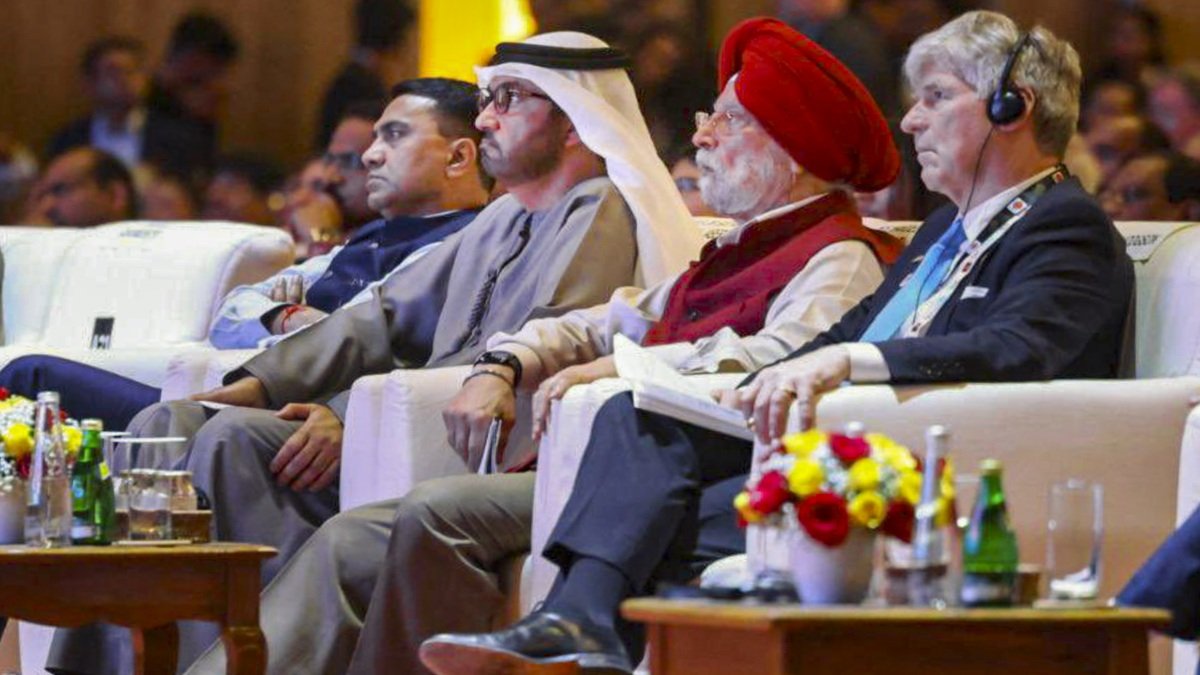
with
addresses
by
Union
Minister
for
Petroleum
and
Natural
Gas
Hardeep
Singh
Puri,
UAE
Minister
of
Industry
and
Advanced
Technology
His
Excellency
Sultan
Ahmed
Al
Jaber,
and
Goa
Chief
Minister
Dr.
Pramod
Sawant.
Their
remarks
underlined
India
Energy
Week’s
growing
stature
as
a
forum
that
prioritises
delivery
over
rhetoric.
Collectively,
their
participation
signalled
confidence
in
India’s
role
as
a
stable,
credible
and
long-term
partner
for
energy
investment,
technology
collaboration
and
transition
financing.IEW:
Bridging
the
Global
Energy
Divide
IEW
operationalises
this
bridge
by
placing
divergent
realities
at
the
same
table.
Capital-rich
economies
alongside
capital-intensive
transitions,
technology
developers
alongside
deployment
markets,
and
climate
ambition
alongside
development
necessity
provided
a
unique
platform
for
the
global
energy
ecosystem
to
assess
and
finetune
the
trajectory
of
the
shared
energy
future.
At
its
core,
IEW
functions
as
a
bridge-
linking
developed
and
developing
nations
around
the
shared
challenges
of
energy
security,
affordability,
and
sustainability.
At
a
time
when
energy
transitions
are
often
framed
through
the
lens
of
advanced
economies,
IEW
brings
much-needed
balance
by
amplifying
perspectives
from
emerging
markets
that
must
simultaneously
fuel
growth
and
meet
climate
commitments.
Union
Minister
Puri
made
this
clear
in
his
opening
remarks,
stating
that
India
is
committed
to
an
energy
balance
that
supports
economic
growth
through
practical,
inclusive,
and
scalable
models.
IEW:
A
Trusted
Partner
in
an
Evolving
World
The
strong
participation
of
international
leaders-
most
notably
UAE
Minister
Sultan
Ahmed
Al
Jaber
–
reinforces
India’s
credibility
as
a
reliable
and
constructive
partner
in
global
energy
cooperation.
At
a
time
when
the
world
is
in
flux,
India
Energy
Week
offers
a
rare
space
for
collaboration
grounded
in
mutual
interest
rather
than
ideology.
Over
successive
editions,
India
Energy
Week
has
evolved
into
a
full-spectrum
international
platform.
Beyond
formal
bilateral
meetings
between
energy
ministers,
the
forum
enables
open
dialogue
across
the
energy
value
chain,
connecting
policymakers
with
industry,
financial
institutions,
technology
developers,
and
researchers.
IEW:
Scale,
Participation,
and
Strategic
Timing
IEW
2026
emerged
as
a
platform
that
emphasises
resilience,
execution
and
investment-readiness,
distinguishing
this
edition
as
one
focused
on
navigating
complexity
rather
than
reiterating
consensus.
Since
its
launch
in
2023,
India
Energy
Week
has
rapidly
established
itself
as
a
key
annual
fixture
in
the
global
energy
calendar.
IEW
2026
brings
together
energy
ministers,
CEOs,
financial
leaders,
international
organisations,
technology
innovators,
and
academic
experts
to
collectively
address
pressing
energy
challenges.
Key
themes
include:
-
Energy
security
and
system
resilience -
Investment
frameworks
and
financing
mechanisms -
Clean
energy
transition
strategies -
Digital
technologies
and
innovation -
Energy
access
and
equity
Discussions
span
the
entire
energy
ecosystem-oil
and
gas,
renewables,
hydrogen,
biofuels,
carbon
capture,
power
systems,
and
future
mobility-offering
a
holistic
view
of
the
transition
challenge.
India’s
Energy
Transition:
Pragmatic,
Inclusive,
Scalable
India
Energy
Week
2026
underlined
the
emergence
of
India
as
a
convenor,
connector
and
catalyst
in
the
global
energy
ecosystem.
By
aligning
policy,
capital,
technology
and
execution
on
a
single
platform,
IEW
has
evolved
into
institutional
energy
infrastructure,
reflecting
the
priorities
of
a
changing
world.
Progress
in
areas
such
as
gas
connectivity,
biofuels,
clean
cooking,
fuel
and
mobility
infrastructure,
and
renewable
deployment
reflects
a
transition
model
rooted
in
practicality
rather
than
idealism.
It
is
a
model
that
prioritises
inclusion
and
affordability
while
responding
to
the
demands
of
a
fast-growing
economy.