
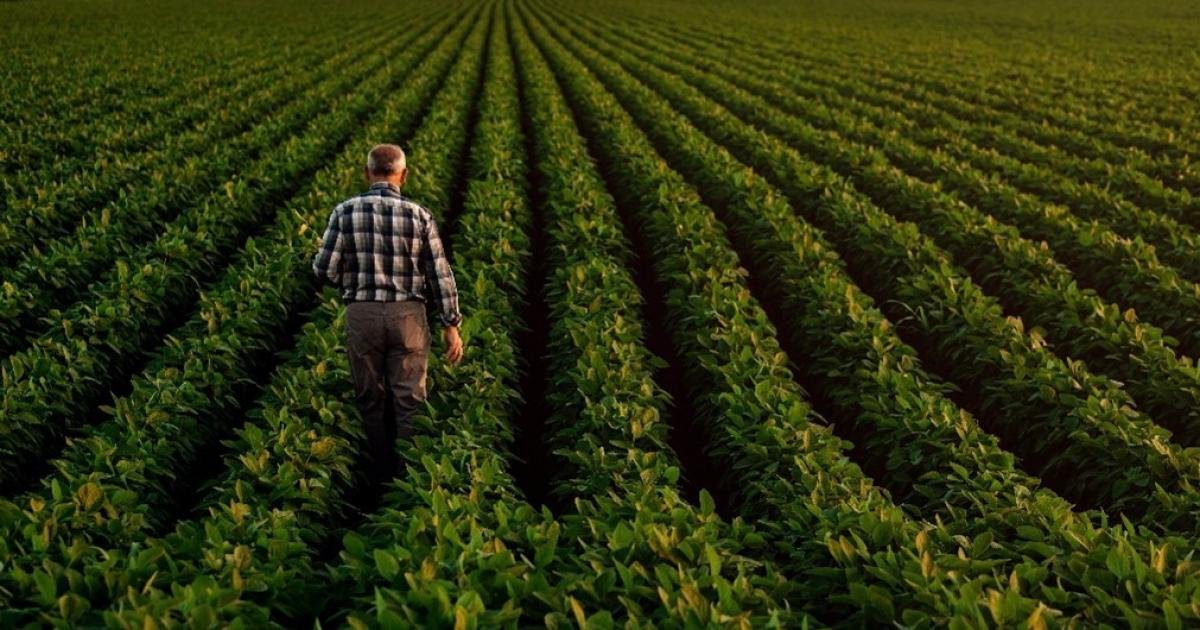
The more accustomed we become to AI – and the more familiar we are with its capabilities – the more possibilities are arising for AI to generate growth in less ‘obvious’ industries, such as healthcare and sciences.
One such industry that could benefit from AI optimisation is agriculture, which has experienced significant instability in the UK. Most recently, dairy farmers reported a food shortage-threatening lack of workers, while 6365 agricultural businesses have shut down in almost 12 months.
For insight into how AI could alter the future of the agricultural industry, we spoke to James McHugh and Ashleigh Patterson, consultants at AGBi – an innovation funding and consulting firm that helps businesses access government incentives and R&D tax credits. James and Ashleigh have specialist knowledge in the fields of AI and agriculture.
Firstly, what should businesses be aware of when it comes to the development of AI?
“Businesses looking at AI’s rapid development need to keep several critical considerations in mind,” says James. “First and foremost, companies must be aware of their ethical and legal responsibilities. AI systems can inadvertently embed biases or make unfair decisions, so firms must have a framework in place to guard against ‘algorithmic bias’ and discrimination.
“Data privacy is another paramount concern. Companies must comply with data protection laws and use data ethically while being aware of the reputational and cybersecurity risks the technology poses. Misuse of AI, like generating deepfake content or violating IP rights, can harm a company’s brand.
“Another key point is the need for cohesion over AI governance and strategy,” James continues. “Business leaders must develop a coherent AI strategy aligned with business goals, invest in the right tools and infrastructure and measure AI’s impact on KPIs like productivity or customer satisfaction. Businesses also need to prepare their workforce by upskilling employees and addressing fears around job displacement.
“Finally, firms should stay aware of the regulatory landscape,” says James. “AI regulations are evolving and issues like AI accountability and transparency are drawing scrutiny. Future-facing businesses in any sector must be aware that, in 2025 and beyond, AI governance will be a critical business imperative.”
Can you speak to any advancement likely to come about in the agricultural sector due to recent AI innovations?
“Recent breakthroughs in AI are expected to drive several advancements in agriculture,” says Ashleigh. “One promising development is the use of AI-powered predictive tools for crop management. These systems could forecast disease outbreaks, pest infestations, or drought stress weeks in advance by analysing patterns in weather, soil conditions and satellite imagery, enabling farmers to take action before problems occur.
“In the coming years, AI-driven precision irrigation systems are likely to become more common,” Ashleigh continues. “These tools make real-time decisions on when and how much to water, based on data from field sensors and weather forecasts. This helps farmers reduce water use while maintaining yields – a vital improvement in the face of climate change.
“Further down the line, AI is also expected to enhance supply chain efficiency, helping coordinate food production and distribution by predicting market demand more accurately. As these innovations develop, farms of the future will increasingly rely on AI to guide key decisions – from planting and irrigation to animal care and food delivery – creating a more efficient and sustainable agricultural system.”
What innovations within the agricultural sector do you feel are the most exciting for businesses?
“There is a lot of innovation taking place in the agricultural industry,” says Ashleigh. “One exciting area is the use of precision technologies in farming, known as ‘precision agriculture’. This involves the use of tools such as GPS, sensors, drones, and data analytics to monitor and manage crops and livestock with high accuracy.
“In crop farming, these technologies help optimise inputs like water, fertilisers, and pesticides, while in livestock farming, they are used to track animal health, monitor feeding patterns, and improve breeding efficiency.
“Another exciting area is the use of robotics and automation in farming,” Ashleigh continues. “One notable advancement is in the harvesting of crops, where machines are increasingly replacing manual labour. Mushrooms, for example, are traditionally picked by hand, due to the delicate nature of the mushroom caps. Unlike most fruit and vegetables, they have no protective outer skin, so are prone to damage and bruising.
“However, advanced robotic systems now incorporate advanced sensors, soft-touch grippers and machine vision to identify and gently pick mushrooms without causing damage. This signals a massive advancement within the mushroom industry!
“Innovations in sustainability are also transforming agriculture,” Ashleigh adds. “One example is the Lighthouse Farm model led by Professor Rogier Schulte. A standout case is a farm in Latvia with 1000 dairy cows which converts manure into biogas, electricity to power 2500 homes, and heat to run fish farming – ultimately producing high-value caviar as the primary output.”
Can you give us any insights into the future of the agricultural industry? How do you think new advancements will affect the sector – both nationally and on a local scale?
“The agricultural industry is set for major transformation driven by technology and sustainability demands,” says Ashleigh. “Nationally, the sector will become more tech-enabled and data-driven, boosting productivity and resilience. Controlled environment agriculture, such as indoor vertical farms, will be on the rise.
“New facilities in the UK, like Fischer Farms in Norfolk, show how stacking crops under LED lighting can dramatically increase output per square foot. Traditional farms will also continue adopting precision farming techniques, and by 2030, a significant majority of UK farms are expected to use satellite monitoring, AI-based decision support, and real-time sensor data to improve yields with fewer inputs.
“Locally, farmers will benefit from AI-powered tools that tailor practices to their specific conditions,” James continues. “Advanced forecasting and sensor networks can provide granular insights about each field’s needs, enabling hyper-local management. This localised precision improves profitability and can regenerate land by avoiding overuse of chemicals.
“We’ll also likely see growth in local agri-tech hubs and alliances, with urban vertical farms working with rural growers to share knowledge and balance supply. Local food production, such as community greenhouses or smaller vertical farms, might become more common, bringing fresh produce closer to consumers and creating local jobs in agri-tech.
“If AI is implemented correctly, the future agricultural industry looks to be more productive and locally integrated. National output could grow through high-tech farming, while local communities benefit from greater food self-sufficiency and new agri-tech enterprises. The coming years will likely bring a more converged food system, where technology, energy, and agriculture work hand-in-hand to feed the population sustainably – which would be a big win for consumers and farmers alike.”
Link to original article – https://www.abgi-uk.com/services/tax-relief/rd-tax-credits