
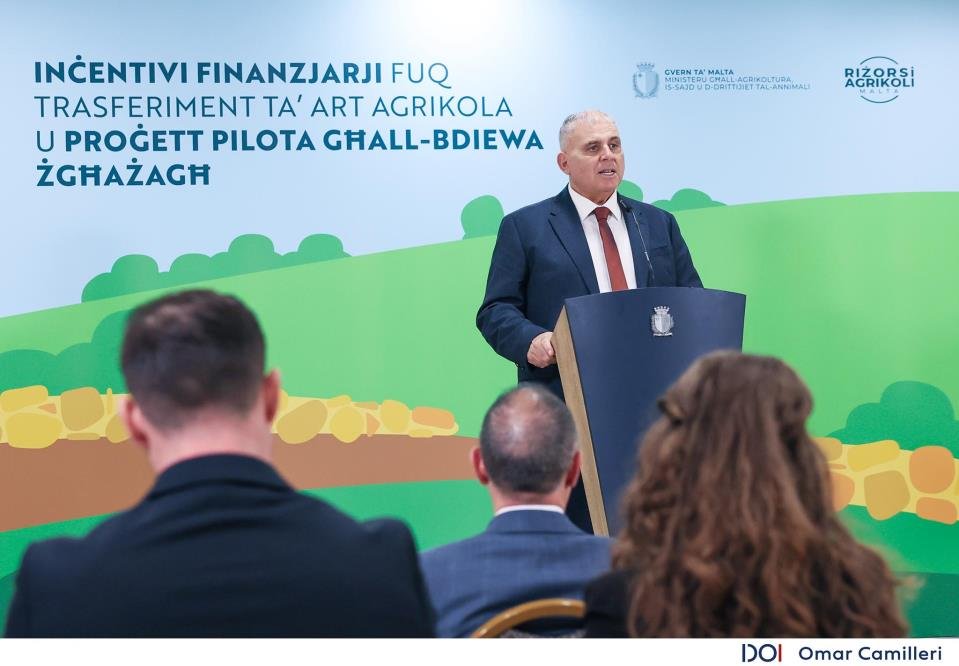
The Minister for Agriculture, Fisheries and Animal Rights, Anton Refalo, announced two key initiatives addressing challenges in Malta’s agricultural sector. These measures aim to ensure productive and sustainable use of agricultural land and to create opportunities for young farmers and new entrants, the government said.
The first scheme will offer financial support to encourage the temporary transfer of agricultural land, whether leased from the Lands Authority or privately owned, under the administration of RAM for a period of three years. The financial incentive is primarily directed at non-commercial farmers within the first category of the farmer classification system.
Eligible applicants who temporarily transfer their land will receive €1,500 per “tomna” of land, paid in three annual instalments of €500. During this period, the land will be managed by Agricultural Resources Malta and allocated to young or active farmers for food cultivation, ensuring productive and sustainable use.
The second initiative is a pilot project addressing one of the greatest challenges faced by aspiring farmers: access to agricultural land, the government said. Through this project, vacant agricultural land owned by the Government will be leased for a renewable 10-year term. Rent will be set at a fair price in accordance with agricultural land valuation regulations, ensuring a transparent and equitable process. The opportunity is open to young farmers under 41 as well as new entrants to the sector.
Applicants will be evaluated through a transparent points-based system, with points awarded for the quality of the business proposal, alignment with organic-farming and national-policy objectives, investment in infrastructure and technology, and commitment to environmental practices.
Minister Refalo stressed the voluntary nature of the first scheme, noting that interested landowners may choose to transfer their land temporarily, while ownership remains intact and is returned after the agreed period.
He added that the agricultural sector is a cornerstone of the economy and cultural identity, yet faces significant challenges requiring innovative solutions. These measures aim to ensure productive use of agricultural land while strengthening the next generation of farmers. The initiatives promote organic agriculture, environmental stewardship, and food security, reflecting the Government’s vision of a greener future where economic development and ecological responsibility progress together.
Further details and application guidelines will be available on the RAM website, and public information sessions will be announced in the coming days.