
Agricultural exports declined by nearly 9 per cent in FY24, totalling $43.7 billion, due to global conflicts, rising freight costs, domestic restrictions, and tariff wars
Global events—from the Red Sea crisis and the Russia-Ukraine war to rising trade tensions—have exposed vulnerabilities in Indian agriculture. These disruptions go beyond economic impact, carrying national security and geopolitical implications that influence food systems, livelihoods, and India’s global positioning.
Agriculture remains the backbone of India’s economy, employing over 50 per cent of the workforce and contributing some 16 per cent of GDP (Economic Survey 2024-25). Allied sectors, including animal husbandry, forestry, and fisheries, contribute 15.4% of GDP and engage more than 41 per cent of the workforce. About 70 per cent of rural households depend primarily on agriculture (FAO), making any disruption a serious concern for domestic food security, employment, and trade.
Geopolitics and agricultural exports
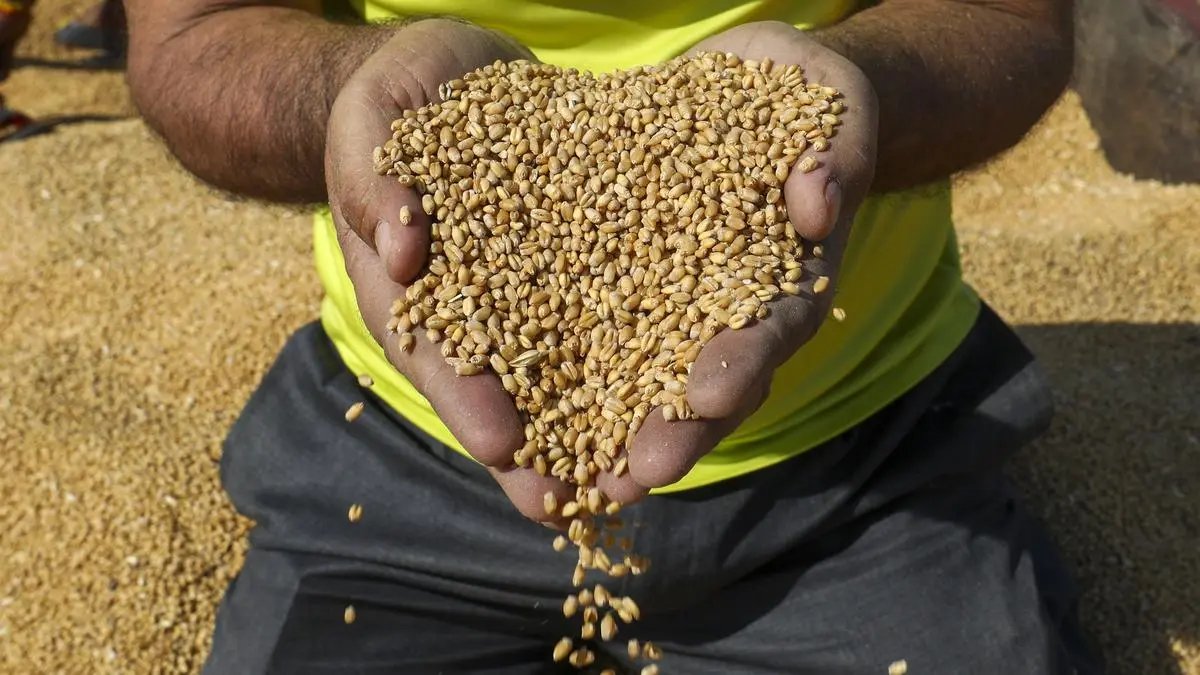
Recent crises have had a visible impact on India’s exports. Agricultural exports declined by nearly 9 per cent in FY24, totalling $43.7 billion, due to global conflicts, rising freight costs, domestic restrictions, and tariff wars. The APEDA basket, comprising 719 products, declined 6.85 per cent to $22.4 billion, prompting several commodities to be diverted to domestic markets and reducing profit margins. Despite producing 14 per cent of global wheat, India exports only 3 per cent, as domestic demand dominates. Surplus wheat could supply countries such as Egypt, Israel, Oman, Nigeria, South Africa, and even parts of Europe, traditionally reliant on Russian and Ukrainian supplies. Enhancing export infrastructure, including cold storage, pack houses, and processing units, can minimise post-harvest losses and strengthen India’s reliability in global markets.
Geopolitics and fertilizers
India imports significant quantities of urea, DAP, and potash from the Middle East, Africa, and the Mediterranean. The Red Sea crisis disrupted shipping routes, causing delays and rerouting of vessels, which slowed deliveries and created shortages at ports. Fertilizer dependence adds further risk, especially on imports from China. Delays raise cultivation costs, threaten crop productivity, and limit export potential. Timely fertilizer application is critical for perishable and high-value crops such as rice, wheat, sugarcane, and vegetables. Reducing dependency on external sources is essential to maintain production stability and trade resilience.
Research, innovation, and the living laboratory
India is a living laboratory for agriculture, with the largest number of farmers, rich traditional knowledge, diverse agro-climatic zones, sea routes, ports, industrial ecosystems, and a vast domestic market. This environment provides opportunities for research and innovation in precision farming, climate-resilient crops, value-added processing, and digital solutions. Strategic investments, both by government and private players, can boost productivity, expand exports, and position India as a global leader in agricultural innovation.
Agriculture as a geopolitical instrument
By leveraging its scale, technological expertise, and surplus resources, India can influence global food security, trade flows, and regional diplomacy. Supplying grains, fertilizers, and agricultural technology to neighboring South Asian countries strengthens stability, builds goodwill, and expands soft power. Thoughtful deployment of agricultural exports allows India to shape trade norms and assert international influence.
To realise this potential, India must diversify production and exports, prioritise value-added products, adopt sustainable practices, and address tariff and non-tariff barriers proactively. Agriculture is no longer just an economic lifeline—it is a strategic global asset. By investing in innovation, infrastructure, and regional partnerships, India can transform its agricultural sector into a resilient, influential, and globally respected driver of growth in an increasingly uncertain world.
The author is an agriculture economist
Published on October 12, 2025