

Kansas Legacy at Risk: The Shutdown of USAID’s Food for Peace
Explore the controversial decision by President Trump and Elon Musk to shut down USAID’s Food for Peace program, a 70-year Kansas legacy.
- Funding for one of two Kansas State University agricultural research labs has been restored by the Trump administration.
- The Climate Resilient Cereals Innovation Lab, previously funded by USAID, will continue its research on wheat, sorghum, rice and millet.
- Senator Jerry Moran is credited with helping secure the restored funding.
- A separate K-State lab focused on sustainable intensification has not had its funding restored.
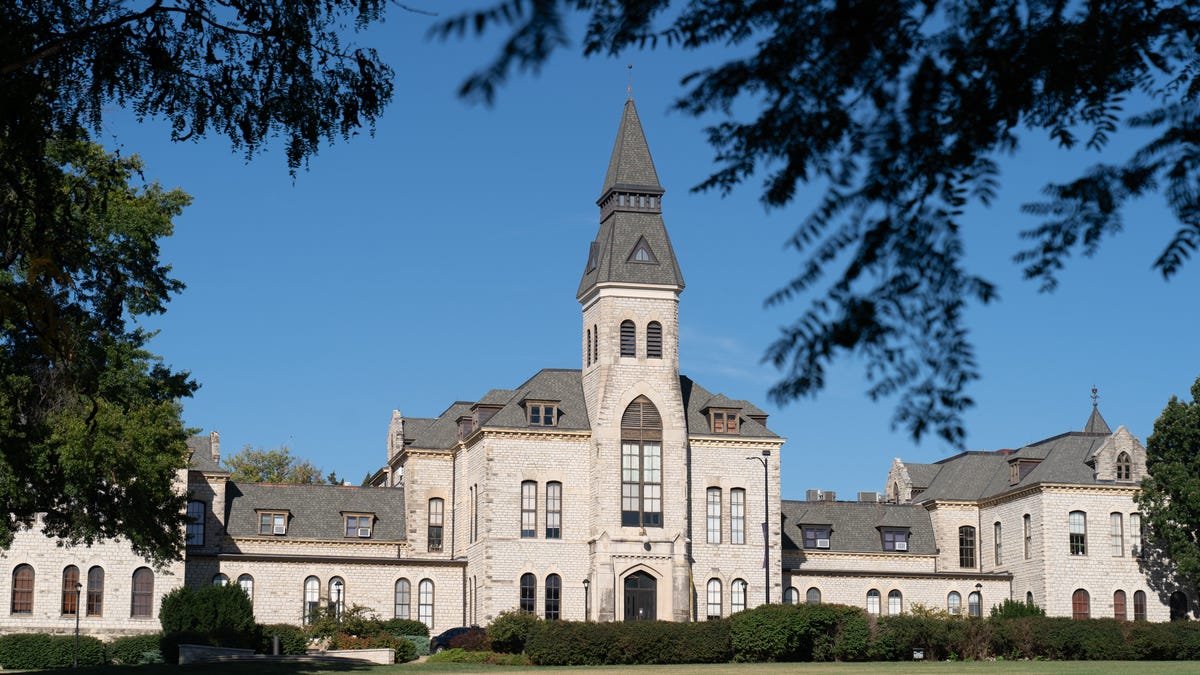
President Donald Trump’s administration has restored federal funding for an agricultural research grant to Kansas State University worth between $22 million and $37 million.
K-State officials announced April 30 that the university is in the process of restarting work at the Climate Resilient Cereals Innovation Lab after its federal funding resumed earlier in the month.
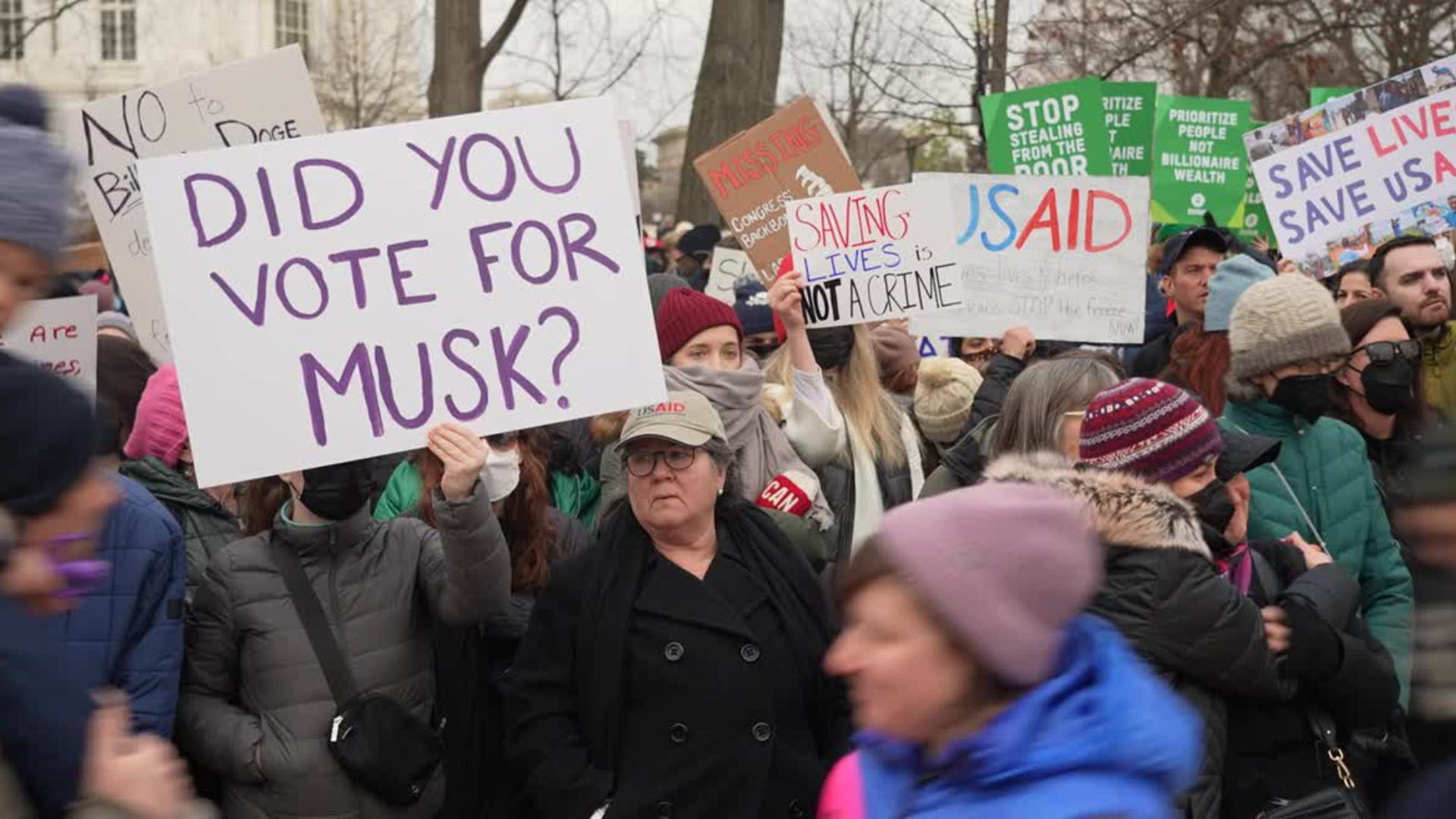
The university previously suspended operations at the lab after receiving a stop-work order as the Department of Government Efficiency (DOGE) paused funding and dismantled the U.S. Agency for International Development, which had awarded the agricultural research funding to K-State.
The federal government, however, has not restored funding to a second research lab at K-State on sustainable intensification, which was also funded by USAID. The grant was worth at least $50 million and potentially up to $100 million.
DOGE cut USAID agricultural research at K-State
That agricultural research lab was part of Feed the Future, which was under the U.S. Agency for International Development. USAID was largely shuttered by the Department of Government Efficiency, the cost-cutting initiative led by Trump adviser Elon Musk.
USAID awarded K-State with the cereal lab grant in October 2023. The award was $22 million, with a potential ceiling of $37 million.
Then in November 2024, USAID awarded K-State with another Feed the Future lab: the Climate Resilient Sustainable Intensification Innovation Lab. The award was $50 million for five years, with a potential renewal for another five years with an additional $50 million.
The DOGE “savings” website previously reported at least one of K-State’s two innovation lab grants had been canceled, claiming a savings of $33 million off a $37 million grant. The website used the acronym for the CRSIIL lab but paired it with the potential ceiling of the CRCIL lab. The DOGE website showed that Feed the Future innovation labs elsewhere had also been canceled.
Funding has not been restored for that sustainable intensification lab, which received a termination notice and has stopped work.
The lab’s goal was to “positively impact agricultural productivity, the environment, and natural resources.” Among its objectives were enhancing climate resilience of farmers through adaptation and mitigation strategies.
K-State cereal research aimed to make farmers more prosperous
The cereals lab researches wheat, sorghum, rice and millet.
Known as the Wheat State, Kansas was the country’s leading producer of wheat in 2024, according to U.S. Department of Agriculture commodity data. Kansas also produces over 50% of all sorghum, also known as milo, grown in the U.S.
The lab aims, the university said, to “help double the world’s food supply by 2050 through crop production improvements for four of the world’s most important cereals.”
The goal of the crop breeding research is to make the cereals more resistant to heat, drought, insects and disease — which in turn would make farmers in the U.S. and around the world more prosperous.
“This work is vital to the success of American and international agricultural production,” said Timothy Dalton, an agricultural economics professor and interim director of the innovation lab, in a statement. “The work we are doing ultimately results in grains that are more tolerant to real-world challenges farmers are facing now.”
The university said the research includes “phenotyping with uncrewed aerial drones, next-generation DNA sequencing and genotyping, AI-assisted crop modeling and simulations, and speed breeding” with projects around the world.
K-State is collaborating with the University of Florida, Texas A&M University, Texas Tech University, Purdue University, Cornell University, Louisiana State University, Clemson University and national agricultural research systems in Senegal, Ethiopia and Bangladesh.
Those international partnerships allow for testing crops in different conditions, which can be similar to the current and forecasted challenges for American farmers, Dalton said.
The university said wheat and sorghum yields will improve as a result of tests in hot and dry regions bordering the Sahara Desert. Meanwhile, research on resistance to rice blast disease will lead to new rice varieties for farmers in the southern U.S.
“We’re searching for scientific advances to make crops stronger and food production more reliable and safer,” Dalton said. “This makes farmers here in Kansas and in partner nations more prosperous and ready to meet global food needs far into the future.”
Kansas State credits Sen. Jerry Moran, who credits Secretary of State Marco Rubio
K-State officials credited U.S. Sen. Jerry Moran, R-Kansas, with helping restore the funding.
“Thank you to Senator Moran and his team for their dedicated efforts in supporting and ensuring the continuation of this important research at Kansas State University,” said Ernie Minton, the dean of K-State’s College of Agriculture and director of K-State Research and Extension, in a statement. “Advancing agricultural innovation and ensuring resilient crop production are critical priorities for global food and national security.”
The university’s press release included a statement from Moran, who thanked Secretary of State Marco Rubio. The administration is reorganizing the remnants of USAID to now be under the State Department.
“K-State’s innovation lab is helping bolster American agriculture by creating crops that are resistant to drought and disease,” Moran said. “I appreciate Secretary Rubio for recognizing the importance of the work being done at Kansas State University and supporting the continuation of this program. Kansans, Americans and individuals around the world face a brighter future due to the work being done at K-State to help feed the world.”
Jason Alatidd is a Statehouse reporter for The Topeka Capital-Journal. He can be reached by email at jalatidd@gannett.com. Follow him on X @Jason_Alatidd.