
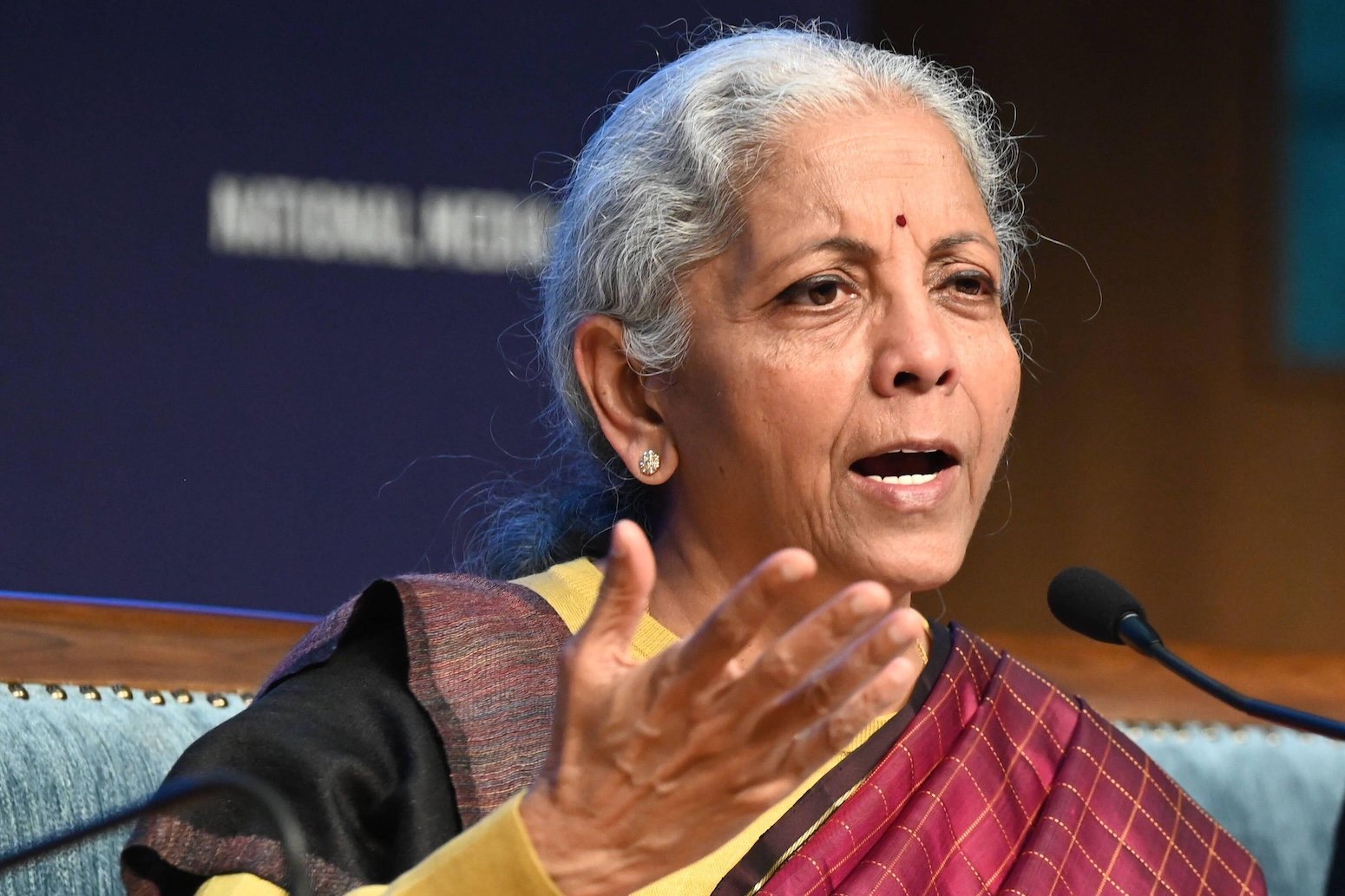
On 1 February, India’s finance minister Nirmala Sitharaman unveiled the government’s budget for 2026, which included a new $2.2bn funding push for carbon capture technologies.
In the absence of its new international climate pledge under the Paris Agreement, the budget offers a glimpse into the key climate and energy security priorities of the world’s third-largest emitter, amid increasing geopolitical tensions and trade challenges.
While Sitharaman’s budget speech did not mention climate change directly, she said: “Today, we face an external environment in which trade and multilateralism are imperilled and access to resources and supply chains are disrupted.”
Sitharaman emphasised that “new technologies are transforming production systems while sharply increasing demands on water, energy and critical minerals”.
The budget sets out: support for the mining and processing of critical minerals and rare earths; import duty exemptions for nuclear power equipment; and support for renewables, particularly rooftop solar.
However, unlike in some previous years, the 2026 budget does not include specific climate adaptation measures.
Below, Carbon Brief runs through five key climate- and energy-focused announcements from the budget.
Carbon capture, utilisation and storage
The biggest climate-related budget announcement was $2.2bn to support carbon capture, utilisation and storage (CCUS) technologies in India over the next 5 years.
These are technologies that capture carbon dioxide (CO2) as it is released, then use or store it underground or under the sea.
This funding is aimed at decarbonising five of India’s high-emitting industrial sectors – power, steel, cement, refineries and chemicals. These sectors are “staring at the risk” of coming under the EU’s carbon adjustment mechanism (CBAM), even after a recent EU-India trade deal, according to Sitharaman.
The funding is meant to align with a roadmap released last year that sees CCUS as a “core technological pillar” of India’s 2070 net-zero strategy, particularly for “decarbonising sectors where viable alternatives are limited”, notes the government’s roadmap.
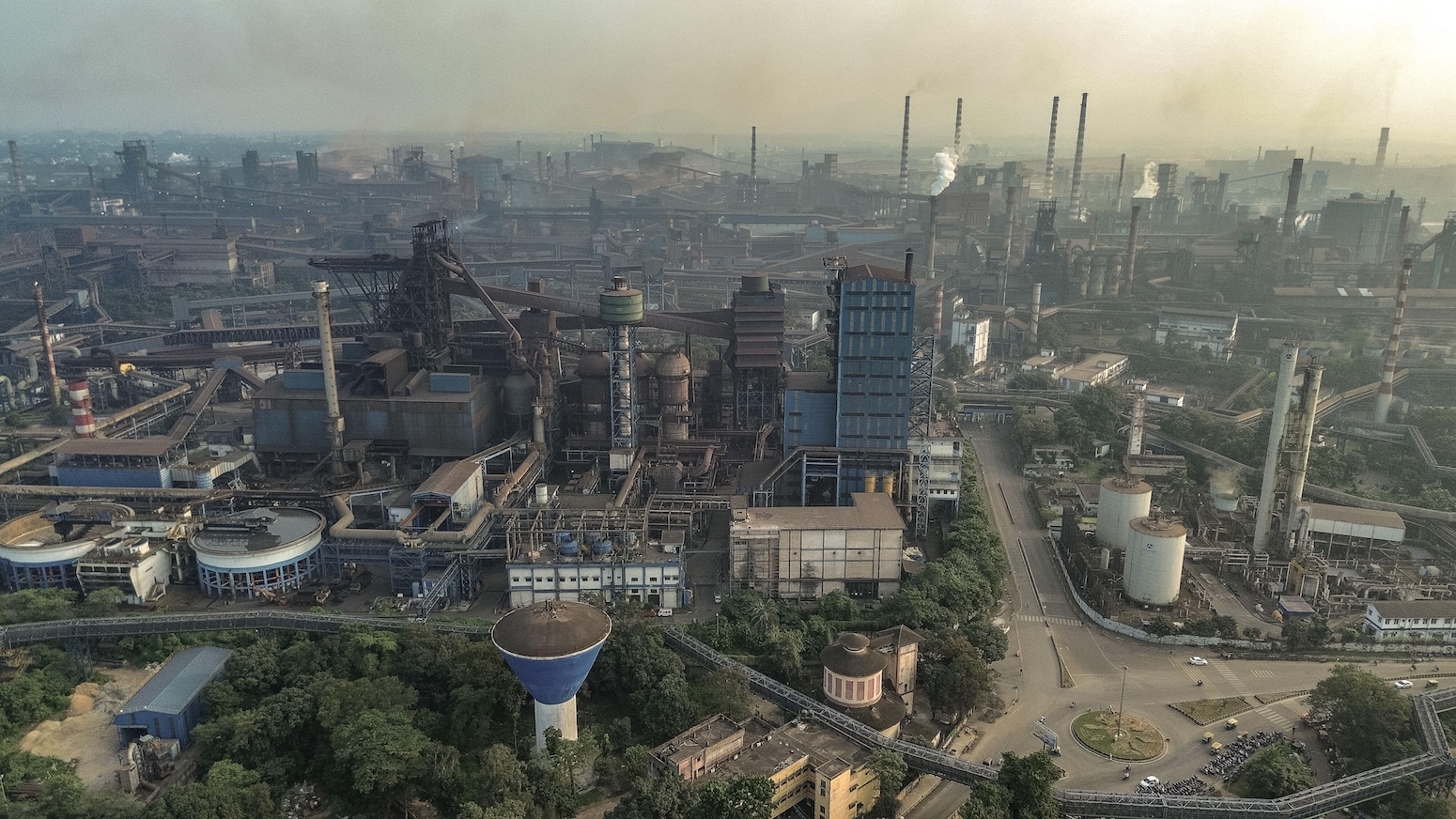
According to the Intergovernmental Panel on Climate Change (IPCC) sixth assessment report, however, the need for CCUS to mitigate industrial emissions “may be overestimated”, compared to measures such as energy and material efficiency and electrification.
Speaking to Carbon Brief, Dr Vikram Vishal, a professor of earth sciences at the Indian Institute of Technology, Bombay (IIT-B),, describes the budget move as a “big welcome step for industrial decarbonisation and India’s net-zero ambitions as a whole”.
Vishal says that the funding could go towards getting “big demonstration plants to near-commercial plants” that could entail even bigger investments in the future.
He tells Carbon Brief:
“India is blessed with both onshore and offshore availability for carbon storage. But while utilisation exists, storage has not happened, per se, even at a decent scale. We [would] need to build transportation infrastructure from the point source of capture at scale, on land and offshore. While offshore storage is very low risk, onshore presents a closer proximity to emission sources.”
However, that could also mean closer proximity to densely populated or protected areas.
Vishal adds that India has a very large theoretical storage potential, even a quarter of which would allow for up to 150bn tonnes of CO2 to be stored. This could sustain CCUS for hundreds of years, Vishal says, adding: “And by that time, the energy transition would have happened, right?”
Critical minerals and rare-earth ‘corridors’
Mining, sourcing and processing “critical minerals” and rare earths is another key area of India’s 2026 budget.
It proposes establishing “dedicated rare-earth corridors” in the “mineral-rich” coastal states of Odisha, Kerala, Andhra Pradesh and Tamil Nadu to “promote mining, processing, research and manufacturing”. These corridors are intended to complement a $815m rare-earth permanent-magnet scheme announced in November.
In addition, the budget supports “incentivising prospecting and exploration” for rare-earth minerals, such as monazite, as well as others that the government wants to include in its list of “critical minerals”.
Last week, for instance, India classified coking coal – which is predominantly used in making steel – as a “critical and strategic mineral”, removing regulatory measures such as the need to consult affected communities before developing new mines.
Sehr Raheja, programme officer at New Delhi thinktank Centre for Science Environment, tells Carbon Brief that “moving up the critical-minerals value chain” is “increasingly essential” for the energy transition in developing countries.
She adds that some of the measures announced in India’s budget “point in that direction”, explaining:
“Globally, developing countries often stay stuck in the extraction stages of value chains and capture the least value. While duty exemptions for critical mineral processing and battery manufacturing signal intent to build domestic manufacturing capacity, the extent to which these new efforts deliver sustained value will only become apparent over time.”
Rahul Basu, research director at the Goa Foundation, which advocates for “intergenerational equity” in mining, tells Carbon Brief:
“Rare earths are not particularly rare. What is difficult is separating and refining them. China imports ore from around the world, including [the] US. Their competitive advantage lies in processing, including the ability to tolerate high pollution levels.
“India should perfect the processing technology with imported ores first. It is the critical piece. Not mining. We seem to want to mine the same beaches that are already seeing sea-level rise.”
Nuclear energy
The Indian government has also lifted customs duties on imports of nuclear power equipment within the 2026 budget.
Under the changes, equipment for all nuclear power plants will not be subject to customs duties until 2035, irrespective of capacity.
The announcement follows India enacting a landmark new nuclear act, dubbed the “Shanti” act, in December 2025. This seeks to privatise and invite foreign participation in the country’s nuclear energy sector, which has been largely state-run for decades and has a long history of public protests over safety and land-acquisition concerns.

The Shanti act – which is an acronym for “sustainable harnessing and advancement of nuclear energy for transforming India” – aims to help India increase its nuclear capacity tenfold to 100 gigawatts (GW) by 2047.
This coincides with 100 years since India’s independence and is “the year India aims to attain developed-nation status”, according to prime minister Narendra Modi.
Renewables
Support for renewables in India’s budget this year is significant, but “uneven”, experts tell Carbon Brief.
Allocations to India’s Ministry of New and Renewable Energy (MNRE) grew by 24% to a “record high” in the 2026 budget, with the bulk going to the prime minister’s flagship rooftop solar scheme. The government also cut import duties on lithium-ion cells for battery storage systems, as well as on inputs for solar-panel glass manufacturing.
However, Vibhuti Garg, South Asia director for the Institute for Energy Economics and Financial Analysis, tells Carbon Brief that spending on wind energy and – “more critically” – on transmission and energy storage has either “stagnated or declined” this year.
Garg says grid infrastructure is “fundamental” to renewable expansion. She explains:
“Transmission infrastructure and storage are fundamental to integrating higher shares of renewable energy into the grid. As renewable penetration rises, these elements become not optional but indispensable, and the current level of support falls short of what is required.”
Adaptation
The budget does not announce any specific adaptation measures or schemes, although it does mention a plan to develop and rejuvenate reservoirs and water bodies and to “strengthen” fisheries value chains in coastal areas.
The budget does not mention or include measures related to heat stress or its impact on productivity and workers in sectors such as agriculture.
According to India’s national economic survey tabled ahead of the budget, adaptation and “resilience-related” domestic spending “surged” from 3.7% of the country’s GDP in 2016-17 to 5.6% in 2022-23.
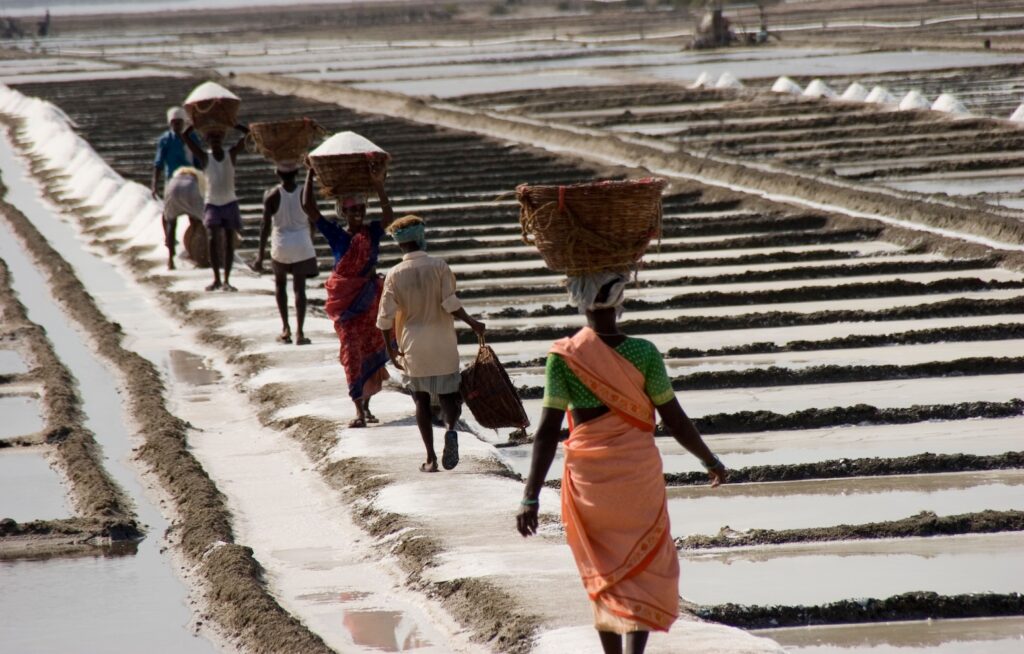
Yet, unlike earlier budgets, allocations to and expenditure from India’s National Adaptation Fund for Climate Change are not separately visible in the 2026 document.
Harjeet Singh, climate adaptation expert and founding director at the Satat Sampada Climate Foundation, tells Carbon Brief that this budget was a “missed opportunity” and a response “not commensurate to the needs [for adaptation] on [the] ground or investment at the scale of crisis that we are facing”.
Singh adds that it fails to recognise the “huge” economic impacts already being felt in India. He says:
“If a budget doesn’t recognise how climate change is already eroding India’s development – causing huge economic losses – and is going to affect our GDP growth, it means that you aren’t really acting, or nudging states to do more.
“It was a missed opportunity to tell the world that we do see adaptation as a problem and we are acting on it, but we also need international cooperation.”