
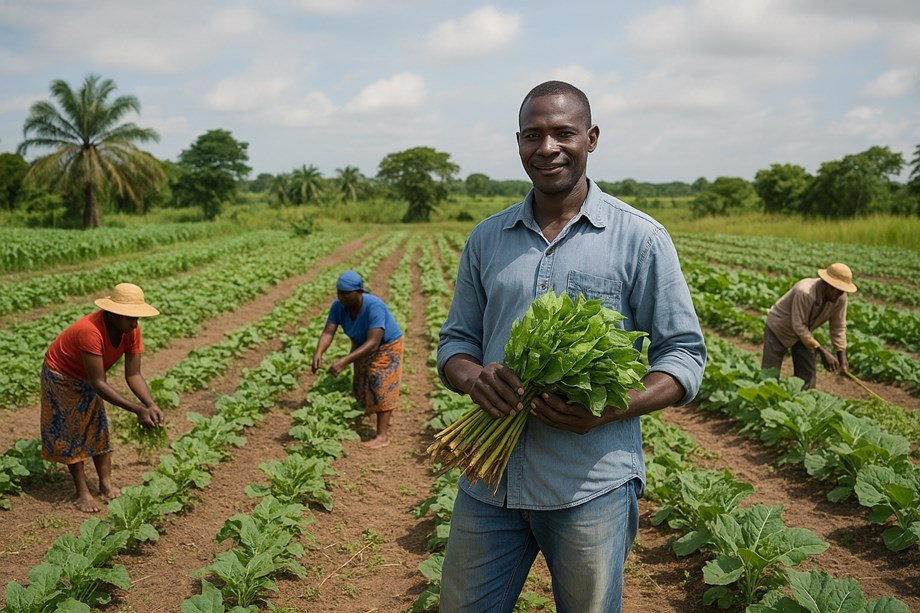
The European Investment Bank (EIB) has reaffirmed its commitment to advancing global agricultural development, food security, and climate resilience, with a strong focus on low- and middle-income countries (LMICs). Speaking at the World Food Forum in Rome, held in celebration of the 80th anniversary of the Food and Agriculture Organization of the United Nations (FAO), EIB Vice-President Gelsomina Vigliotti emphasised that agriculture remains central to sustainable global development.
EIB’s Role in Transforming Global Agriculture
“Agriculture is at the heart of global development,” said Vigliotti during her keynote address. “The way we produce, distribute, and finance food will determine not only food security but also climate resilience, economic growth, and the livelihoods of millions of people. The EIB plays a key role to support this transformation.”
Since approving its first agricultural loan outside Europe in 1965, the EIB has financed over 3,000 agricultural projects worldwide, amounting to more than €85 billion. Notably, over 80% of this investment has been made in the past decade, underscoring the Bank’s growing dedication to addressing food security and supporting sustainable rural development across continents.
Strategic Partnerships with UN Agencies
The EIB’s global agricultural initiatives are closely coordinated with Rome-based UN agencies — the FAO, International Fund for Agricultural Development (IFAD), and World Food Programme (WFP). These partnerships blend the EIB’s financial expertise with the technical know-how of UN institutions, ensuring maximum impact even in fragile and low-capacity settings.
A landmark example is the €500 million loan to IFAD, designed to strengthen rural development and food security in over 70 countries, particularly across Sub-Saharan Africa. The financing focuses on empowering smallholder farmers, modernising agricultural infrastructure, and fostering climate-resilient food systems.
Further reinforcing this collaboration, the EIB recently signed new Memoranda of Understanding (MoUs) with FAO and WFP during the Financing for Development (FfD4) Summit held in Seville in July 2025. These agreements aim to enhance joint operations, support sustainable food systems, and mobilise additional resources for agricultural transformation in vulnerable economies.
$110 Million Loan to ETG: Boosting Africa’s Agri-Value Chains
On the sidelines of the World Food Forum, Vice-President Vigliotti announced a major new financing deal with ETG (Export Trading Group), one of Africa’s leading agribusiness and supply chain companies. The $110 million loan — one of the largest EIB Global private-sector financing operations in Africa in recent years — will support the modernisation of agricultural processing and logistics infrastructure across Mozambique, Malawi, Benin, Zambia, Tanzania, and Uganda.
The investment will upgrade ETG’s processing plants for key commodities such as cashew and soybeans, and expand essential storage and transport networks, critical to reducing post-harvest losses and improving market access for farmers.
Supporting Sustainable Agriculture and Farmer Training
The EIB-ETG partnership will also strengthen ETG’s Farmer Extension Services (FES) programme, which provides training and technical support to smallholder farmers. Through these initiatives, farmers will gain access to modern agricultural practices, technology transfers, and community-based programs promoting sustainable and climate-smart farming.
“This partnership with ETG shows how targeted private-sector engagement, supported by EIB Global, can deliver real change,” said Vigliotti. “By unlocking sustainable investment, we are helping smallholder farmers and rural communities build a more resilient future.”
ETG Chief Treasury Officer Paul van Spaendonk welcomed the collaboration, noting that the financing will enable the company to scale its outreach and accelerate its mission of promoting agricultural competitiveness. “This significant financing will accelerate our efforts to enhance agricultural competitiveness and food security across Sub-Saharan Africa. With this facility, we can drive impactful projects of varying sizes under a single umbrella, reaching more communities, more quickly,” he said.
A Catalyst for Climate Resilience and Food Security
The latest investment underscores the EIB’s growing commitment to aligning agricultural finance with climate action and sustainable development goals. By supporting both public and private sector initiatives, the Bank aims to foster inclusive growth, improved livelihoods, and resilient food systems capable of withstanding global shocks such as climate change and supply chain disruptions.
As the world faces mounting challenges from population growth, environmental degradation, and geopolitical instability, partnerships like the one between the EIB and ETG are essential to securing the future of food and agriculture — particularly in regions where the need for sustainable solutions is most urgent.
Driving the Future of Global Food Systems
The EIB’s expanding agricultural portfolio reflects a broader shift in global development finance — one that recognises the interconnection between food systems, climate resilience, and economic opportunity. By investing in the transformation of agriculture, the Bank is not only supporting farmers but also laying the groundwork for a more inclusive, sustainable, and resilient global economy.