

 BBC
BBCCuba has endured one of its toughest weeks in years after a nationwide blackout which left around 10 million Cubans without power for several days. Adding to the Caribbean island’s problems, Hurricane Oscar left a trail of destruction along the north-eastern coast, leaving several dead and causing widespread damage. For some communities in Cuba the energy crisis is the new normal.
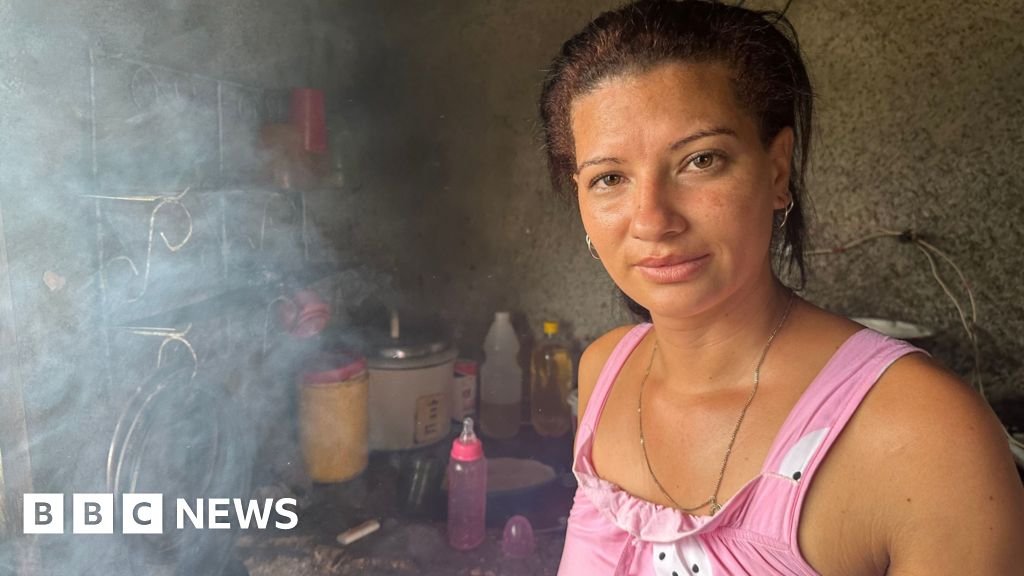
As Cuba approached its fourth day without power this week, Yusely Perez turned to the only fuel source left available to her: firewood.
Her neighbourhood in Havana hasn’t received its regular deliveries of liquified gas cannisters for two months. So once the island’s entire electrical grid went down, prompting a nationwide blackout, Yusely was forced to take desperate measures.
“Me and my husband went all over the city, but we couldn’t find charcoal anywhere,” she explains.
“We had to collect firewood wherever we found it on the street. Thankfully it was dry enough to cook with.”
Yusely nodded at the yucca chips frying slowly in a pot of lukewarm oil. “We’ve gone two days without eating,” she adds.
 AFP
AFPSpeaking last Sunday, at the height of what was Cuba’s most acute energy crisis in years, the country’s energy and mines minister, Vicente de la O Levy, blamed the problems for the country’s creaking electrical infrastructure on what he called the “brutal” US economic embargo on Cuba.
The embargo, he argued, made it impossible to import new parts to overhaul the grid or bring in enough fuel to run the power stations, even to access credit in the international banking system.
The US State Department retorted that the problems with energy production in Cuba did not lie at Washington’s door – but argued that it was due to the Cuban government’s own mismanagement.
Normal service would be resumed soon, the Cuban minister insisted. But no sooner did he utter those words than there was another total collapse of the grid, the fourth in 48 hours.
At night, the full extent of the blackout became clear.
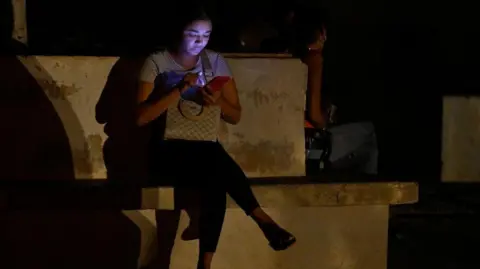
Havana’s streets were plunged into near total darkness as residents sat on the doorsteps in the stifling heat, their faces lit up by their mobile phones – as long as their batteries lasted.

Some, like restaurant worker Victor, were prepared to openly criticise the authorities.
“The people who run this country are the ones who have all the answers,” he says. “But they’re going to have to explain themselves to the Cuban people.”
Specifically, the state’s decision to invest heavily in tourism, rather than energy infrastructure, frustrated him most during the blackout.
“They’ve built so many hotels in the past few years. Everyone knows that a hotel doesn’t cost a couple of bucks. It costs 300 or 400 million dollars.”
“So why is our energy infrastructure collapsing?” he asks. “Either they’re not investing in it or, if they are, then it’s not been to the benefit of the people.”
Aware of the growing discontentment, President Miguel Diaz-Canel appeared on state TV wearing the traditional olive-green fatigues of the Cuban revolution.
If that message wasn’t clear enough, he directly warned people against protesting over the blackout. The authorities would not “tolerate” vandalism, he said, or any attempt to “disrupt the social order”.
 AFP
AFPThe protests of July 2021, when hundreds were arrested amid widespread demonstrations following a series of blackouts, were fresh in the memory.
On this occasion, there were only a handful of reports of isolated incidents.
Yet the question of where Cuba chooses to direct its scarce resources remains a real point of contention on the island.
“When we talk about energy infrastructure, that refers to both generation and distribution or transmission. In every step, a lot of investment is needed,” says Cuban economist, Ricardo Torres, at the American University in Washington DC.
Electricity generation in Cuba has recently fallen well below what’s required, only supplying some 60-70% of the national demand. The shortfall is a “huge and serious gap” which is now being felt across the island, says Mr Torres.
By the government’s own figures, Cuba’s national electricity generation dropped by around 2.5% in 2023 compared to the previous year, part of a downward trend which has seen a staggering 25% drop in production since 2019.
“It’s important to understand that last week’s problem in the energy grid isn’t something that happens overnight,” says Mr Torres.

Few know that better than Marbeyis Aguilera. The 28-year-old mother-of-three is getting used to living without electricity.
For Marbeyis, even “normal service” being restored still means most of the day without power.
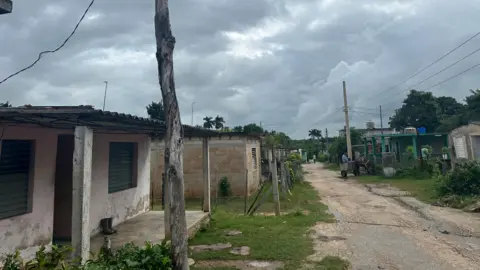
In fact, what the residents of Havana endured for a few days is what daily life is like in her village of Aguacate in the province of Artemisa, outside Havana.
“We’ve had no power for six days”, she says, brewing coffee on a makeshift charcoal stove inside her breeze-block, tin-roofed shack.
“It came on for a couple of hours last night and then went out again. We have no choice but to cook like this or use firewood to provide something warm for the children,” she adds.
Her two gas hobs and one electric ring sit idle on the kitchen top, the room filling with smoke. The community is in dire need of state assistance, she says, listing their most urgent priorities.
“First, electricity. Secondly, we need water. Food is running out. People with dollars, sent from abroad, can buy food. But we don’t have any so we can’t buy anything.”

Marbeyis says some of the main problems in Aguacate – food insecurity and water distribution – have been exacerbated by the power cuts.
Her husband’s manual labour also requires electricity and he’s stuck at home waiting for the instruction to come to work. The Cuban Government was due to recall state workers by Thursday – but to avoid another collapse in the grid, all non-essential work and schools have now been suspended until next week.
“It’s especially hard on the children”, Marbeyis adds, her eyes tearing up, “because when they say I want this or that, we have nothing to give them.”
Living without a reliable energy source is the new normal in places like Aguacate. Many have been struggling with power shortages since around the start of the Covid-19 pandemic, which coincided with a sharp economic downturn on the island.
Perhaps the biggest problem for the Cuban State is that the sight of people cooking with firewood and charcoal in the 21st Century is reminiscent of the poverty under dictator Fulgencio Bastista, who the revolutionaries ousted six-and-half decades ago.
Amid it all, on the north-eastern coast, the situation got even worse. As people were still coping with the blackout, Hurricane Oscar made landfall, bringing high winds, flash flooding and ripping roofs from homes.
The storm may have passed. But Cubans know that such is the precarious state of the island’s energy infrastructure that the next nationwide blackout could come at any time.