
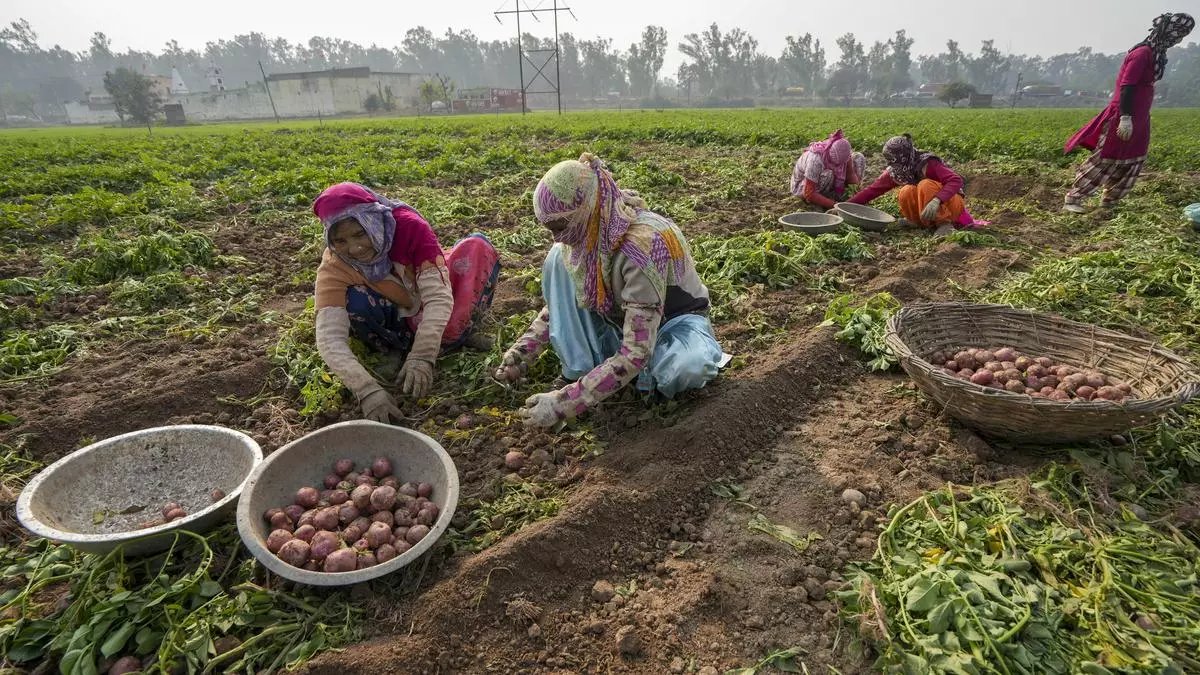
India’s agricultural sector, engaging roughly 45.8 per cent of the workforce, is central to the nation’s economic and social fabric. Despite employing nearly half of the workforce, it contributes only around 18% to GDP, underscoring productivity challenges and the need for modernisation.
As the Union Budget 2025 nears, it presents a pivotal chance to address these gaps and align agricultural development with the “Viksit Bharat 2047” vision. This ambitious roadmap prioritises inclusive growth, sustainability, and technological integration across sectors, placing agriculture at the forefront of India’s future.
Current challenges in Indian agriculture
The sector faces significant hurdles stemming from climate vulnerability, market volatility, and limited R&D investment. Rising temperatures, erratic rainfall, and extreme weather events such as droughts and floods threaten crop yields and farm incomes, emphasising the urgent need for effective mitigation strategies. Market instability, marked by unpredictable commodity prices and sudden export bans, further discourages investment and impedes long-term planning. Negative producer support estimates—indicating implicit taxation on farmers—compound these problems, exacerbating financial hardships and limiting farmers’ ability to thrive.
Moreover, agricultural research and development spending remains below 1 per cent of agricultural GDP. This underinvestment slows the creation of high-yield, climate-resilient crop varieties and innovative farming practices, hindering efforts to boost productivity and address new challenges.
Budget 2025: A catalyst for transformative change
Promoting Climate-Resilient Farming- Increasing R&D spending to at least 1 per cent of agricultural GDP is vital for fostering innovation in the sector. Enhanced funding for research institutions can accelerate the development of climate-resilient crop varieties, advanced irrigation systems, and improved pest management techniques. Equally important is promoting sustainable farming methods—natural and precision agriculture—through incentives, subsidies, and training programs. Such efforts improve soil health, reduce reliance on chemical inputs, and fortify resilience to climate fluctuations.
Effective water management also demands attention. By expanding micro-irrigation initiatives and integrating moisture sensors in drought-prone regions, policymakers can ensure more efficient water use. Collectively, these measures bolster long-term agricultural productivity and ecological balance.
Leveraging public-private partnerships (PPPs)
Strengthening agricultural infrastructure is crucial for enhancing efficiency and ensuring favorable outcomes for farmers. Public-private partnerships can help build critical facilities such as cold storage units, advanced supply chains, and digital platforms to connect producers with broader markets. These interventions reduce post-harvest losses, streamline logistics, and enable farmers to secure better prices for their produce.
Collaborations with private players can also enhance extension services. By offering farmers access to the latest technologies, scientific knowledge, and market insights, these partnerships bridge the information gap, boost productivity, and raise farm incomes. Overall, PPPs can create a robust, sustainable agricultural ecosystem that supports long-term development goals.
Boosting self-sufficiency in high-value crops
Targeted investments in high-value crops—such as oilseeds, pulses, and horticultural produce—are essential to curb import dependence and strengthen domestic production. Developing specialised clusters for these crops improves yields, broadens marketability, and creates competitive advantages for Indian farmers. Over time, reduced reliance on costly imports bolsters economic growth and promotes agricultural self-reliance.
Market support policies play a pivotal role here. Establishing stable frameworks, including minimum support prices (MSPs), export incentives, and comprehensive insurance schemes, encourages farmers to cultivate high-value crops. Such measures not only ensure steady returns and income stability but also help create a more resilient marketplace for agricultural commodities.
Export growth and policy stability
Stable export policies are vital for securing India’s position in global agricultural markets. Frequent export bans and unpredictable trade regulations erode buyers’ confidence and hamper long-term demand for Indian commodities. By maintaining a consistent export regime, India can cultivate stable international relationships, particularly for high-demand products like spices, basmati rice, and marine goods—thus reinforcing its agricultural trade balance.
Equally important is building export-oriented agri-infrastructure. Establishing testing laboratories, certification centers, and logistics hubs that meet international standards can reduce turnaround times and enhance competitiveness. This approach positions agriculture as a key contributor to India’s trade and economic expansion.
Aligning with “Viksit Bharat 2047”
The “Viksit Bharat 2047” vision underscores inclusive and sustainable development with agriculture at its core. A dynamic agricultural system is essential for ensuring food security, self-reliance, and global competitiveness. Budget 2025 can spearhead this transformation by creating innovation hubs to generate technology-based solutions, launching initiatives to attract and train young entrepreneurs in agri-business, and promoting carbon-neutral farming through renewable energy adoption.
The Union Budget 2025 represents a defining moment for India’s agricultural sector. By prioritising climate-resilient farming, fostering public-private partnerships, investing in high-value crops, and embracing digital integration, the government can catalyze a more sustainable and robust agricultural landscape. Addressing existing challenges through strategic interventions will secure food systems, elevate farm incomes, and strengthen India’s position in global markets.
The author is Partner, Grant Thornton Bharat