
Businesses have accused the government of making Britain uncompetitive and threatening their survival as they brace for an increase in their energy bills to fund the transition to green energy.
The UK’s high energy costs have been widely criticised as a barrier to economic growth and companies argue that the government is making an already tough business landscape significantly worse.
While wholesale energy prices have fallen since the peak after Russia’s full-scale invasion of Ukraine, new charges to fund the construction of Sizewell C nuclear power station and electricity pylons will be added to bills from April.
Businesses that were paying £143 per MWh last year in non-commodity costs that include network, system and policy charges will be paying £222 per MWh in 2030, a 55 per cent increase, according to analysis by E.On.
For some of the country’s biggest energy users, this will contribute to a £450,000 overall increase in their bills by the end of the decade, around a 5 per cent increase, according to analysts at Cornwall Insight.
The government has repeatedly defended its push to deliver clean power as the best way to bring down energy costs in the long run and create greater domestic energy security.

But the extra short term energy costs are putting pressure on companies that are already struggling. David Wigham, commercial director of pub chain Admiral Taverns, said businesses were “bearing the brunt of infrastructure costs that don’t relate to them and they won’t benefit from”.
“It’s a jam tomorrow strategy on energy, but the reality is that some businesses won’t be here to enjoy those lower bills because of the costs placed on them today.”
Liam Conway, co-founder of Greenfields Energy Group, which arranges contracts for small and medium sized businesses, said even if wholesale energy costs come down, the new charges “are wiping out any profit businesses have and it is making it very difficult for British manufacturing to compete on a global scale”.

One City veteran said that the UK’s “exorbitant” energy costs was top of the agenda in most boardrooms when it came to deciding where to invest in new facilities.
Brent Millage, managing director at Kepston Limited which specialises in heat treating metal components, said the 110-year-old company was in “jeopardy” as a result of rising energy costs. “We’ve seen three recessions, survived Covid but we’re now facing the biggest crisis we’ve ever faced,” he said.
Kepston, which employs a team of 56 in the West Midlands, has already had to axe staff as it braces to absorb higher energy bills on top of increased staffing costs caused by last year’s changes to national insurance contributions.
Millage said Kepston, which pays £17,000 a month for energy, is now facing an extra £100,000 a year in transmission costs and an extra £13,500 to fund Sizewell C.

Jonathan Duck, who runs kitchen and bathroom flooring business Amtico, said sky-high energy costs risked his business becoming uncompetitive against international rivals. He said he had recently worked out that the most effective thing his group could do was build a gas generator and come off the grid entirely.
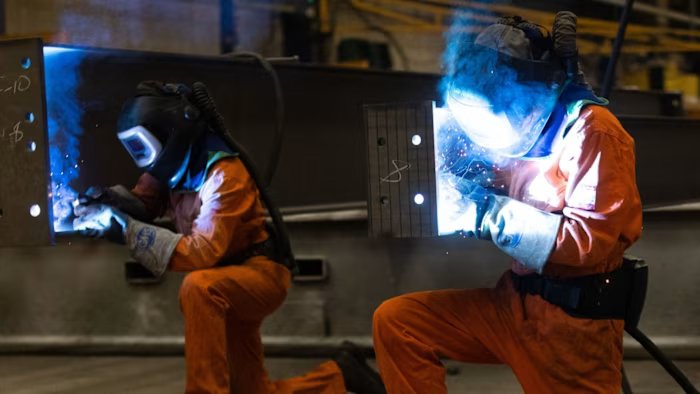
Simon Boyd, managing director at Dorset-based Reidsteel, which specialises in structural engineering, said the government’s race to net zero was “destroying” UK manufacturing. “The whole strategy is anti-growth because now we are just trying to keep our heads above water, not invest.”
The retail sector has high lighting, heating and refrigeration costs but has been left out of government energy support schemes.
Alex Baldock, chief executive of retailer Currys, said: “‘Economists will tell you that secure and low cost energy is arguably the most important enabler of growth. Thirty years ago, UK commercial energy prices were the same as the US, now they’re four times as high. This needs to change, and fast.”

The government insists that it has made tackling energy costs a priority. Peter Kyle, business secretary, in October pledged to cut a total of £420mn from electricity bills, but this scheme only applies to 500 of the most energy intensive businesses in the country.
Another plan to cut energy bills by a quarter applies to 7,000 businesses but is only due to start in 2027. Companies are also waiting for details of the government’s British Industrial Competitiveness Scheme to reduce electricity costs for the eight sectors prioritised in its industrial strategy, including life sciences and defence.
Millage at Kepston complained that his business might not survive long enough to receive support through these schemes and urged the business secretary to widen the definition of energy intensive users so firms like his could benefit sooner. “We use energy in every part of our production but we are not entitled to the support.”
The government insists that its push to support clean power will reduce energy costs over time. Energy Secretary Ed Miliband has promised that the average household bill will fall by £300 in five years’ time, although several senior people within the energy industry have raised doubts about whether this will happen.
Meanwhile, the National Energy System Operator (Neso) has said that clean power targets can only be reached if there is a “Herculean” effort, due to the scale of investment required.
A government spokesperson said: “Lowering bills is central to every decision we make. Our mission for clean power by 2030 will get us off the rollercoaster of fossil fuel prices, to cut bills for businesses and households for good.”