
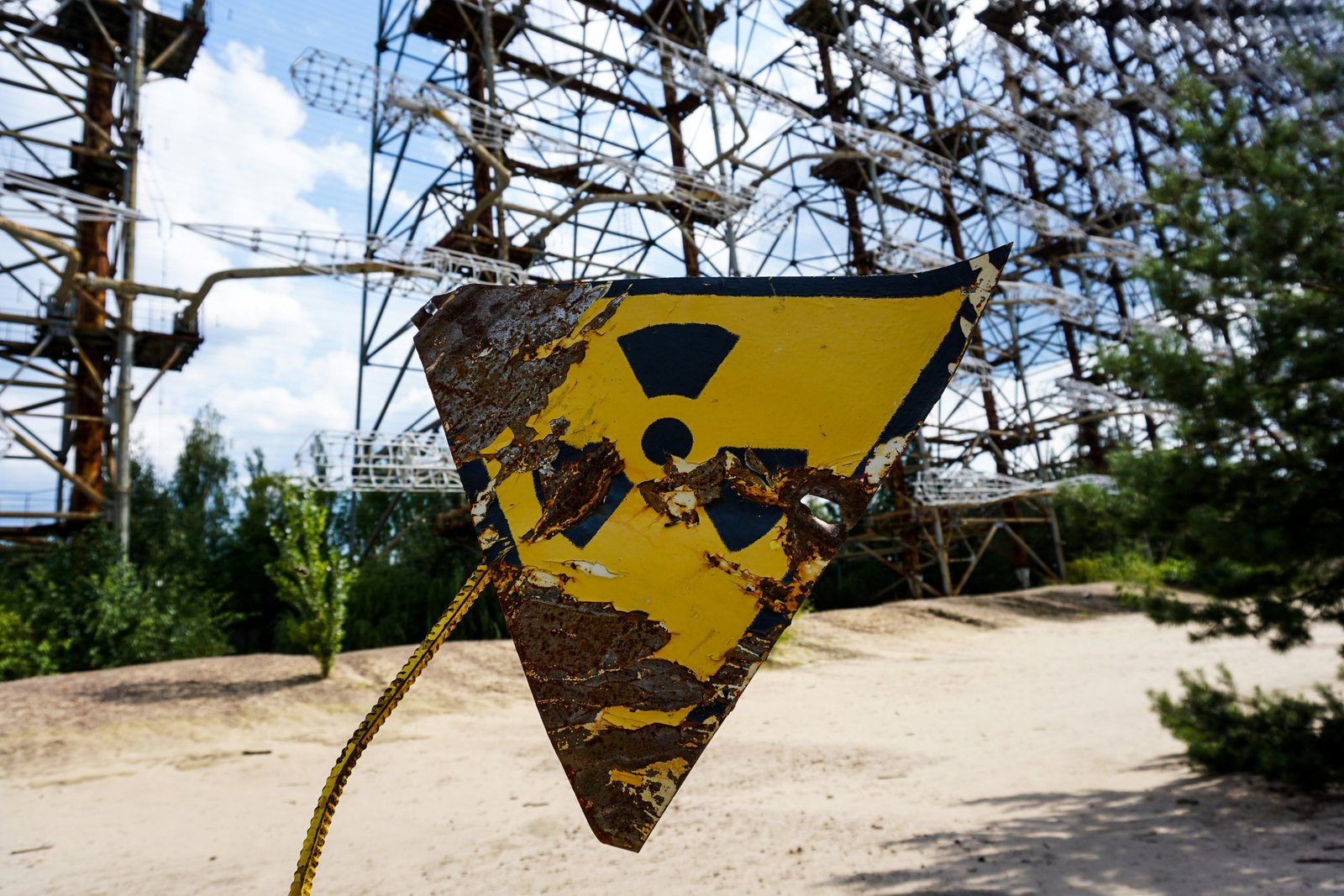
A melanin-rich fungus first discovered inside the ruined Chernobyl nuclear reactor is attracting renewed global interest after fresh reports highlighted its striking ability to grow more rapidly when exposed to radiation.
The species, Cladosporium sphaerospermum, has long intrigued researchers for its unusual resilience, but recent online debates and resurfaced scientific studies have prompted a surge in searches about the so-called Chernobyl fungus and its potential to use radiation as an energy source.
Life Found Growing on the Walls of Reactor 4
Scientists first identified dark, mould-like growths inside Reactor 4 in the early 1990s, only a few years after the 1986 explosion.
What they found was unexpected: the fungi were not merely surviving the intense ionising radiation but appeared to be growing towards it.
Subsequent laboratory work explored these observations further, showing that melanin-rich fungi could thrive under radiation levels that would be fatal to most organisms.
Cladosporium sphaerospermum quickly emerged as one of the most studied examples.
Researchers noted that when exposed to gamma radiation, the fungus increased its metabolic activity.
This effect, first documented in controlled experiments, laid the groundwork for theories suggesting that the organism may be capable of radiotrophy, a biological process in which ionising radiation contributes to energy production.
How the Fungus May Convert Radiation Into Chemical Energy
At the centre of scientific interest is melanin, the pigment that gives the fungus its dark appearance.
Experiments have shown that melanin can undergo structural changes when exposed to high radiation, enhancing its ability to facilitate electron transfer.
This process is thought to boost the fungus’s metabolic efficiency. Samples exposed to radiation often grew faster compared with those kept in normal conditions, raising the possibility that the organism performs a primitive form of energy harvesting.
Although some media refer to this as the fungus ‘eating radiation’, scientists maintain that the mechanism is still under investigation.
The concept has been compared loosely to photosynthesis, although the underlying chemistry is not the same.
Nonetheless, the idea that an organism can use radiation to support growth continues to generate scientific and public fascination.
Online Frenzy as ‘Chernobyl Fungus’ Trends Again
Interest in Cladosporium sphaerospermum spiked this week after renewed coverage by science outlets reignited conversations across social media.
Users circulated images and archived research describing how the fungus was found thriving on the walls of Chernobyl’s reactor, prompting speculation about whether similar organisms could survive in extreme environments beyond Earth.
In the highly radioactive ruins of the Chernobyl reactor, scientists discovered a remarkable black fungus called Cladosporium sphaerospermum, that appears to use radiation the way plants use sunlight.
This process, sometimes called radiosynthesis, lets the fungus convert gamma… pic.twitter.com/J3JhyLaRxs
— Science girl (@sciencegirl) November 29, 2025
The online attention reflects a broader public fascination with extremophiles, organisms capable of enduring some of the planet’s harshest conditions.
Few examples have captured imaginations quite like fungi that appear to benefit from one of the most dangerous energy forms known to science.
Possible Applications From Space Travel to Radiation Protection
The organism’s resilience has led to speculation about future applications.
Experiments conducted aboard the International Space Station found that fungal biomass grown in orbit could reduce radiation levels on nearby surfaces.
The findings have prompted discussions about whether melanin-rich fungi might one day contribute to radiation shielding for long-duration space missions.
Researchers have also examined whether such fungi could support biotechnological solutions for polluted or high-radiation sites. These ideas remain in early stages but continue to attract scientific interest due to the fungus’s remarkable adaptability.
Scientific Cautions and Misconceptions
Despite its intriguing properties, experts stress that more research is needed to understand precisely how the fungus interacts with radiation.
Studies support increased growth under exposure, but radiotrophy remains a developing field.
Scientists also clarify that while Cladosporium sphaerospermum is found globally, including in indoor environments, household strains are not radioactive and pose no radiation-related risks. Its primary relevance in domestic settings is as a common airborne mould and allergen.