
PUBLISHED : 20 Dec 2025 at 01:01

The country’s agricultural economy is expected to see slightly slower but still robust growth of 2-3% next year as landowners and farmers have secured more water resources and benefit from higher demand in the global market, as well as accelerated domestic economic growth.
However, the industry still faces a raft of challenges, including the impact of climate change, geopolitical conflicts and higher tax barriers, according to the Office of Agricultural Economics.
Peeraphan Korthong, acting secretary-general of the Office of Agricultural Economics, said global economic growth is tipped to hit 3.2% next year compared to just 1.2-2.2% in Thailand.
Meanwhile, agricultural economic growth in the country is expected to reach 2.0-3.0%, down slightly from 3.3% this year.
He said growth could hinge on multiple unknowns, such as the degree and impact of climate change in 2026, war, economic recession, trade barriers and higher US tariffs, all of which threaten to curtail growth.
Yet local consumption is still expected to grow, buoyed by the government’s economic stimulus policies.
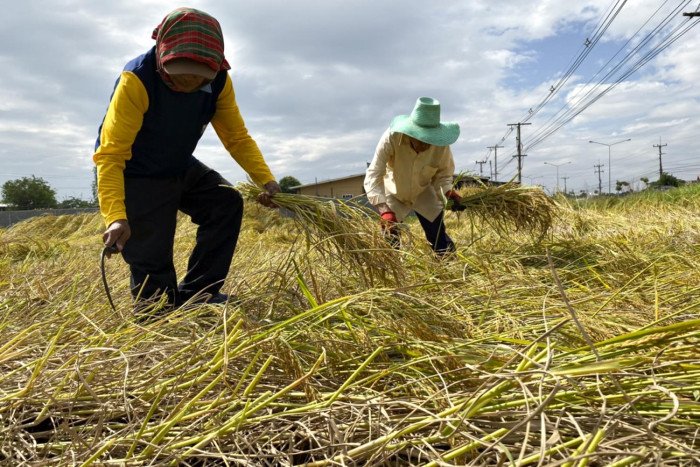
Mr Peeraphan suggested the government pay closer attention to economic plants such as rice by investing more in low-carbon plantations and targeting the growing demand for environmentally friendly products.
“In terms of rice, we can no longer compete on price with countries like Vietnam, as our cost of investment is rather high,” Mr Peeraphan said. “As such, we need to shift to premium quality rice, which requires precise plantation protocols and innovation.”