
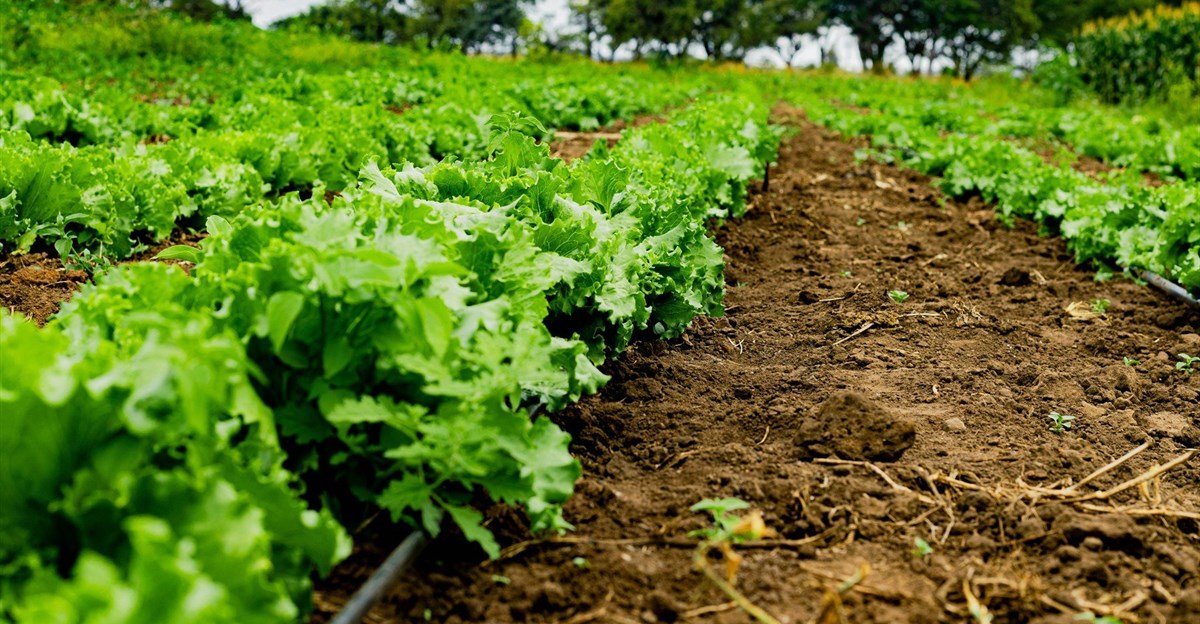
World Soil Day 2025 (5 December) calls on the world to recognise the theme “Soil & Water: A Source of Life.” But for agriculture, this message goes beyond awareness. It is a reminder that these two life-support systems must be managed as one.

Soil and water are not separate challenges—they are a single, interconnected system that underpins food security, climate resilience and long-term agricultural viability.
A new reality: Soil and water under simultaneous pressure
Both soil and water face escalating threats that are increasingly difficult to mitigate and manage.
The mounting crisis of water scarcity is mainly due to climate-driven changes such as erratic rainfall patterns and prolonged drought cycles; human pressures with the focus on overextraction from aquifers and surface water sources; and pollution that represents contamination from agricultural runoff, industrial discharge, and urban waste
Soil degradation: A silent but severe threat
Representing an equally urgent, silent but severe challenge is soil degradation. Topsoil, the most productive layer for agriculture, is particularly vulnerable to:
• Physical degradation: including wind and water erosion and compaction from heavy machinery;
• Chemical degradation: nutrient depletion and contamination from pollutants and salinisation;
• Biological degradation: represented by the loss of organic matter and decline in microbial abundance, diversity, and activity;
• Management-related decline: mainly due to unsustainable practices such as intensive tillage, monoculture cropping, and overuse, indiscriminate or irresponsible use of agrochemicals.
The compounding effect
Water scarcity exacerbates soil degradation, with degraded soils reducing water infiltration and retention. This creates a vicious cycle that undermines agricultural productivity and ecosystem resilience. Increasing the organic matter content of soils is vital. Organic material in soils acts like a sponge, absorbing rainwater, storing it and slowly releasing it.
Soils with adequate organic matter content have reduced runoff and flooding while increasing water-use efficiency in crops. Research showed that for each 1% increase in soil organic matter, approximately 185,000 litres more water per hectare of farmland can be stored.
While farmers cannot change their soil’s natural texture, they can enhance the water-holding capacity through practices that increase organic matter, such as adding compost or manure, using cover crops, and adopting regenerative farming methods. These practices, however, take time to improve soil health and water retention, which benefits sustainable plant growth.

Prof Driekie Fourie, Nematologist, Syngenta Seedcare
The rhizosphere
The rhizosphere—the slim layer of soil surrounding plant roots—is where water, soil, biology and plant health meet. It is the engine room of agriculture. Here, root exudates feed microbes, microbes unlock nutrients, and soil structure determines how effectively water reaches the root zone.
It is also where threats accumulate. Plant-parasitic nematodes, soil-borne fungi, pathogenic bacteria and viruses all operate in this narrow zone. Managing the rhizosphere is therefore not optional—it is essential.
A proactive approach should combine:
• Regular nematode diagnostics.
• Biological solutions to enhance beneficial microbial populations.
• Integrated crop protection, including targeted seed treatments using minimal active ingredients.
• Practices that reduce soil disturbance, preserving microbial diversity and structure.
• When the rhizosphere thrives, crops are more resilient to both biotic and abiotic stress.
From degradation to regeneration
With nearly 60% of land degraded and 91% prone to desertification, a revised approach to farmland management is essential. Farmers need knowledge and tools grounded in innovative, sustainable practices, particularly regenerative agriculture, which naturally improves soil fertility, enhances ecosystem health, and sequesters carbon to reduce greenhouse gas emissions.
Quality crops require quality water. Protecting water sources from pollution is non-negotiable. Nationwide advocacy and training on water conservation is critical, and every citizen must understand their role in preserving this finite resource.
Agriculture accounts for approximately 70% of global freshwater use, and demand is expected to rise with population growth. The solution lies in precision irrigation technology by applying only the water needed, when and where needed; rainwater harvesting through capturing and storing rainfall for dry periods; and responsible water stewardship by maximising efficiency across all agricultural operations.
Equipping farmers with regenerative practices and precision tools, while educating communities on water conservation, creates a sustainable path forward, one that protects both soil and water for future generations.
From awareness to action
Producers must take active steps to address water scarcity, erratic rainfall, and soil degradation by:
• Monitoring and assessing through soil testing to determine the texture and water-holding capacity of soils.
• Nematode sampling by testing during active growth (near harvest) to identify plant-parasitic nematodes and plan management strategies for the next crop.
• Building soil health by practising, for example, reduced tillage to minimise soil disturbance through conservation/regenerative practices.
• Increasing the soil organic matter by retaining crop residues, using cover crops or soil amendments.
• Structured crop protection by combining chemical and biological solutions as part of an integrated approach.
• Seed treatment is an example of responsible crop protection because it uses far fewer active ingredients than top dressing or strip applications and protects seedlings in the first critical 4-6 weeks after planting
The bottom line is that soil regeneration begins with observation, proactive action, and commitment. Technology alone cannot optimise production; farmers must actively participate in rebuilding soil health and managing resources responsibly.
Digital farming: The new backbone of climate-smart agriculture
Digital tools are no longer “nice to haves” – they are the backbone of modern agricultural strategy. Digital farming integrates modern technologies such as GPS, satellite imagery, data analytics, and AI to optimise agricultural outcomes. Precision or smart farming enables data-driven decisions that increase yields, enhance crop quality, and promote sustainability through the efficient use of resources.
Managing risk in a changing climate can be done by using digital tools that provide early warnings for extreme weather events, helping farmers adapt and prepare for climate variability. [Specific tool/brand reference removed]. Using remote sensing, data analytics, and AI, these tools empower farmers to make informed decisions that boost both productivity and sustainability.
A national call to stewardship
South Africa’s soils and water sources are among the country’s most undervalued assets. Protecting them is not only a farming responsibility—it is a national imperative. Every citizen, policymaker, agribusiness and farmer plays a role in safeguarding the foundations of food security.
As soil scientist and author William Bryant Logan famously wrote: “The future of food security depends on the living layer beneath our feet. When we heal the soil, we heal the planet.”