
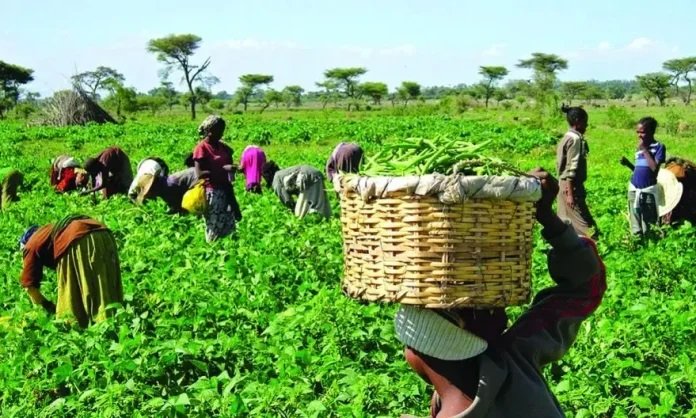
As the nation marked Farmers Day last Friday, celebrating the men and women who fed our nation, powered our economy and sustained our communities.
We pause to reflect and take stock of our success, our failures and how to ensure policy coherence in the agricultural value chain in order to sustain the gains that had been achieved in the agricultural sector to guarantee food security.
Instead, we find ourselves confronting an agricultural glut that is destroying the very livelihoods we ought to be honouring.
More than 200,000 metric tonnes of unsold paddy rice and maize from the last farming season remain in warehouses and fields, with some rice farms still unharvested.
This is not merely a logistical challenge but a full-blown crisis that threatens to undermine Ghana’s food security and economic stability.
The glut, should never be celebrated because it represented the collapse of farmers’ hopes and the erosion of their economic security.
When produce rots in storage or remains unharvested due to lack of markets, there was nothing to celebrate especially on a day dedicated to recognising farmers’ contributions.
Ghana’s farmers are the backbone of our economy. They provide food security, employ millions in rural areas, supply raw materials for industries, and generate export earnings.
Yet today, these same farmers who deserve our gratitude are watching their investments turn to losses, forced to sell below production cost or unable to sell at all.
The grain sector alone contributes approximately 20 per cent of Ghana’s Gross Domestic Product (GDP), yet farmers face threats from bird invasions, bushfires, inadequate harvesting equipment, and most devastatingly, the absence of viable markets.
The flooding of local markets with cheap, smuggled grains that evade duties and quality checks has created artificially low prices that make it impossible for Ghanaian farmers to compete.
Meanwhile, despite government announcements of GH¢100 million and later an additional GH¢200 million for the National Food Buffer Stock Company to purchase surplus grains, farmers report seeing little evidence of actual procurement on the ground.
This disconnect between policy pronouncements and ground realities is unacceptable. Farmers need transparency, published lists of companies, locations, and quantities of grains actually procured, along with clear timelines and operational areas of approved licensed buying companies.
Without this transparency, government interventions remain mere words that do nothing to ease farmers’ distress.
Immediate action must accompany by long-term structural reforms. Government must ensure announced funds reach farmers quickly and transparently.
We support mandating all state institutions including schools, hospitals, prisons, and security services to procure only locally produced rice and maize.
Stronger border controls to prevent smuggling of inferior grains are essential, as is a temporary import ban until the local glut stabilises.
For the long term, Ghana must shift from reactive crisis management to proactive market systems development.
This requires investment in storage infrastructure in key grain-producing regions like Bono, Ahafo, Ashanti, Volta, and Upper West.
We need functional processing facilities, improved rural roads, and most critically, a deliberate industrial policy that addresses the high cost of production making Ghanaian grains uncompetitive.
The ultimate solution lies in developing competitive export markets for Ghanaian grains and lifting the current ban on grain exports.
If our farmers cannot sell to neighbouring countries, if local millers are overwhelmed, and if they cannot compete with cheap imports, where exactly should they sell? Export markets would not only absorb surplus production but generate significant revenue while strengthening the entire agricultural value chain.
On this Farmers Day, let us honour our farmers not just with words but with meaningful, transparent action. We must never allow politically motivated interventions to destroy agricultural livelihoods again.
Our farmers have suffered enough. They deserve policies guided by data, market realities, and their own expertise—not electoral cycles or political expediency.