
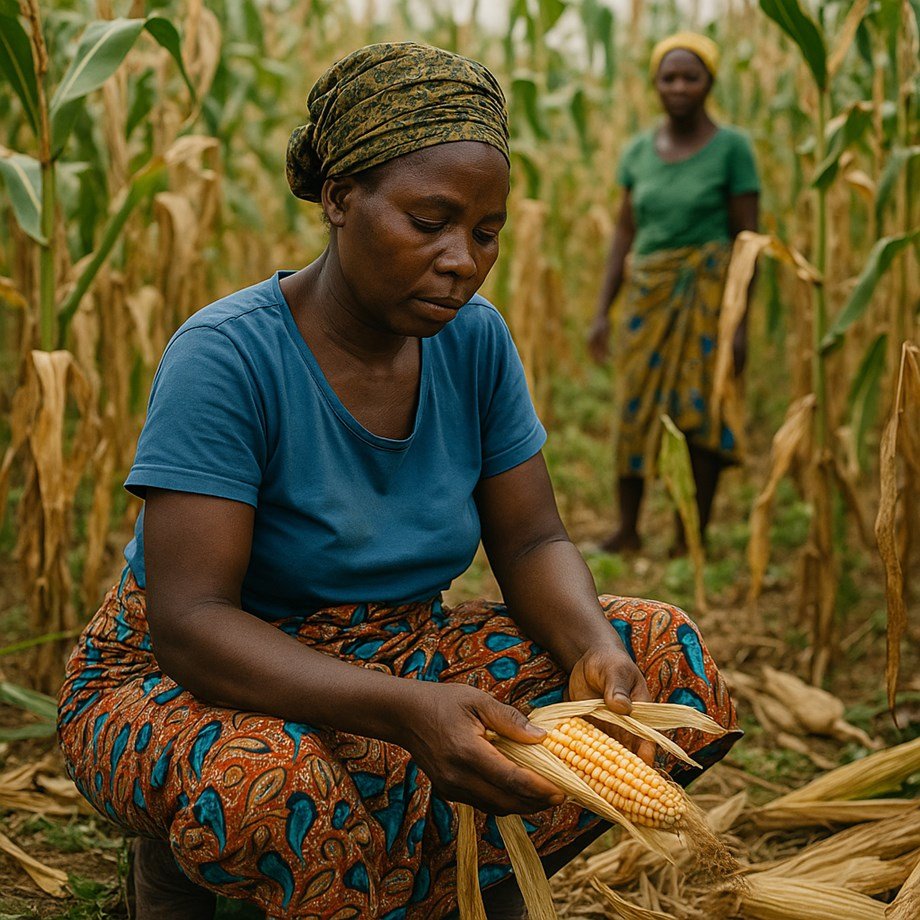
A new academic investigation has revealed that women farmers in Sub-Saharan Africa continue to face deep-rooted disadvantages in agricultural commercialization, despite their critical contributions to crop production. The research warns that these gender gaps limit both inclusiveness and efficiency in the region’s agricultural markets.
The study, titled Gender and Agricultural Commercialization in Sub-Saharan Africa: Evidence from Three Panel Surveys and published on arXiv, examines how gender shapes the participation of smallholder households in agricultural markets across Ethiopia, Nigeria, and Tanzania. Using three rounds of panel data from the World Bank’s Living Standard Measurement Study–Integrated Surveys in Agriculture (LSMS-ISA), the authors uncover systematic gender disparities that vary by country and context but remain significant enough to call for urgent policy action.
How does gender influence market participation?
The research demonstrates that women farmers face marked disadvantages in Ethiopia and Nigeria, while patterns are less pronounced in Tanzania. Women-headed households and those with a higher share of land managed by women are consistently less likely to sell crops, record lower scores on the crop commercialization index, and devote a smaller share of their sales to cash crops. In Ethiopia, female-headed households are more than six percentage points less likely to participate in crop sales compared with their male counterparts. In Nigeria, this gap rises to nearly nine percentage points.
The gender imbalance extends to the scale and type of market participation. Women-managed farms, even when involved in sales, typically earn less from commercialized output and specialize less in cash crops. This limits their ability to reinvest, expand, and integrate more fully into the agricultural economy. Tanzania presents a partial exception. There, while women farmers still face barriers, the differences in commercialization outcomes between genders are weaker and not always statistically significant. This variation, the authors stress, underscores the context-specific nature of gender inequality in African agriculture.
Do women farmers avoid markets?
Contrary to long-standing assumptions that women either avoid or are restricted from markets, the study finds that women farmers who do sell crops often rely on market buyers as much as or even more than men. In Ethiopia, female-headed households are more likely to sell directly to market buyers rather than individuals, suggesting that exclusion from markets is not driven by preference but by structural barriers. In Nigeria, women farmers are also more likely to sell through market outlets, though their transactions are concentrated in informal and proximate channels.
This reliance on nearby informal markets reflects the mobility and intermediation challenges women face. Limited access to transport, restricted mobility due to social norms, and exclusion from male-dominated trading networks often push women toward less distant, less formalized outlets. While these pathways provide some access, they restrict women’s ability to command better prices, diversify sales, and secure contracts that are more accessible through formal or distant markets. The findings highlight that women are not less market-oriented than men, but that their routes to commercialization are constrained by systemic obstacles.
What explains the commercialization gap?
The study identifies self-consumption as a critical factor mediating the gender gap. Households that devote a larger share of production to their own food needs are significantly less likely to participate in crop sales. This effect is amplified in women-headed households in Ethiopia and Nigeria, where the combination of high self-consumption and gender disadvantages sharply reduces commercialization opportunities. The researchers argue that women’s central role in ensuring household food security drives a stronger preference for consumption over sales, limiting the marketable surplus available for commercialization.
The analysis further shows that when gender is proxied through decision-making authority, measured as control over harvest allocation, here is no significant difference in commercialization outcomes once other household factors are considered. This suggests that disparities are less about decision-making at the point of sale and more about upstream constraints such as limited resources, consumption needs, and restricted access to supportive networks.
The pooled regional analysis confirms these results, finding that, on average, women-headed households are significantly less commercialized than men-headed households, with lower participation, reduced commercialization indexes, and smaller cash crop shares. While the size of these gaps varies, the direction is consistent, highlighting a widespread regional challenge.
Policy implications and the way forward
Commercialization is seen as a pathway to higher incomes, poverty reduction, and food security, but excluding or disadvantaging women undermines both equity and efficiency. The authors argue that interventions must be country-specific, tailored to address the unique institutional and cultural constraints shaping women’s access to markets.
Two policy areas emerge as critical. First, easing the trade-off between self-consumption and commercialization could expand opportunities for women. Measures such as improved on-farm storage, seasonal food safety nets, and access to short-term credit would reduce the pressure to prioritize consumption and free up more produce for sale. Second, lowering mobility and proximity barriers is essential. Investments in safer transport, local aggregation points, and reliable intermediaries would allow women to expand beyond local informal markets and engage more competitively in regional and national markets.
The study cautions that while its findings are based on robust panel data, the evidence should be interpreted as associative rather than causal. Even so, the consistency of gender gaps across countries signals that structural inequalities persist in agricultural commercialization.