
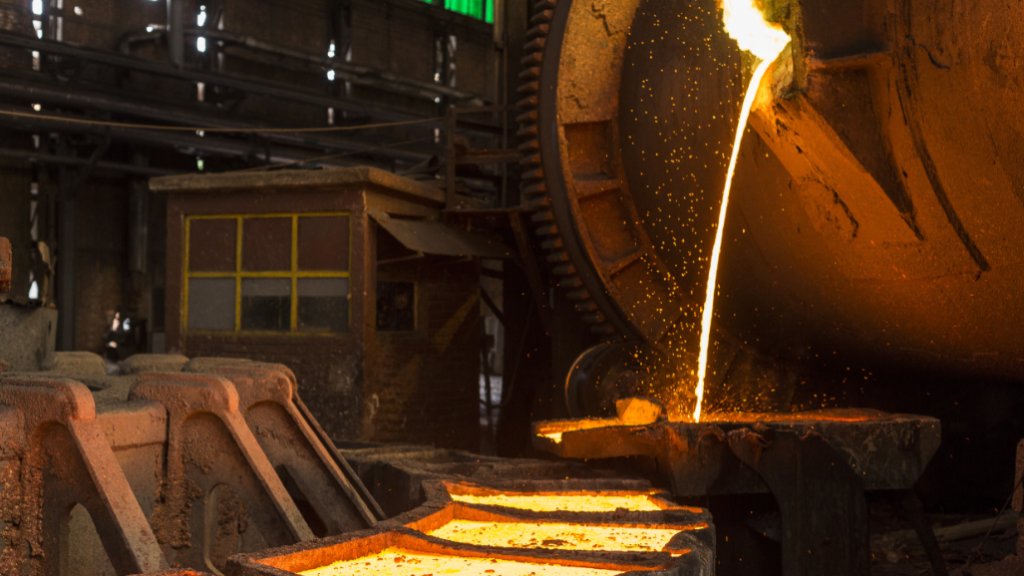
Stock image.
After rallying through 2025 (not without some deep troughs) and into this year driven by supply disruptions in Indonesia and South America alongside tariff disruptions, copper prices are pulling back again.
Copper for March delivery fell over 3% in New York to $5.78 a pound or $12,740 a tonne on Thursday and is now trading 12% below highs hit just over two weeks ago.
Uncertainty on copper markets was heightened after satellite data showed January smelter activity was the lowest on record since tracking began nearly a decade ago.
Earth-i’s latest SAVANT Global Copper Smelting Index shows that 14.3% of global smelting capacity was inactive in January. Activity fell 2.5% from December, a notable drop during what is typically the industry’s most active period.
It was also the first January in seven years to show a double‑digit inactivity rate and is now 6.8% above the three‑year average. Earth-i’s satellites cover some 95% of global capacity.
The global headline number masks significant regional divergence. China, home to 45% of smelting capacity tracked by SAVANT, reported an inactive‑capacity reading of just 7.5%.
Active tonnage ex-China is now 1.2 million tonnes lower than the same period a year ago, highlighting the severity of the slowdown outside China.
The steepest year‑on‑year drop came from Asia and Oceania, which accounted for more than 850,000 tonnes of the decline, despite a month-on-month increase over December (the only region to do so).
The region continues to reel from major disruptions, including the closure of the Isabel Leyte (PASAR) smelter in the Philippines and the temporary shutdown of the Gresik and Manyar smelters in Indonesia. Both Indonesian plants were forced offline after the mud‑rush at the Grasberg mine in September, which curtailed upstream and downstream operations.
South America and Europe each recorded declines in active tonnage of more than 100,000 tonnes. In South America, much of the decline stems from the ongoing outage at Salvador (Potrerillos) in Chile, which has remained offline following a chimney collapse in June 2025.
Africa, meanwhile, saw the most pronounced deterioration in January. The continent’s inactive‑capacity reading jumped 12.9% to 28.4%, the sharpest relative monthly drop of any region. Yet Africa also delivered one of the month’s few bright spots: the first operating signals from the 500,000 tonne per year Kamoa‑Kakula smelter in the DRC.
While still in ramp up and not yet included in the Earth-i index, its addition will eventually lift Africa’s active smelting tonnage to around 1.45 million tonnes.
The historic weakening in global smelter activity is intertwined with an unprecedented collapse in treatment and refining charges, or TCRCs, which are the fees miners pay smelters to convert concentrate into refined copper.
Mine disruptions have tightened concentrate supply forcing smelters, many of which have come online in recent years after aggressive Chinese build out, to compete for feedstock.
As a result, spot TCRCs have plunged into deeply negative territory, with recent spot market tenders closing near –$45 per tonne and – 4.5¢ per lb. The benchmark annual contract market has followed this collapse. Antofagasta’s 2026 benchmark agreement with a Chinese smelter settled at zero dollars, the lowest annual TC/RC terms ever recorded.
These levels effectively eliminate smelter processing margins and explain why many facilities outside China are curtailing output. The Chinese industry is less exposed to market forces with many refiners and smelters across the country backed by local governments that can keep operations running even when margins disappear.