
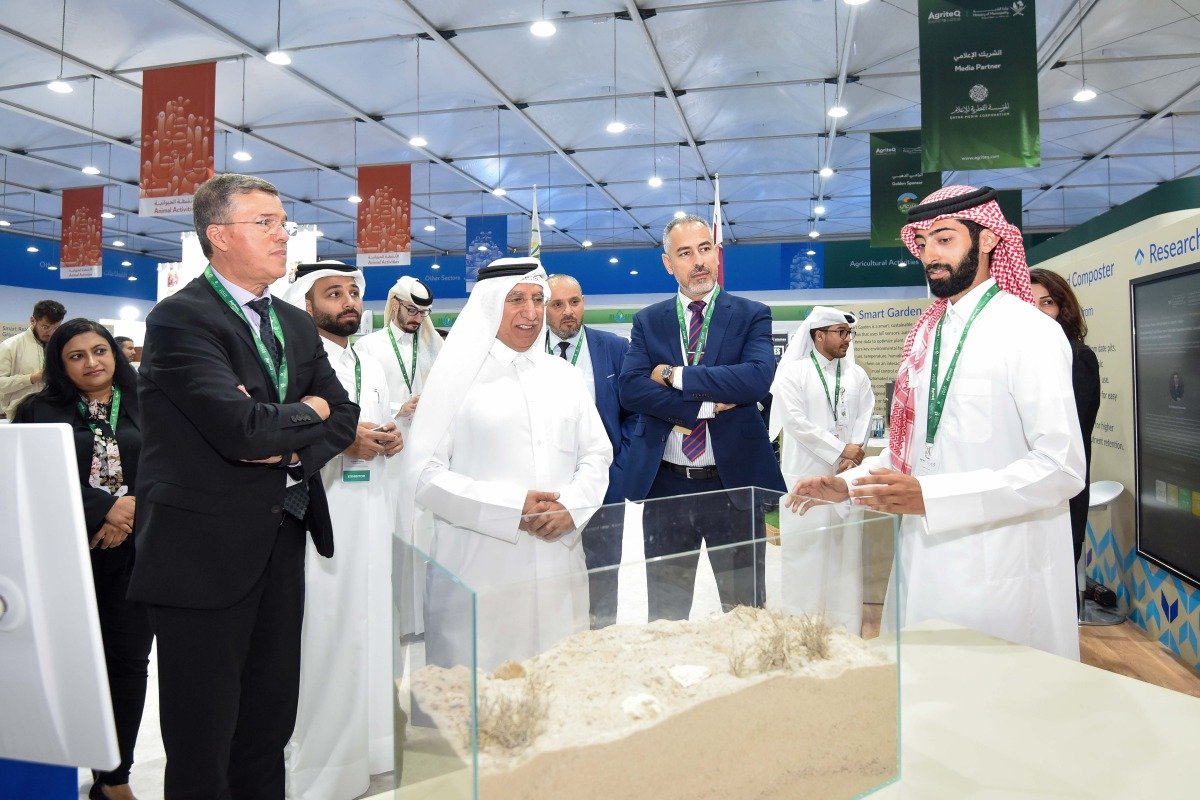
UDST President Dr. Salem Al-Naemi at the University’s booth with other officials and participants.
DOHA: The University of Doha for Science and Technology (UDST) is taking part in the leading agriculture exhibition, AgriteQ 2026, showcasing a range of applied research projects and functional prototypes that support sustainable agriculture, food security, and smart farming practices in Qatar.
This participation builds on the work of UDST’s Center of Excellence for Sustainability and Food Security, which serves as a key research platform translating technological innovation into practical applications that enhance agricultural productivity, environmental sustainability, and efficient resource management.
During the exhibition, UDST presented advanced agricultural prototypes developed by faculty members, researchers, and students, demonstrating practical solutions to challenges related to water efficiency, climate resilience, soil health, and agricultural productivity. Among the exhibited prototypes were smart irrigation and monitoring systems, AI and IoT-enabled agricultural technologies, sustainable soil and biomass solutions, and data-driven tools designed to optimize resource utilization. These prototypes highlight how applied research can be translated into scalable solutions that enhance efficiency, sustainability, and decision-making across the agricultural sector.
The exhibition also provided a platform to announce the launch of new Bachelor’s and Diploma programs in Animal Health and Veterinary Sciences, introduced to meet the growing demand for skilled professionals in animal health and sustainable livestock production. The programs play an important role in supporting food security by strengthening animal health practices across the agricultural sector.
Commenting on the participation, Dr. Salem Al-Naemi, President of the University of Doha for Science and Technology, said: “Agriculture is a strategic priority for Qatar, and applied innovation plays a critical role in strengthening food security and sustainable production. Through our participation and the prototypes showcased, we demonstrate how applied education and research at UDST translate into practical solutions that address real agricultural challenges and support national development objectives.”