
Unlock the Editor’s Digest for free
Roula Khalaf, Editor of the FT, selects her favourite stories in this weekly newsletter.
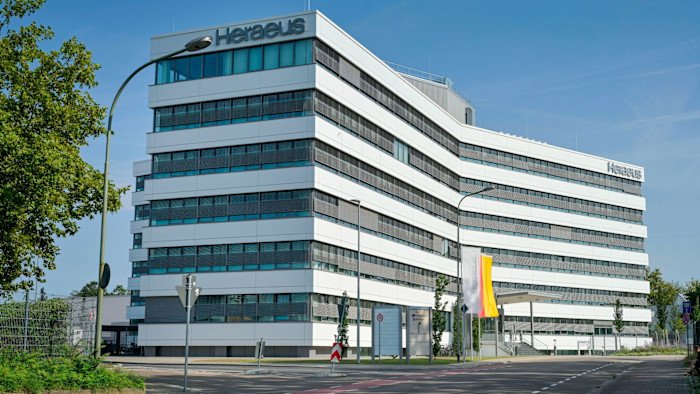
German prosecutors are investigating suspected fraud at industrial group Heraeus after the company set aside almost €460mn to cover potential risks.
The Frankfurt public prosecutor’s office told the FT it had been conducting a criminal investigation since June into possible unlawful practices at Heraeus Precious Metals following a voluntary disclosure by the company.
The investigation relates to allegations that metal left in milling equipment during processing at HPM’s recycling business was retained by the company despite being rightfully owned by customers.
Sixteen current and former employees, including senior executives, are under investigation on suspicion of fraud and embezzlement. Authorities said the alleged misconduct took place between 2015 and 2025.
The case is the latest controversy to come to light in the metals sector. Commodity trader Trafigura is embroiled in litigation over an alleged $600mn nickel fraud involving misrepresented cargoes, while German copper producer Aurubis has previously suffered €169mn in losses from alleged precious metals theft involving collusion between employees and suppliers.
Heraeus is wholly owned by the extended Heraeus family, with roughly 200 family shareholders. The group, founded in 1851, reported revenues of €29.4bn in 2024 and is one of Germany’s largest family-owned industrial companies.
In its 2024 annual report published in September, Heraeus disclosed that it had booked €457.7mn in provisions to cover potential financial risks arising from the matter, with the discrepancies requiring it to recognise €150mn of precious metals on its balance sheet that at least partially belonged to customers. The company said it had assessed the impact “based on a preliminary legal evaluation”.
A whistleblower flagged the issues at its precious metals unit in Hanau, one of the world’s largest refining operations. According to three people familiar with the matter, the whistleblower came forward in October 2023, triggering an internal investigation that lasted more than a year.
Auditor KPMG was not satisfied with the quality of the internal investigation, two of the people said, and Heraeus in December 2024 commissioned law firm CMS to conduct a two-part investigation under supervisory board oversight.
KPMG declined to comment. CMS confirmed to the FT it was conducting the investigation.
According to the Heraeus annual report, the first phase of CMS’s probe identified irregularities at Heraeus’s recycling operations. The second phase covers adjacent parts of the refining process such as material analysis and customer settlements.
A final report is expected to be finished later this quarter, according to people familiar with the matter.
Prosecutors said at least two customers had been affected.
Heraeus said it had “acted transparently throughout the process”, had “proactively notified the relevant authorities” and had “already fully compensated customers affected by the irregularities”, adding that it was “fully co-operating” with investigators.
According to people familiar with the matter, the core issue involved the handling of unrefined customer material, which is milled and homogenised before samples are taken to determine precious metal content for settlement after the refining.
Quantities of metal are alleged to have remained in the milling equipment and were subsequently appropriated by Heraeus, in effect lowering customer settlements, the people said.
Prosecutors said the metals in question included platinum, palladium and rhodium. People familiar with the matter said there was no indication that individuals had enriched themselves personally.
South African miner Northam Platinum disclosed in August that it had reached an “amicable” redetermination of historical refining outcomes with Heraeus, covering roughly a decade.
Heraeus made a one-off payment of $66mn to Northam, which people familiar with the matter confirmed was one of the affected customers. Northam declined to comment beyond its initial disclosure.
Heraeus said the findings had led to personnel consequences, extensive remediation and a strengthening of compliance, alongside a joint initiative by management and the supervisory board to reinforce integrity and “tone from the top”.
Following the launch of the external investigation, several senior managers left the company last year.
Jan Rinnert departed as chief executive in May after 12 years in the role, citing the end of his term and the timing as right for a leadership transition. Soon afterwards Heraeus disclosed the preliminary investigation results to prosecutors.
Rinnert — who is married to the daughter of patriarch Jürgen Heraeus, a former Heraeus CEO who chaired the group’s supervisory board for two decades until 2020 — is among the suspects in the prosecutor’s investigation, according to two people familiar with the matter.
Rinnert did not respond to requests for comment.
The company declined to comment on personnel measures other than to say that Rinnert’s successor, Frank Stietz, was not under investigation.
According to a company spokesperson, the owning family takes the matter “very seriously” and “fully supports a thorough investigation”, remaining “fully committed to the company”.
Additional reporting by Leslie Hook and Camilla Hodgson in London